




 |
| Director James Gray |

 |
| Gray with cinematographer Darius Khondji |
ARMAGEDDON TIME B USA Brazil (114 mi) 2022 ‘Scope d: James Gray
The thing that most white people imagine that they can salvage from the storm of life is really, in sum, their innocence. It was this commodity precisely which I had to get rid of at once, literally, on pain of death. I am afraid that most of the white people I have ever known impressed me as being in the grip of a weird nostalgia, dreaming of a vanished state of security and order. —James Baldwin, The Black Boy Looks at the White Boy, from Esquire magazine, May 1, 1961, The Black Boy Looks at the White Boy - ALLISON BOLAH
James Gray is one of those filmmakers who is better received in Europe than he is in America, as his early films like LITTLE ODESSA (1994), The Yards (1999), and WE OWN THE NIGHT (2007) express a shocking violence where death is a prominent theme, known for also creating memorable nightclub sequences, yet despite rave reviews at Cannes, these deeply personal films were often overlooked and received sharply divided reviews. But for all their dramatic expansiveness, these early crime pictures were of a kind not seen since the New Hollywood classics of the 1970’s, where Gray is a cinephile clearly impacted by the films of that era, citing Bernardo Bertolucci’s The Conformist (Il Conformista) (1970), William Friedkin’s THE FRENCH CONNECTION (1973), Francis Ford Coppola’s THE GODFATHER (1972), and THE GODFATHER Part II (1974), and the films of Martin Scorsese, Robert Altman, and Stanley Kubrick, yet claims the film that has had the most enduring influence on him was Coppola’s APOCALYPSE NOW (1979), noting that the “swell of the architecture of a movie is part of what makes it the most beautiful visual art form.” While he has passionate supporters, he has just as many detractors, where he’s never been able to find a mass audience, yet French critics love him, which is why he’s become a Cannes regular for over twenty years, with this film receiving a 7-minute standing ovation. A native of Flushing, Queens, Gray’s first films tell personal, if loosely autobiographical, stories set in Brooklyn, venturing to Ellis Island for his historical drama The Immigrant (2013), making his way to the Amazon jungle and even outer space for his next projects, before finding his way back home to Queens, making his most autobiographical film, a portrait of his upbringing in the 1980’s, with the Gray family name shortened from Greyzerstein at Ellis Island, a time when a post-Vietnam, post-Watergate America returned to conservatism, placing a halt on any socially progressive agenda. The youngest son in an upwardly mobile Jewish-American family, 11-year old Paul Graff (Banks Repeta) is an alter-ego of the director, with an antagonizing older brother Ted (Ryan Sell), and second-generation parents Esther (Anne Hathaway) and Irving (Jeremy Strong), while Anthony Hopkins plays the kindly grandfather Aaron Rabinowitz, whose family fled first from the murderous acts of the Cossacks, and then the Nazi’s. While Jewish history is a predominate theme, this film slyly overlays a similar theme taking place in America with the routine persecution of blacks, who are subject to a heavy-handed authoritative approach from government, schools, and police, quickly labeled troublemakers or criminals, never receiving the breaks or second chances that whites often receive. A family drama that reflects on a small scale where the whole country is headed, the film is a sober reflection, a coming to terms with one’s own past, which clearly haunts the filmmaker to this day, exploring a generational failure, characterized by the 1980 Presidential election of Ronald Reagan, who was swept into office on a tide of racism and a legacy of dog-whistle bigotry, featuring his slogan, “Let’s make America great again (sound familiar?),” Pandering to racists through Nixon’s Southern Strategy, which continues to harm communities even today, Reagan released southern states from school desegregation and voting rights mandates while demonizing black women as welfare queens who want free hand-outs and are unwilling to work for a living, making the rest of the country despise who they are and everything they stand for, planting the seeds for the white supremacy of Trump, whose family makes its eerie presence, almost like a horror film. By the time Donald Trump becomes President in 2016, Republicans hold almost every governor’s office and control most legislatures across the South.
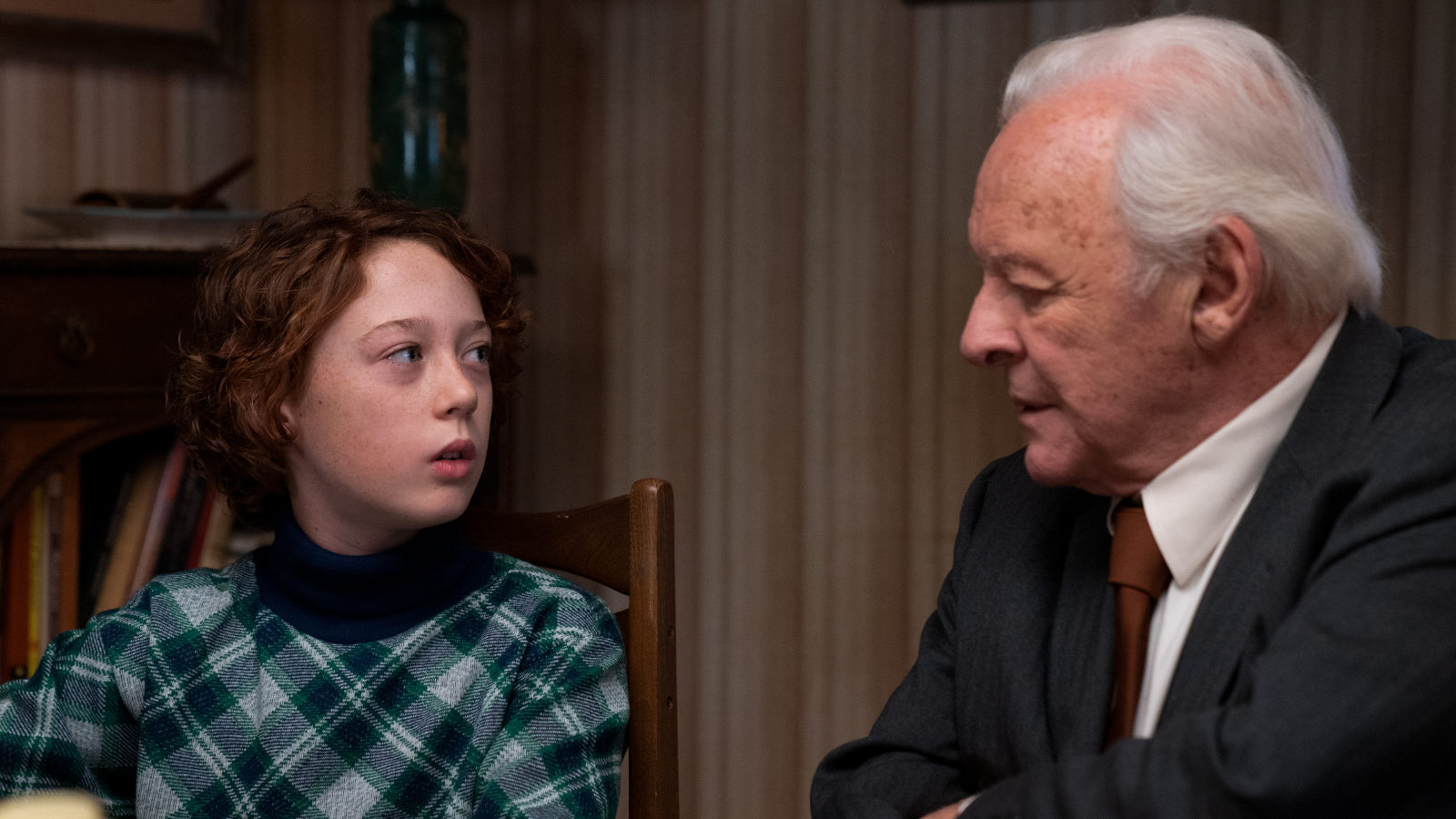
The film’s title comes from a 1979 reggae song by The Clash, The Clash - Armagideon Time [Single] - YouTube (3:51), the B-side of London Calling, while also referencing Ronald Reagan’s 1979 quote on Jim Bakker’s evangelical PTL television network, openly campaigning as an evangelical Christian, expressing his growing interest in the anti-gay theology of Armageddon, “Do you ever get the feeling sometimes that if we don’t do it now, if we let this be another Sodom and Gomorrah, that maybe we might be the generation that sees Armageddon?” This coming-of-age story reveals the different trajectory of the lives of two young boys, one white and one black, Paul and Johnny Davis (Jaylin Webb), quickly becoming best friends in a 6th grade class at P.S. 173, as both are singled out for being disruptive in class by the overzealous teacher Mr. Turkeltaub (Andrew Polk), who bears a resemblance to Ben Stein, the cartoonish teacher in FERRIS BUEHLER’S DAY OFF (1986). While the point of view follows Paul and his family, we learn that Johnny has none, living with a grandmother suffering from dementia, basically leaving him homeless where he’s fending for himself, held back the previous year, the only black kid in class, with the teacher reminding him of his failures at every turn. There are subtle differences in the punishment of each student, as Johnny is the one automatically blamed, even when Paul is the instigator, where he’s able to hide behind his race, learning very early about how racial dynamics play out in the real world, which only grew more exacerbated with the election of Reagan. Despite such different backgrounds, they take solace in being outsiders, with Paul having little interest in school, spending his time drawing instead, with a talent for illustrations, creating a science-fiction superhero character named Captain United, dreaming of one day becoming an important artist. Both share a passion for outer space, with Johnny dreaming of being an astronaut with NASA, while Paul wants to illustrate comic books about space travel, but their friendship is defined by the rebellious things they do together, like skip out on school, smoke weed in the bathroom, and hang out in the clubhouse built in Paul’s backyard, which Johnny secretly uses as his makeshift home. While his mother Esther is the head of the PTA, Paul thinks she runs the school, protecting him from any adverse punitive acts, viewing himself as near invincible. Overall, however, despite telling a personal story, the film feels distantly impersonal and heavy-handed, never becoming dramatically engaging, as outside of Johnny, there are really no likable characters in the film, with Paul in nearly every frame, and he’s kind of a bratty kid, misbehaving at home and at school, where he gives his parents plenty of grief, acting up in inappropriate situations. When they try to express the gravity of their family history, Jewish-Ukrainian immigrants who escaped anti-Semitism in Europe, it’s beyond his comprehension, showing little interest as he routinely backtalks while tuning them out. It’s rare to see a coming-of-age film with such a snotnose kid as the lead protagonist, yet he has a special relationship with his grandfather, who looks after him like a guardian angel, buying him gifts, showering him with affection, never letting him forget his past, as they may otherwise end up haunting you, which is exactly what happened in America, where embracing the sins of Ronald Reagan was a breeding ground leading us into the disaster of the Trump era. Following in the footsteps of demagogue radio priest Father Coughlin, who commanded a massive audience in the 1930’s, viewed as the father of hate speech, spouting anti-Semitic and pro-Nazi tirades on the airwaves during the lead-up to World War II, (The Deplatforming of Father Coughlin - Slate Magazine), these are quasi-celebrities who blend populist appeal and right-wing politics, where today a narcissistic self-interest is the new moral dilemma plaguing the nation, as politicians openly seek face time on the networks, hoping to bathe in the social media spotlight of “Me-ism,” while everything else is purely secondary, like running the government or serving the interests of the nation.
While America is supposedly a land of equal opportunities, one thing this film makes perfectly clear is how opportunities don’t happen equally, as the privileged take advantage by overlooking the many doors that were opened for them, typically at the cost of excluding the more disadvantaged. Jews escaped persecution in Europe, as Aaron’s family discovered freedom in the welcoming doors of America, yet blacks have never experienced that same welcoming experience, as the doors have continually been closed for them throughout hundreds of years of history, which is astonishing when you think about it, as it goes back to the era of Columbus. Even though this autobiographical film is not openly political, the experience of “white privilege” resonates strongly, as the education system fails students from marginalized groups in a disproportional way, while the paths of justice operate only for one of these kids, while the other feels the wrath of racial hatred. Paul’s parents react with horror when they discover his partner in crime is a black kid, transferring all the blame to that kid, suggesting he’s a “bad influence,” overlooking their own child’s explicit responsibilities, while pulling him from the school and transferring him to Forest Manor, in real-life The Kew-Forest School, an all-white private school located in the affluent neighborhood of Forest Hills, Queens, the same school attended by his brother, along with Donald Trump and his family, where Donald’s father Fred is on the board of trustees. Paul is extremely unhappy, as this means he will no longer see Johnny, but he quickly experiences a culture shock at the new school, where he’s required to wear a uniform, catering to upper middle class and wealthy families, with readily available computers in the classrooms. When Johnny visits on the school playground, Paul pretends to barely know him, painfully aware of how his presence is perceived by the other students, who use the n-word to describe him, mocking his lowly status, while making him the butt of racial jokes. When Paul attempts to talk about this with his grandfather, a bit ashamed that he didn’t stand up for his friend, his grandfather reveals how “the game is rigged” against marginalized groups in America, who experience a collapse of faith when the nation’s promise of freedom and equality doesn’t apply to them, which may explain his own family’s eager assimilation in pursuit of the American Dream. While Paul and his family also face discrimination, he has the ability to escape much of it, as they have the resources to help him be successful. Johnny is not so fortunate, with no support whatsoever in helping him achieve his dreams. A powerful exposé of privilege and inequality, and how it is systematically perpetuated over time, the film is conscientious but difficult, as it’s a rather blunt depiction, providing little insight or background into Johnny’s character, who comes across as a token black figure, and doesn’t compare well to Barry Levinson’s Proustian sagas of Jewish life in post-war Baltimore in films like AVALON (1990) or LIBERTY HEIGHTS (1999). In addition, the film has a very muted color palette, making it feel colder as it articulates heavier themes, with Gray using digital for the first time, shot by Darius Khondji, where the camerawork is dark and oppressive. The Trump family are major donors to this new school, with Paul encountering Fred Trump (John Diehl), a powerful real estate magnate in Queens, in the hallway on his first day. This period in his life is when Paul begins to understand how race, religion, and social class are used as reasons for bigots to inflict their damaging prejudice on others, often veiled and disguised in patriotic and life-affirming rhetoric which is meant only for a privileged few, perfectly encapsulated in a cameo appearance by Jessica Chastain as Maryanne Trump (Donald’s older sister, a federal appellate judge appointed by Ronald Reagan), who gives a rousing speech to the students about the importance of hard work to achieve success, declaring “you are the elite,” conveniently leaving out the part about inheriting a fortune from her father. While many may not want to hear this message, just as they tuned out on Jimmy Carter’s prescient “crisis of confidence” message in favor of Reagan’s sunny optimism, but it is crucial nonetheless.


