




 |
| Director Miloš Forman, 1964 |
 |
| Forman with Hana Brejchová |
 |
| Hana Brejchová |
 |
| Forman behind the camera |
 |
| Miloš Forman, 1980 |
LOVES OF A BLONDE (Lásky jedné plavovlásky) B+ aka: A Blonde in Love Czechoslovakia (85 mi) 1965 d: Miloš Forman
The only way to deal with an unfree world is to become so absolutely free that your very existence is an act of rebellion. —Albert Camus
Disgruntled with the communist regime that had taken over in Czechoslovakia in 1948, students of the Film and TV School of The Academy of Performing Arts in Prague (also known as FAMU) became the dissenters of their time, evolving out of the Devětsil movement of surrealist and avant garde artists of the 20’s and 30’s. One of the major figures of the Czech New Wave in the 1960’s, Miloš Forman, along with other Czech directors František Vláčil, Věra Chytilová, Ivan Passer, Jaroslav Papoušek, Jaromil Jireš, Jiří Menzel, Jan Němec, and Slovak director Ján Kadár and others, children of a nationalized film industry, who had access to studios and 100% state funding (in contrast to the French New Wave), often taking significant political risks by using cinema to protest the hypocrisy and absurdity of the Communist state, with most running into censorship problems, but the movement came to an abrupt end when Soviet tanks invaded Prague in 1968, wiping out the reform movement, re-establishing authoritarian control, with Forman escaping to the United States, along with Jan Němec. But this film was made prior to that, as De-Stalinization had a late start in Czechoslovakia, where some hardliners were removed from top levels of government and replaced by younger, more liberal communists. Forman’s material falls more in line with the humanist tradition of Renoir, Truffaut, and Olmi, creating a wicked satire aimed at Communism’s ordinary life in the Eastern-bloc, which is funny and heartbreaking at the same time, depicting a world where individuals pursue modest dreams of happiness, using a lyrical and social realistic style in crafting a tender psychological portrait of a young woman, while also making comments about misguided youth that tended to fly under the radar because Soviet censors did not consider comedies to have a serious message. Well aware of an artist’s position in Czechoslovakian society, all of Forman’s films deal with thwarted individuality, told with an absurdist humor, demonstrating an acute sense of observation, featuring characters who are continually frustrated by the conventional rules of society that simply don’t make sense. The possibility of freedom, given a chaotic set of restrictions, remains an elusive goal, yet clearly rock ‘n’ roll has hit the mainland, with an opening anthem to freedom sung by Táña Zelinková, a dark-haired woman on a guitar, regaling how love makes her do foolish things, yet it has a dour inflection, without a hint of a smile, as if performed with a gun to her head, Hooligan (Loves Of A Blonde intro) with subtitles YouTube (2:07). A tale of desire and disillusionment, this brief introduction is a lead-in to a shoe factory manager (Josef Kolb, the actual factory manager) trying to explain the advantages of the People’s Army sending their recruits into Zruč, a small town in central Czechoslovakia where the women inexplicably outnumber the men 16:1 (apparently the situation was quite common in Czechoslovakia at the time), claiming this is an opportunity you can’t resist, suggesting “Youth needs what you used to need, Comrade Major,” like a Peter Sellers line out of DR. STRANGELOVE (1964), Stanley Kubrick’s anti-authoritarian spectacle turned into exaggerated comic farce. Forman, like Roman Polanski and so many others, had lost both parents in the Nazi camps during World War II, and while openly expressing sympathy for young people, he had a way of drawing comedy out of real life tragedy, making use of unhappy experiences. Forman’s mother ran a summer hotel, while his father was a professor who was arrested for distributing banned books during the Nazi occupation and died in Buchenwald, while his mother died in Auschwitz. Discovering the ease of lightweight movie cameras, which suddenly became available in the early 60’s, Forman became enamored with the cinéma vérité style of documentary filmmakers, as it provided a more direct representation of reality than the heavily stylized Hollywood productions. Believing he could use this equipment to shape a story out of his own direct observation, meeting with cinematographer Miroslav Ondříček, they felt they could capture an authentic look at the rock ‘n’ roll craze sweeping Czechoslovakia in the early 60’s, utilizing a largely non-professional cast, relying upon a considerable amount of improvised dialogue, while also capturing a realistic depiction of teenage hopes and disappointments, leading to an early documentary film AUDITION (1964). Forman’s screenplay methods also came into play, as he routinely met with fellow artists Ivan Passer and Jaroslav Papoušek, and together they would openly criticize each other’s ideas for films, paring down the extraneous material, while constantly reshaping the material, combining forces with Václav Sasek to write this film. This screenwriting process was totally opposite to the socialist-realism approach, which is why it produced an examination of Czech society that was critical to the success of the New Wave, shattering several myths about socialism, Czech youths, and the nation in general simply because the characters are so fully believable. All of Forman’s Czech films share the common theme that society can only avoid tragedy by remaining open to young people and to new ideas, but in this film, accentuating the gulf between generations, as well as the awkwardness and confusion surrounding sex in an overly repressed society, that development becomes increasingly unlikely.
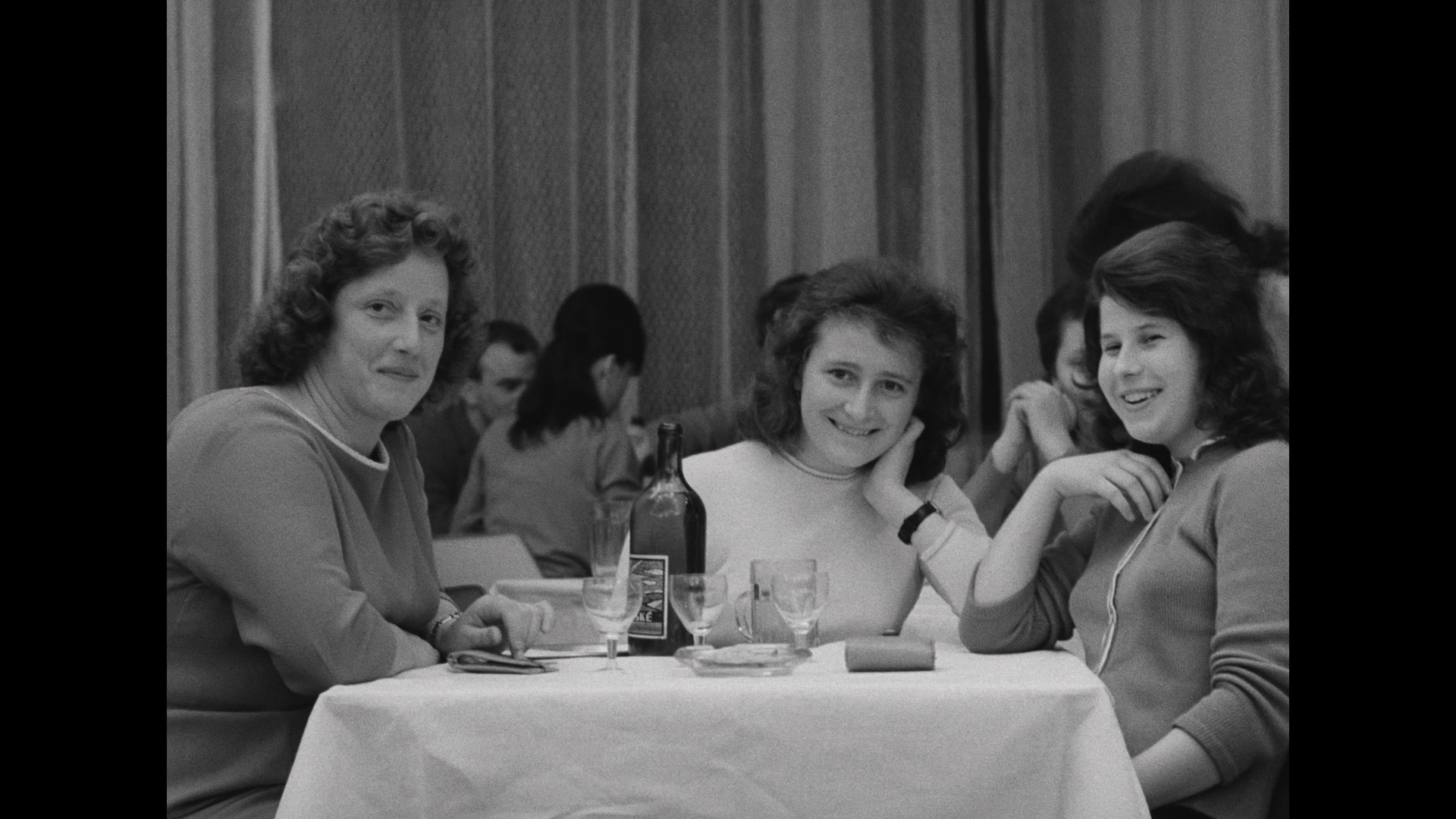
In 1956, after Khruschev came to power, the Communist Party denounced the dictatorship of Josef Stalin, ousting the Stalinists from power, and suddenly doors to the West were opened, leading to unprecedented social, cultural, and economic transformations in the Soviet Union. Polish films had dominated the arthouse scene more than any other Eastern European nation during the late fifties and early sixties, but by 1965 the Czechs had taken over. The Czech government of the mid-60’s under Antonín Novotný became entrapped by their own Stalinist ideology and the stupidity of an entrenched bureaucracy that resisted progressive reforms, becoming increasingly isolated from ordinary people, struggling to control its nation’s artists, whose new ideas gripped the country into a political divide. His greatest opposition in the years from 1963 to 1967 came from artists, students, and intellectuals who called for greater freedoms, which led to the rehabilitation of banned writers like Franz Kafka and Karel Čapek, the greatest Czech authors of the 20th century, transforming art and literature into political weapons, eventually leading to Novotný barring all political dissent. Armed with a new set of censorship laws, the Communist Party immediately banned Věra Chytilová’s DAISIES (1966), wildly experimental and hysterical, and of course, too liberating for the masses, and Jan Němec’s A Report On the Party and the Guests (O slavnosti a hostech) (1966), described by film historian Peter Hames as “The most controversial film ever produced by the Czech New Wave.” Forman never intended to confront the political situation of the times, but this film couldn’t help but have important social and political implications, particularly when viewed by the West, when all Eastern European films automatically challenged existing autocratic systems and provided serious social commentary. Even the premise for the film, a world with women outnumbering men to exaggerated proportions, suggests a certain playfulness, yet the film evolves into moral dishonesty and outright foolishness, an apt analogy for a bumbling regime that is out of touch with its people. In creating a world about hypocrisy and deception, Forman increases the importance of individual responsibility. The bare outline of the story is inspired from an actual conversation by Forman with a girl who was walking along a Prague street late one night with a suitcase in her hand. She had come looking for a boy with whom she had had a romantic encounter, but he gave her a false address and now she was alone in the big city. Forman decided to shoot the film in the Italian Neo-realist style, examining the lives of ordinary people where nothing extraordinary is ever likely to happen to them, yet they are reflections on contemporary life, having significant impact on other rising filmmakers, like socialist British director Ken Loach, who admired Forman for respecting everyday people, always listing this among his favorite films, claiming the film “endorsed everything I was trying to do in my own work but hadn’t managed yet.” Starring 18-year old Hana Brejchová as Andula, she is the younger sister of his former wife, actress Jana Brejchová, shy, sweet, and gullible, living in a State-operated dormitory with other young girls, all pulled from their families by the government to work at the same shoe factory, isolated from the world at large, until a group of middle-aged Army reservists arrive by train, mostly married men, where disappointment is clearly registered on the faces of the young women, all hoping for a chance at love, where the social engineering mistake made was actually sending the wrong group of men, not really understanding the situation, as had they sent a group of young recruits, the results would have been substantially different. The same could be said for an entire generation of authoritarian decisions, which is a biting comment on the Party having no real grasp of reality. In a kind of group embarrassment, they are all mixed together at a giant dance hall party thrown for all of them to get to know each other, each sitting on different sides of the room, demonstrating the awkwardness and bungling between the sexes, including a live band that plays fairly nondescript music that may be a blend of old world polkas and tamed down jazz rhythms of the 50’s, with initially only a few venturing out onto the dance floor. Something of a disaster for both groups, as Andula and her two friends Jana Nováková and Marie Salacová find no younger recruits they might be attracted to, instead these are older, unappealing men who they describe as “old buffers” with whom they have nothing in common, while the men themselves can only think of taking advantage of the situation, like a night on the town, with little regard for their wives and families at home. Yet a trio of middle-aged uniformed men with their eye on Andula and her friends are stymied by how to approach the young women, deciding to send a bottle of wine to their table, but the waiter sends it to the wrong table, with a table of very plain-looking girls expressing their embarrassed appreciation, before the waiter returns and whisks the bottle away from them and correctly places it on Andula’s table. While they have no real interest in the men, who come by to escort them back to their own table, trying to fulfill their own egos by seeking to appeal to their indifference, with the women remaining distanced, even as they dance with them, eventually escaping to the lady’s room. By this time the dance floor is full of couples, with one of the men having to retrieve his wedding band that fell on the floor when he took it off, having to crawl on his knees under a table of women, finding himself in a precarious situation, Loves of a blonde - Milos Forman YouTube (4:00). Yet the starkest realization, perhaps, is that the characters and locations are recognizably authentic, accentuating adolescent romantic longing that quickly turns to despair, with a focus on quiet and ordinary teenagers in normal settings, a far cry from the brazenly rebellious teenagers we might expect in the West, as in the East lives are overly controlled, with little hope of a better future, making the drama slower and less apparent, with Forman thinking this film may be too slow for Western audiences to appreciate.
For Andula, she has her eye on a young pianist in the band, Milda (Vladimír Pucholt), who is kind of a young Roman Polanski look-alike, luring her into his hotel room, though she remains cautious and leery, while also inquisitive. His come-on method is highly amusing, as he attempts to teach her self-defense measures to fend off unwanted pursuers, and in this manner lowers her defenses, allowing him to physically drape himself all over her. It’s an ingenious plan, even if it looks awkwardly ungainly and hardly romantic, yet it produces the desired result, as they are quickly kissing and embraced in each other’s arms, whispering sweet nothings, as he tells her she looks like a guitar drawn by Picasso, Loves of a Blonde Bedroom Scene (6:19). Clearly enchanted by the experience, Andula sneaks out the next morning to show up at work, an assembly line plant where everyone repeats the exact same work routine all day long, growing dreary and monotonous. Although apparently engaged to Tonda (Antonín Blazejovský), a guy on a motorbike who shows up belatedly, expecting the ring he gave her would make her wait for him, but instead he forces his way into the dormitory demanding his ring, and she never wants to see him again, disgusted by his behavior. After a less than enthralling speech by the dormitory house mother on moral virtue, and how a girl needs to preserve her honor, so you can’t jump into the pants of the first boy you see, Andula is seen hitching a ride to Prague in search of Milda, making one cut from a country road to a shot of an empty dance floor in Prague, which may seem confusing at first until a few people race into the picture and begin frantically dancing to a ramped up version of 1959 HITS ARCHIVE: Gotta Travel On - Billy Grammer YouTube (2:31) in beautifully choreographed precision, with Milda off to the side at the piano, later seen trying to seduce another woman, playing the field, so to speak, while Andula arrives at his parent’s door, suitcase in hand, in search of something more meaningful. The comedy ramps up with the suspicions of the parents, who must size up this young lady while they wait for the return of their son, who is out for the evening. The situation couldn’t be more socially awkward, as first Milda’s father (Josef Šebánek), but especially his mother (Milada Ježková), both non-professionals who are actual parents, are unable to control their own moral cynicism about the situation, thinking this kind of visit just isn’t done, immediately turning it into a tragic situation, already imagining the worst, that the girl must be in trouble. The lives of the parents couldn’t be emptier or less meaningful, staring at a stupid television show that only puts them to sleep, then awakening to a nightmarish situation their son got them into. The mother talks about the girl as if she’s not even there, making disparaging remarks about her immorality, going on endlessly to the point that both Andula and her husband are sound asleep in their chairs, giving her mother a chance to inspect the contents of the girl’s suitcase. Dishonestly prying, apparently, is a mother’s right. By the time Milda returns at the crack of dawn, he enters quietly, hoping not to wake anyone up, but sees a girl wrapped up in a sheet in the living room. He doesn’t look upset to see who it is, but in no time, his mother is on his case, whisking him away from her and into their own bedroom, squeezing him into the middle of their crowded bed, joining them in a three-way blanket sharing, becoming a comic charade of unleashed discomfort, with the overbearing mother going on a non-stop rant, the start of a searing domestic drama to end all domestic dramas, one brutally realist director Maurice Pialat would die for, as the bickering parents are spewing blisteringly poisonous venom that Andula can hear from behind the door, subjecting her to all manner of scorn and ridicule behind her back, with the mother completely unsparing in her criticism, where the casual nature of the cruelty is real, becoming one elongated family quarrel that descends into a darkly disturbing chaotic farce, quickly discovering no one gives a damn about her, that she’s been misled, feeling deeply hurt and deceived by the extent that she’s been used, becoming utterly humiliated and emotionally devastated. Andula has lost her innocence, but not in the manner that she expected. What works here is that they are not caricatures, but ordinary people stuck in absurdly real situations. Back in the dormitory, she makes up a completely different story that she tells the other girls, who have still never left their own rural isolation, not knowing a thing about the outside world, so Andula is their own credible source. While Andula knows the difference between fantasy and reality, the other girls don’t, stuck in a joyless predicament where all they know is the drudgery of factory work. Andula becomes the Cinderella fairy tale they all long for, believing she’s discovered true love. The opening song of the movie ended with a guitar being placed on a table, which is picked up again, as the guitar strums to a female soprano voice singing “Ave Maria,” soaring over the girls, like a bedtime lullaby, later seen wasting away their drab lives back at the factory, where nothing ever changes. A time capsule for a forgotten age, Andula, in order to mature and cease being a victim, must get out into the world and learn what people and love are really all about. The fact that she has done so lends a sense of optimism to Forman’s film, nominated for Best Foreign Language Film, the first of four films earning Academy Award nominations, including 2 Best Picture and Best Director wins for ONE FLEW OVER THE CUCKOO’S NEST (1975) and AMADEUS (1984), heralding the young artist as a filmmaker to watch in the future.
Postscript The American version was a slightly different film, including a superfluous scene on the streets of Prague where Milda is tricked by a girl to climb into a windowsill, shoes in hand, hoping to find her, only to discover it’s the wrong home. The film caused plenty of social havoc after the release in early spring of 1966, where it was a huge commercial success, because once the weather warmed up, hundreds of love-starved boys headed for the provinces to spend Saturdays and Sundays in Zruč, setting up tents in the nearby forests. The police had to comb the woods to get rid of the boys because the girls were crawling out of their dormitory windows, and some weren’t showing up for work. Based on this preposterous situation, the movie was accused of being immoral.
Loves of a blonde (1965) : Milos forman - Internet Archive entire film on Vimeo, with English subtitles (1:20:52)


