|
| Writer/director Paul Thomas Anderson |

 |
| Anderson on the set with Leonardo DiCaprio |

 |
| Anderson with DiCaprio and Benicio del Toro |
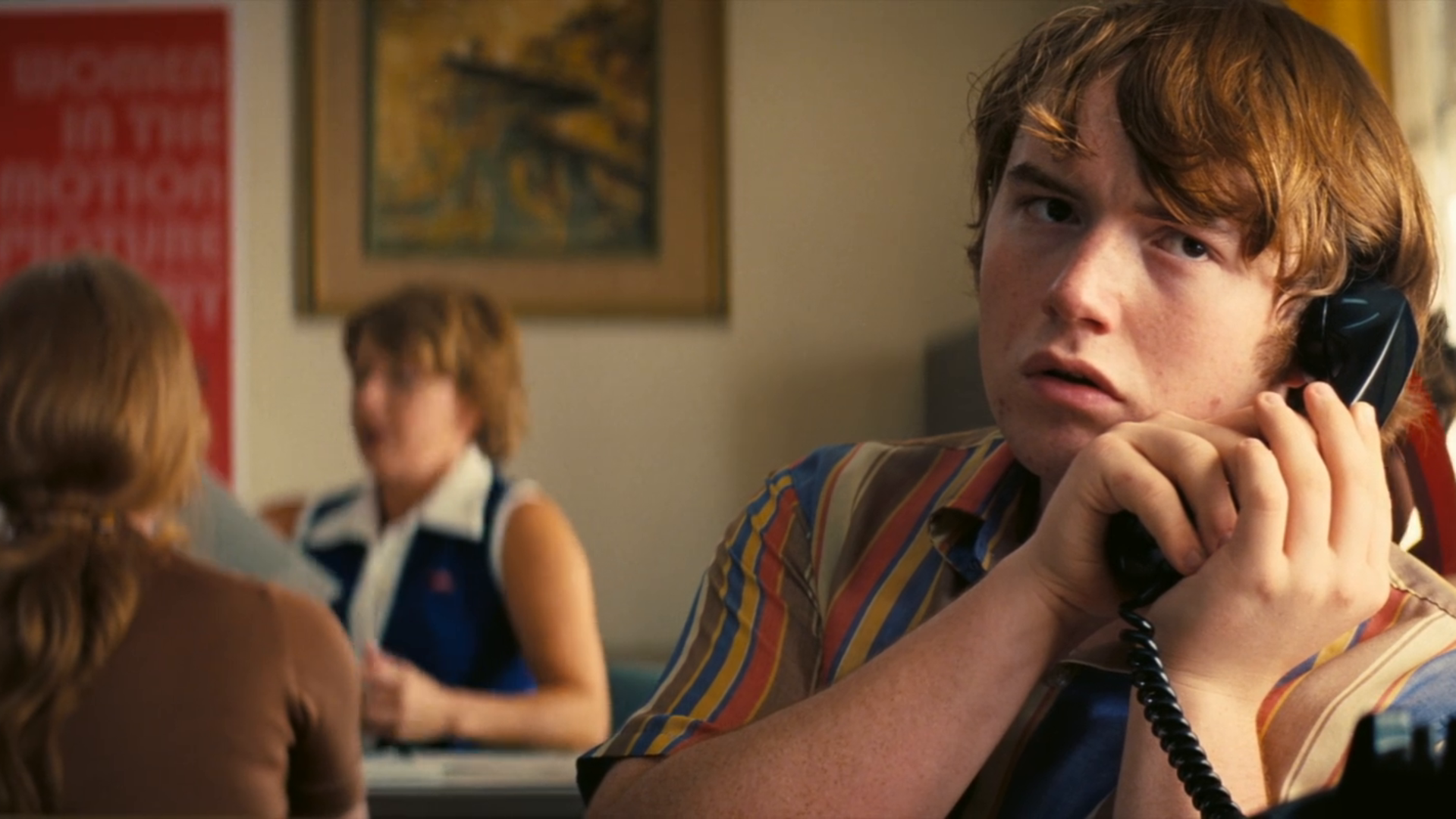
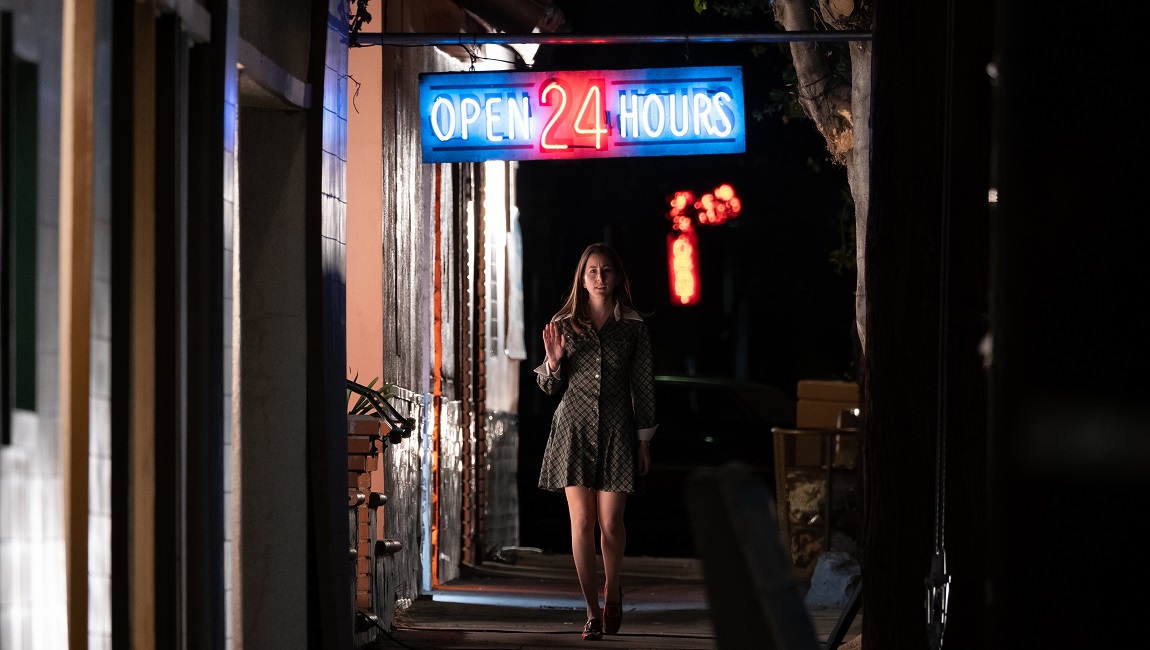
ONE BATTLE AFTER ANOTHER B USA (161 mi) 2025 70mm d: Paul Thomas Anderson
Time doesn't exist, yet it controls us anyway. —Comrade Josh (Dan Chariton)
Another revisiting of the 60’s counterculture movement, like Haskell Wexler’s Medium Cool (1969), Antonioni’s Zabriskie Point (1970), Howard Alk’s The Murder of Fred Hampton (1971), Sidney Lumet’s Running On Empty (1988), and Olivier Assayas’ 2012 Top Ten Films of the Year: #7 Something in the Air (Après mai), where cries of revolution are in the air, kind of a throwback to the Weather Underground and the Days of Rage, including a 2015 book by Bryan Burrough, offering a fictional counterpart to Weatherman radical couple Bill Ayers and Bernardine Dohrn, who according to Burrough was something of a revolutionary sex symbol in miniskirts and knee-length boots back in the day, yet for all their chutzpah, little was actually achieved, as liberalism’s postwar peak ushered in the era of Richard Nixon, moving the country to the right. Only a very few have accurately portrayed the movement, where the decade of the 60’s has not translated well into the mainstream, as it remains something of an enigma in American history. According to the director, an artistic descendent of Robert Altman and Jonathan Demme, he had a 20-year obsession to make this film, adapting a combination of car chase movies, female revolutionary figures, and Thomas Pynchon’s 1990 postmodern fiction novel Vineland set in California during the year of Ronald Reagan’s re-election in 1984, where the remnants of 60’s radicalism and government paranoia from the Watergate fallout of the 70’s undercut daily life, yet somehow it’s been updated to the present, holding a mirror to our current reality. Courageously standing up to fear in her lifetime, according to singer and civil rights activist Nina Simone, true liberation means being free from all forms of fear and oppression, which she viewed as a sickness in society, or as one character expresses in the film, “The message is clear. Free borders, free bodies, free choices, and free from fucking fear.” That is the subject this film addresses, where it’s Anderson’s most expansive film yet, exploring and exposing the darkness of America, with the director imagining just what happens in the disillusioning fallout when the revolution fails and members under pressure collapse upon themselves. Listed as the #1 film of the year on Letterboxd, 130 tickets were sold for an afternoon matinee in the only theater within a hundred miles capable of screening 70mm films, where the word of mouth on this film is through the roof with hyperbole, some indicating it’s the filmmaker’s best film, or the best film of the year, even described as the film of our time, where the audience was howling with laughter throughout the entire film. The problem is the film features white supremacists whose racial hatred drives their political agenda of hating migrants and people of color, as it stains the “purity” of the country, yet they’re also incredibly stupid and played for laughs. Somehow, that just doesn’t seem like a laughing matter, however cartoonishly absurd it is presented, combining farce, black comedy, family drama, and surrealist elements, as the film is crazy scary about what’s happening in the present, with the government overextending their reach, with a militarized police force conducting raids in immigrant neighborhoods, smashing car windows, breaking down people’s doors, pulling children out of bed and zip-tied, raiding official places of business, slamming people to the ground, manhandling and herding people into prisons like cattle, denying their rights, even sending them to overseas supermax prisons, and believing the worse their own official behavior, the better example it sets, as they want to send a message that “these people” are not welcome here. Much of this plays out like a MAGA wet dream, so you can see the problem with the laughter here, as the film simply adds no depth to any continuing exploration of the racism, social justice, and immigration issues that are currently tearing apart the fabric of the nation, where the one-sided worldview is too often characterized as overly naïve, where people who are actually in these dire predicaments may find it difficult to laugh at the absurdity of it. Rather than creating full-fledged characters, mostly these are stereotypical caricatures, a collection of broken idealists and monstrous zealots, where the world already has enough problems from stereotyping, especially with people of color, so this only adds and contributes to that age-old historical negligence. Instead of being horrified at the tragic turn of events in this country, with the creeping threat of fascism and white supremacy mirrored by what we see onscreen, viewers were breaking out in applause. One must say that just a decade ago in the era of Obama, audiences probably wouldn’t be laughing at something like this, so something has drastically changed in the minds and hearts of contemporary viewers, younger perhaps, and less conscientious. It’s probably a cliché to suggest times have changed, but they really have, almost overnight, where the established norms and laws have been manipulated to suit the government’s own despicable political agenda, with Anderson provocatively envisioning a society already in captivity, with a group of ragtag revolutionary guerillas attempting to disrupt the authoritarian regime through a series of random bombings and bank robberies. For a big budget movie, it’s surprisingly experimental, where it’s meant to be chaotic and all over the map, taking chances few others would take, like an arthouse movie, but that is counterbalanced by an old-school reliance on box office stars who are, as they say, bankable.
The film is dedicated to Adam Somner, the legendary second unit director of Anderson’s 2018 Top Ten List #10 Phantom Thread (2017), and producer of 5 of his last films, who died last year in November. Among the most important contemporary filmmakers, in tune with current events, this is his most commercially accessible and expensive production to date, creating an arthouse version of a blockbuster, loosely inspired by the frenetically paced Mission Impossible and Terminator movies, with an over-the-top PR ad campaign that produced the biggest box office opening of his career. Anderson has adapted Pynchon before with Inherent Vice (2014), which was kind of a stoner roller coaster, film noir, private eye romp, which exists in conversation with this film, as there is a palpable sense through the marijuana haze that we are watching the end of an era, with Pynchon evoking the passing of the counterculture, where free love slips away and paranoia creeps in, depicting what seems to be the official end of the 60’s. Like watching the pendulum swing to the extreme opposite end of the spectrum, with its caricature of hyper-materialism, this era was ushered in with Mary Harron’s scathing social satire American Psycho (2000), a film that could make your hair stand on end with its surreal take on the empty universe of decadence, excesses, rampant consumerism, and exaggerated hedonism. Pynchon’s novel takes place in a similar bizarre alternate reality, one where a group of student radicals choose to secede from California in the 1960’s to create their own free territory, declaring independence from the United States, celluloid revolutionaries who use film to expose fascism, while the federal government takes the War on Drugs quite literally, providing a satirical commentary on America’s shift from the 60’s to the 80’s. It is in this vacuum that we find ourselves in contemporary times, with the film depicting the lengths that people are willing to go in order to derail the inhumane autocratic power that only wants to amass more unfettered control over the country, highlighting a culture of fear and repression, where the powers that be would like you to think that the 60’s never happened, as progressive social values like racial tolerance and women’s rights are viewed not only as irritants, but crimes where its advocates need to be locked up and eradicated from society, regressing to a time when whites-only ruled unhindered by outside pressures or influences. The backlash from the socioracial turmoil of the 60’s led to a so-called War on Drugs in the 70’s and 80’s, which was really an excuse to lock up people of color in record numbers, where by the late 1980’s, blacks (who comprise just 14% of the population) constituted the majority of prisoners for the first time in U.S. history, with the government targeting them exclusively with higher penalties while pretty much giving whites a pass for the exact same crimes. In much the same vein, we have a newly elected President who has targeted immigrants with crimes, yet whose own failed attempts to remain in office following his 2020 election defeat led to charges of election interference, compounded with criminal charges of illegally retaining classified documents once out of office, and a conviction on 34 felony counts for falsifying business records in connection with a payoff to a porn star to avoid a potential scandal prior to the 2016 election, becoming the first convicted felon to become President. That in itself is unique in American history, but making it even more absurd is that he was able to successfully evade prosecution by becoming president, taking full advantage of the immunity it brings. These are the times we find ourselves living in, where the rules have changed, as pending multi-million dollar fines for corrupt billionaire business practices were immediately dropped by this new administration, who also offered pardons for the criminal convictions of many of their supporters, while the President has sought to bring criminal charges against his political opposition, fully determined to crush any last remnants of the left, while also withholding federal funding for entire states that may not have voted for him — all things that are unheard of in a free country, yet that is where we find ourselves. To counter that bewildering turn, it’s the film’s liberating outlandishness that may be the most powerful message, the sheer creative freedom of Anderson’s direction, where what really matters is just how absurd, dangerous, ridiculous, and faintly hopeful the world is today, where it’s a daily struggle that requires eternal vigilance to save a flailing democracy that is besieged by the belligerent fear-mongering and ever-increasing authoritarianism surrounding immigration of today. Anderson himself is a father of mixed-race children with his partner, actress and comedian Maya Rudolph, and some of his own paternal anxieties may permeate this film, which may actually be a tribute to black women. The trailer, by the way, does an excellent job of not giving away what actually happens in this movie. The one takeaway from this film: There’s no safe place left in this world.
From the maker of Boogie Nights (1997), Magnolia (1999), Punch-Drunk Love (2002), There Will Be Blood (2007), The Master (2012), Inherent Vice (2014), 2018 Top Ten List #10 Phantom Thread (2017), and Licorice Pizza (2021), this is set in an authoritarian future America that resembles the present, yet what this film envisions is a resistance movement, something sorely lacking today, borrowing the free spirit of rebellion from Pynchon’s novel, providing an astute description of the times, recounting the heightened discord that existed between the old 60’s hippies and the new 80’s yuppies, with Anderson adding his own spin, turning darker, edgier, and even uglier, exacerbating how the political and the personal intersect, how the family dynamic is affected, while magnifying the absurdities in order to make sense out of this rapidly changing world. Like a modern day version of John Sturges THE GREAT ESCAPE (1963), a far-left underground revolutionary group calling themselves the French 75 wreak havoc in Southern California, using explosives and a carefully planned getaway to liberate hundreds of caged immigrants in a heavily guarded Otay Mesa Immigration Detention Center near the Mexican border, where the intensity is raised as the action is set to the subversive black liberation anthem of the 60’s, Gil Scott-Heron - Revolution Will Not Be Televised (Official ... YouTube (3:06). In what may be a turn-off to some people and their political allegiances, the bomb-throwing radicals are actually the good guys, like the French resistance during the Nazi occupation of France in WWII, as they’re defiantly resistant of a newly created, fascist regime that wants to eliminate all opposition in a power grab to acquire absolute control, with Anderson offering an unflinching look at where this government is heading right now, making it very clear who the villains are and what motivates them. At the center of the group are explosives expert “Ghetto” Pat Calhoun (Leonardo DiCaprio) and his beautiful sex-craved partner Perfidia Beverly Hills (Teyana Taylor, an unforgettable presence), who are revolutionaries in love, with the ferociously “black and I’m proud” Perfidia proclaiming, “Babe, let’s fuck when the bomb goes off,” taking great joy in capturing the head military officer Col. Steven J. Lockjaw (Sean Penn in a deliciously despicable role, the personification of toxic masculinity, where he’s never less than terrifying), who is something of an audaciously preening military pit bull, forcing him to endure degrading sexual humiliation, which he apparently gets off on, having a secret sexual fetish for black women, developing a special fascination with her. Easily the most pathetic character in the film, Lockjaw presents himself as an all-powerful paragon of white American masculinity, but prefers being dominated in the bedroom, especially by a powerful black woman. The irony is not lost on viewers. This love triangle of strange bedfellows forms the basis of the ensuing drama, going off on mysterious tangents and bizarre detours, offering a comedic take on the travails of the times, including carrying out the revolution with a newborn infant, orchestrating targeted bombings, including a fictional senator’s office, sabotaging power grids, until a flashy Symbionese Liberation Army style bank robbery goes wrong, quickly falling off the rails with the arrest of Perfidia, with Lockjaw leading the charge to dismantle the radical organization. Virulently racist, Lockjaw’s ardent desire to join a secret society of white supremacists called the Christmas Adventurers Club, a group “dedicated to making the world safe and pure,” mirrors the current political climate at the highest levels, as racism is no longer secret, but normalized as the official policy of the U.S. government, which continues to routinely suppress gays, women, and minorities. This is a movie about political violence that’s come out in a moment of increasing political violence, and while the characters are caught up in an endless cycle of violence to achieve their aims, it’s that same violence which drives and ultimately destroys them. Making a 16-year leap into the future, Perfidia went into the witness protection program after her arrest, but then escaped, vanishing into exile, while Pat and the newborn go into hiding in the fictional California sanctuary city of Baktan Cross, changing their names to Bob and Willa Ferguson (Chase Infiniti, positively radiant and a revelation in her screen debut). With a washed-up Bob lazily turning into a layabout alcoholic and increasingly paranoid stoner addict, burnt out in a cloud of marijuana smoke, dressed in a plaid bathrobe, deeply sunk into his couch in utter resignation, he is a mirror image of the Dude in Joel Coen’s The Big Lebowski (1998), who lives under a constant fear of exposure, and frustratingly can’t remember the decades-old underground code words, One Battle After Another Movie Clip - What Time Is It? (2025) YouTube (52 seconds), while the biracial Willa becomes the new center of the story, as she’s athletic, innovative, self-reliant, and speaks her mind. Honestly, she’s like a breath of fresh air in this picture, still young and vibrant, with a future ahead of her, and a force of sheer will and determination.
Considering that the film was conceived several years ago and was completed before Trump took office (I’m guessing this film won’t be shown in the White House), Anderson is merciless in his flamboyant depiction of a totalitarian clampdown, expressed through government raids, brutally aggressive approaches to deportation, and recklessly corrupt law enforcement, which all feel unnervingly prescient for present-day America, offering a scathing depiction of what goes on behind the scenes, fueled by an equally underground Christmas Adventurers Club, a shadowy cabal of hate mongers which is a more futuristic version of the Ku Klux Klan, the oldest and most infamous American hate group, where targeted murders of undesirables have replaced hundreds of years of lynchings, where Lockjaw is desperate to prove his worth to the neo-Nazi elites he so admires. While the film blatantly rejects the rising tide of tyranny, it’s not exactly a call to arms against the Trump administration, who are never named, and while it’s the most political film Anderson has ever made, his message isn’t, as it simply provides the backdrop for the story he wants to tell, where the heart of the picture is really a father/daughter movie, becoming more personal than political. Anderson reshapes an abstract paranoid and fractured narrative that remains unpredictable, where the key characters are morally complex, often making questionable choices, merging the sympathies of the French 75’s into the values of the immigrant community in Baktan Cross, led by Sensei Sergio (Benicio del Toro), who is also Willa’s martial arts instructor (the actress is a trained kickboxer), heard offering his own philosophical mantra, “Freedom: when you have it, you don’t appreciate it, but when you miss it, it’s lost,” which may as well be the central premise for the film. Calmly seen evacuating a stream of Latino immigrants through a hidden tunnel while under fire from Lockjaw’s small-town SWAT invasion (stormtroopers operating without government oversight), he’s a man of many hats, also seen helping Bob escape on several occasions (“Don’t go dark on me, Bob”), where he is the true patriot and revolutionary, as opposed to Bob who by this time only has fond memories of being one, One Battle After Another | Exclusive Film Clip YouTube (2:02), ironically seen watching Gillo Pontecorvo’s epic colonial resistance movie The Battle of Algiers (1966) on TV. Of interest, del Toro previously worked together with Sean Penn in the Penn-directed film The Pledge (2001), also in Alejandro González Iñárritu’s 21 GRAMS (2003). In order to solidify his chances of obtaining membership to the Christmas Adventurers Club, the maniacal Lockjaw has to wipe out evidence of his own racial mingling, so he targets and kidnaps Willa from her school, conducts a DNA test to prove blood relationship, and then passes her off to a like-minded compatriot for elimination. Meanwhile, Bob is on his own desperate journey to find and save her, but the years have taken their toll, and he’s a pathetic excuse of who he once was, but he’s persistent and fights through his obvious limitations, with Anderson mixing a whirlwind of comic absurdity, suffocating paranoia, and frantic action. But the real focus is on Willa, who becomes a fully formed character, where her spirit uplifts and infuses the film with needed energy, culminating in a daring escape from her kidnappers and a harrowing, super-charged car chase sequence shot moving up and down the rolling hills of an isolated desert region that may give some viewers motion sickness due to the extraordinarily intense way that it is filmed, with the camera literally placed directly on the car bumper as we see the constant lifting and lowering of the road. Shot on 70mm VistaVision by Michael Bauman and Anderson, collaborating as they did in Licorice Pizza (2021), the only other film this century using this format other than Brady Corbet’s The Brutalist (2024), where the lengthy sequence is beautifully fueled in its entirety by the percussive, piano-heavy score of Jonny Greenwood, reminding viewers of the sophisticated, cool under pressure Steve McQueen in Peter Yates’ Bullitt (1968), whose muscle car went up and down the steep hills of San Francisco. For a subversive film filled with dark pessimism and deep-seeded negativity, where cruelty lies around every corner, there’s a surprisingly optimistic and open-ended finale that’s almost cheery, as the cyclical nature of resistance passes from one generation to the next, picking up the pieces of what’s been left behind, as the fiery spirit of Willa’s ghost for a mother is passed on to her, where the question of who gets to write history is left ambiguously open. Maybe 35 years after the story was published, eloquently capturing the desolate beauty of a dystopian America, we may finally be living in Thomas Pynchon’s world.