|
| Director Oliver Hermanus |
 |
| Director on the set with actor Paul Mescal |
 |
| Hermanus, Mescal, and Josh O'Connor |
 |
| Author and screenwriter Ben Shattuck |
 |
| writer's studio |
THE HISTORY OF SOUND B+ Great Britain USA Italy Sweden (127 mi) 2025 d: Oliver Hermanus
The history of sound, lost daily. I’ve started to think of Earth as a wax cylinder, the sun the needle, laid on Earth and drawing out the day’s music – the sound of people arguing, cooking, laughing, singing, moaning, crying, flirting. And behind that, a silent sweep of millions of sleeping people washing across the Earth like static. —The History of Sound, by Ben Shattuck, 2018
Among the better films at making us feel what the characters are feeling onscreen, yet what’s most surprising is how this is communicated — through listening, through singing, and through silences. Emotionally compelling in a very unorthodox way, an extremely delicate and quiet picture that wanders endlessly, taking many detours along the road before a stunning finale that is simply outstanding, making one realize that the entire film has been about collecting moments and personal experiences, which are simply a reflection of what we were doing at the time, but they are substantially more than that over time, as they become the defining moments in our lives, precious and unsullied, where a collection of small, seemingly insignificant points in time amount to so much more upon reflection, when we’ve had a chance to evaluate how much they mean to us. Death can be a trigger, as it mercilessly cuts us off from these moments with a brutal decisiveness, where the lingering sadness has decades-long consequences. We’re so accustomed nowadays to accessing any song at any given moment, it’s easy to forget there was once a time when songs existed only in memory or on paper, passed from generation to generation as oral or written histories. It’s amazing the power of this picture, which is not for everyone, as it may be too slow, quiet, and introspective for some to actually connect, as no one is making films like this these days due to shifting attention spans, where people who are on their phones all the time may simply not appreciate what it offers, as it requires patience, and represents actual human contact with all that entails, trusting the audience’s imagination and intelligence without over explaining anything, so it’s like a time traveling trip into an old-fashioned past, allowing us to draw our own conclusions. Made by a gay South African filmmaker, where it must be noted that South Africa is not exactly a juggernaut in the film industry. Raise your hand anyone if you can name even a single South African filmmaker. Most cannot. Cape Town-born Oliver Hermanus is a filmmaker acclaimed for his sophisticated, character-driven films that are thought-provoking, richly textured, and visually striking, exploring themes of identity, repression, sexuality, and the essence of longing. So this is an unexpected pleasure, as this film is more than the sum of its parts, a poignant reminder of lost love, reminiscent of Brokeback Mountain (2005), where it makes you wonder how do you tap into that same depth of feeling? Offering a poetic reflection on the ephemeral quality of sound and how our experiences, even the most impactful ones, are constantly fading into the background, leaving only a faint trace behind. This encourages us to appreciate the present moment and the sounds that surround us, as they are constantly being lost to time, exploring the passing of youth, “I always feel like I’m at the end of something,” and the deep regret of not staying with your first love, examining how the past is often misunderstood and how history can reverberate in our lives. While many may not agree, perhaps feeling the material is overly constrained, arriving in mostly empty theaters with little fanfare, this is actually one of the better films of the year, transporting us to New England, Rome, and the English Lake District of the UK, where the finale is poetically sublime, with soaring, elegiac orchestral music that plays over the end credits.
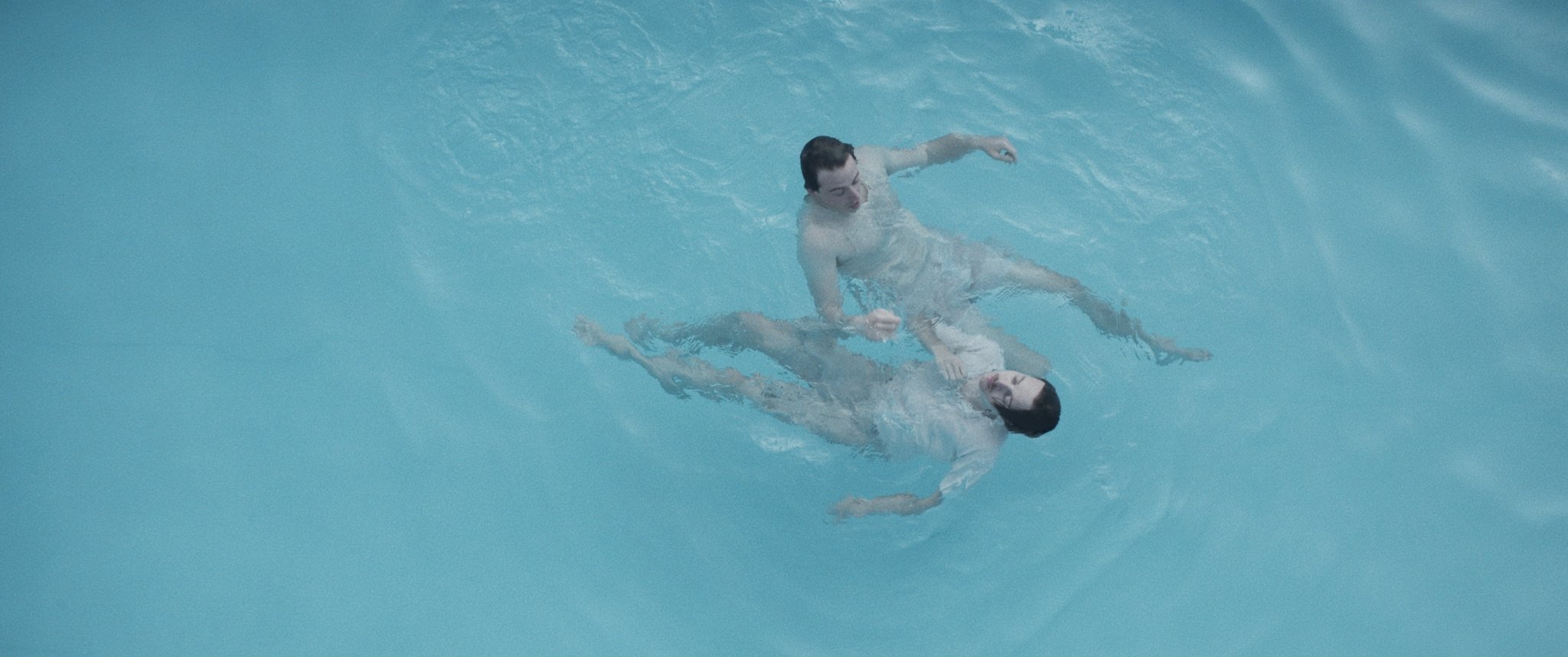
Adapted from a superlative short story by Ben Shattuck, The History of Sound, part of an interconnected anthology of short stories that are an ode to New England, rooted in New England landscapes and culture, where each story has a companion story that contains a revelation about the previous, paired story, winner of the Story Prize Spotlight Award in 2024, with the director claiming he “was drawn to the wisdom of it.” Shattuck also wrote the screenplay for the film which premiered at the Cannes Film Festival in 2025, where it received a nine-minute standing ovation, yet it was among the lowest rated films in competition, Cannes Film Festival 2025 jury grid. Described by the director as “a love letter to the films of the ‘90’s,” featuring intelligent yet accessible romantic epics, like Robert Redford’s A RIVER RUNS THROUGH IT (1992), Edward Zwick’s LEGENDS OF THE FALL (1994), or Anthony Minghella’s THE ENGLISH PATIENT (1996), films that he acknowledges “don’t exist anymore,” yet older viewers may appreciate. This is a story of first love, with an early scene in 1917 before the war setting the stage for what follows, as music student Lionel Worthing (Paul Mescal), who discovered he had perfect pitch and music-based synesthesia where he could see colors as a child while growing up on a dirt-poor farm in Kentucky, earns a scholarship to the prestigious New England Conservatory in Boston where he meets fellow student David White (Josh O’Connor) in a crowded pub. Lionel is seen leaving the table of friends he’s with after hearing the soft voice of someone sitting at the piano, quickly introducing himself, discovering both share a passion for folk music, with Lionel recognizing the song David was singing, which takes him by surprise, as David is a collector of obscure songs, quickly turning the tables by asking Lionel to sing a song that David had never heard of, which turns out to be Silver Dagger, Joan Baez - Silver Dagger (live 1965) YouTube (3:02), immediately falling in love with him right there on the spot, leading to a passionate yet carefully concealed affair, The History of Sound Movie Clip - Singing Love Songs (2025) YouTube (2:11). There’s never any building tension or suspense about whether or not it might happen, as right from the start we know that this is happening. Initially we might think this is an Andrew Haigh film, the gay British-born maker of Weekend (2011), 45 Years (2016), Lean On Pete (2017), and 2024 Top Ten List #2 All of Us Strangers, as it has that lustful male stare that leads to gay sex, but this filmmaker is not interested in that, showing nothing sexually, instead expressing the intimacy of the aftermath, content to show the couple snuggling, where he’s fond of filming bare backs, and the many questions asked the morning after, Love Songs Scene | THE HISTORY OF SOUND (2025) Movie ... YouTube (3:52). Then it veers in a completely different direction, one that few could see coming, becoming, in a sense, a historical road movie, wandering between different spaces and time periods, as it recalls the exploits of Alan Lomax, an American ethnomusicologist, best known for his numerous field recordings of folk music during the Depression and throughout the 20th century, songs existing in many versions, passed down orally through generations rather than written on paper, sung and written by everyday people, songs that are part of a living culture, where Lomax was the leading expert in the important role of preserving folk music traditions, which he obtained by traveling around the country with his portable recording device and taping obscure artists that represented different geographical regions of the United States, recording songs that might otherwise be lost, much like Béla Bartók did collecting old folk melodies in Hungary, or the chronicling of Polish folk music in Pavel Pawlikowski’s Cold War (Zimna wojna) (2018).
David is marked by the early loss of his parents, growing up with his uncle in England, but he refuses to speak about the pain, and instead sings a ballad, explaining the song is a story of two lovers lost in the woods on a January night, having run from their homes to meet by an oak tree to then elope. A blizzard comes, and they can’t find each other. In the chorus they call each other’s names, but the wind shakes the trees so loudly that they can’t even hear their own voices—so they die alone, huddled under separate trees:
Over snow’d floor two tracks did mark One going west, the other east Two still figures at trees’ roots On a dead winter’s night, they never meet.
There is a literary aspect to the film, complete with an eloquent narration that cuts in, which turns out to be the voice of Chris Cooper, an older version of Lionel looking back at his life with a melancholic nostalgia. This film is only as good as the actors who carry it, and they are both superlative in their roles, Mescal (doing his own singing while evoking a Kentucky accent) from 2023 Top Ten List #7 Aftersun (2022) and 2024 Top Ten List #2 All of Us Strangers, O’Connor from 2024 Top Ten List #5 La Chimera (2024) and Challengers (2024). It’s surprising the effect the deep past has on the present, as the farther back in time you go, the more contemporary life you have to strip away. Gone are the cell phones, emails, and cars, trains, lightbulbs, antibiotics, newspapers, and so on, where what it comes down to is two people sitting in a room, exploring their relationship and the feelings they have about each other and themselves. Yet people from the past, are very much like ourselves in the present, not that distant or far away, as we’re all part of the shared human experience. What this film does is strip away everything else, and leave it down to these two main characters, following their routines at different periods of their lives, which has a profound effect on viewers sitting in a theater, as the emotional sweep of their lives leaves an impact. It’s almost a musical, based upon the massive amount of songs that are sung, but these are academics intent on recording the indigenous songs passed down by families through generations, preserving their authenticity before being forgotten in the dustbin of history, taking us on a journey we might otherwise miss. For a queer love story, this is an unexpected way of going about it, as it perversely denies our expectations of what we think a gay romance could be, as the grand sweeping gestures combining societal repression and latent desire of Brokeback Mountain are nowhere to be seen, and anyone expecting to find it will be disappointed, as this is not that film, where the lack of explicit sex has drawn criticism, but the filmmaker is instead far more concerned with the artistic connection and the private, almost sacred interiority of desire as we follow these two young lovers through America’s hidden regions and eventually into Europe for much of the atmospheric expanse of the movie. Though never as easygoing with people as David, Lionel has a deeper inner resilience, featuring plenty of hiking and backpacking together through Maine, following Robert Frost’s The Road Not Taken, collecting songs from local people that they record on wax cylinders while camping under the stars, becoming a masterclass on understated emotions. What’s missing are the stories of the voices they are hearing, whether it be Irish immigrants or descendants of black slaves, such as Thankful Mary Swain (Briana Middleton) on Malaga Island singing Here in the Vineyard YouTube (3:37) as their small, biracial community is about to be forcibly evicted by authorities ("Malaga, revisited: On a Casco Bay island, a shameful incident in Maine's history comes to light"), yet those lives remain invisible, even as we see them onscreen. Equally mystifying is how Lionel is blind even to the needs of his own family, who he’ll leave in an instant, irrespective of the consequences, as the music he hears in his head seems to simply be plucked from any given moment. Away from the rest of the world, there’s nothing outwardly that suggests these men are gay, as they’re extremely careful about not revealing too much about themselves, even to each other, as they part with awkward difficulty, unable to convey how they really feel about each other, and end up spending far less time together than they do apart, each filled with suppressed longing.
“My father said it was a gift from God that I could see music,” opines an older Lionel played by a wistful Chris Cooper in 1980, delivering a searing emotional monologue in the film’s final scenes, as he transforms Lionel’s ear for sound and music into a kaleidoscope of internalized emotions. What’s clear about this film is that it’s seen through Lionel’s eyes, the emotional center of the picture, almost like an Éric Rohmer film, as the David we see is how Lionel remembers him, a young kid going off to war, coming back without much to say about it, filled with hidden secrets that he only later learns about, where the trek through the woods to collect songs one summer unites them for a brief moment in time before returning to their normal lives in the fall, as they’re off again in pursuit of different careers, Lionel to Rome and then to Oxford as an established professor of music, while David has a position at Bowdoin College in Maine, with Lionel staying in touch through letters, but eventually stops as he receives no response. He pursues a few relationships, a young European protégé in Rome and a girl in Oxford, Clarissa (Emma Canning), who brings him home to meet her parents, but in each case he leaves unexpectedly on bad terms, consumed by an aching loneliness with memories of David swirling in his head, always viewed as that special someone who got away, perhaps more than he could contain, yet David’s absence is especially noticeable. While there are brief glimpses of his life in rural Kentucky, with its vast landscapes, beautifully shot by Paul Schrader’s regular cinematographer Alexander Dynan, it’s not really a place he would call home, as there’s nothing left there for him after his parents die. With a musical score composed by Oliver Coates, who also composed the music for 2023 Top Ten List #7 Aftersun, arrangements by Sam Amidon, perhaps the most riveting musical moment, purely by the contrast it offers to the wall-to-wall folk music, happens when a brief snippet of Joy Division’s Atmosphere (2010 Remaster) YouTube (4:09) can be heard, like the voice of David calling out for him, “Don’t walk away, in silence,” beckoning him to return back to America, which he does, but things have changed more than he anticipated, as what he discovers adds to the layers of mystery that envelop this film, like low-lying fog, where it’s hard to see through the mist. It’s beautifully rendered, a quiet portrait of love steeped in regret, filled with all the yearning, joy, and pain that love entails, keeping an emotional distance from its own heart, where few films offer the gravitas of this film, with a grown-up Lionel acknowledging he was “never happier than when collecting songs,” painfully evoking a time when gays living in the closet was the norm, where you couldn’t just come out and acknowledge that, though Lionel remembers “I didn’t experience the guilt that some men in my time would have. I just loved David and I didn’t think much beyond that.” Painfully reflecting on his own interior life, where the sting of David’s haunting absence only makes the heartache grow larger over time, having difficulty emotionally connecting with the world around him, the film is a brutal reminder of the past, as so much has simply vanished over time, including a huge part of himself, enveloped by tender memories that disappear all too quickly as well, playing out like a ghost story, urging viewers to connect with the small beauties that exist everywhere.