 |
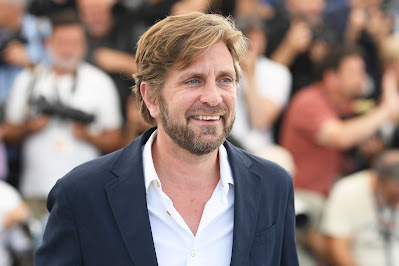
Director Ruben Östlund
|
 |
Östlund with Woody Harrelson
| | | |
TRIANGLE OF SADNESS (Sans Filtre) C- Sweden France
Great Britain Germany Turkey
Greece (147 mi) 2022
‘Scope d: Ruben Östlund
No, it’s not very
complicated. It’s not OK to exploit
another human being and pay them a s*** salary.
And it’s not OK to make a huge profit, using other people. It is
that simple. —Ruben
Östlund defending his film in an interview from The Independent, Triangle
of Sadness director Ruben Östlund interview
Something has shifted in the cinematic priorities of this
director as his films have become more prominently featured in film festivals, playing
exclusively to the festival audiences, offering them smug satires on the rich
and famous, allowing them to giggle with delight at the thought that someone is
making fun of them. It’s the European
answer to Hollywood, where the Academy loves to reward films that comment on
the industry itself, as if they need something to signify their sense of self-importance
in the world, existing in a universe that typically revolves around themselves.
Östlund has gone from making small
sociological observations that were largely nondramatic experiments with
non-professionals, low-budget films like INVOLUNTARY (2008) or Play (2011),
where the latter was particularly provocative, but were seen by very few around
the world. The worldwide critical
acclaim for Force
Majeure (Turist) (2014) changed all that, becoming an international
breakthrough leading to much larger budgets, where his observational films have
become festival spectacles, social media events, with audiences reveling at the
way the director mocks contemporary society, developing a preoccupation with
the upending of hierarchical social constructs, chastising the art world in The Square
(2017), a wicked satire which won the Palme d’Or at Cannes, with a rollicking
finale that made audiences squirm in discomfort, though does anyone actually
remember what it was about? And now, as
the new media darling, he’s become a Barnum & Bailey showman, returning
with another ostentatious parody of cultural self-infatuation, with its rush for
instant stardom from social media postings on Instagram, YouTube, Twitter, TikTok,
or Facebook, where taking selfies dominates the landscape. As he twists the knife with savage takes on
society’s latest misadventures, his sneering tone may be a comic delight to
some, a welcome reprieve from the safety of convention, yet it may be crudely
discomforting to others, particularly the gloating relish of Östlund’s smug,
self-satisfaction, where what interests him is structural irregularities,
placing the square peg in the round hole, a rationale that doesn’t exist, but
his calculating theatrical expression depends upon it. Constructed like a lab experiment, his comedy
of Marxist farce and mocking contempt feels shamelessly pretentious, a
sadistically overblown burlesque featuring thoroughly unsympathetic characters. The problem with this kind of film is the
utter superficiality of tone, where its featured topic du jour may be passé by tomorrow, so what are we really left
with? That, in itself, may well be the
film’s defining legacy, an empty charade of obnoxiousness taken to the extreme,
throwing caution to the wind with grandiose hyperbole, where posterity is an
afterthought. My guess is people won’t
remember this film either. Let’s not
forget the Cannes Film Festival is set along the glamorous beach resorts of the
French Riviera, the prestigious Côte d’Azur, and is the annual setting for
celebratory, invitation-only VIP parties for the jet-setting, superyacht crowd
in black-tie tuxedos and chic evening dresses, featuring celebrities,
photogenic supermodels, and some of the richest people on the planet, where
Jury President Steven Spielberg actually watched many of the festival films
aboard his own prized superyacht, and that a Cannes Jury awarded the Palme d’Or
to William Wyler’s FRIENDLY PERSUASION in 1956, a largely forgotten war film, overlooking
Bergman’s The
Seventh Seal (Det sjunde inseglet), Bresson’s A
Man Escaped (Un Condamné à Mort s'est échappé), and Fellini’s NIGHTS OF
CABIRIA, with Bergman and Bresson never receiving the top prize, which is hard
to fathom.
There isn’t a single authentic phrase uttered anywhere in
this entire film, turning this mostly into nonsense, with some of it borderline
unwatchable, becoming a venture into a grossly exaggerated and supremely
artificial reality, creating a sociological dilemma that isn’t remotely
authentic, with a contemptuous degree of overkill that can be brutal, where we’ve
seen this sort of film made before in Lina Wertmüller’s Swept
Away (Travolti da un insolito destino nell'azzurro mare d'agosto) (1974), an
equally polarizing class exposé that shocked the feminist movement at the time,
yet remains a substantial upgrade over this wretchedly awful film. The irony is it’s not nearly as hilarious or as
culturally impactful as Marin Ade’s 2017
Top Ten List #2 Toni Erdmann, which was overlooked and completely neglected
at Cannes that year, receiving only a Fipresci prize, though it was the most
powerful film of the entire festival, and arguably the best non-winner of the
entire decade. Moving from a ski resort,
the contemporary art world, and now to a luxury cruise, this new film takes the
cake for being grotesquely overrated, a disservice to the other filmmakers who
made better films, though the cinematography by Fredrik Wenzel employs
Haneke-like precision in his compositions, but Östlund has become a festival
darling, awarded a second Palme d’Or at Cannes, while a director as formidable
as Krzysztof Kieślowski never even received one, placing him in exclusive
company, joining the ranks of Francis Ford Coppola, Michael Haneke, Shohei
Imamura, Bille August, the Dardenne brothers, Emir Kusturica, Alf Sjöberg, and
Ken Loach, while also receiving an 8-minute standing ovation at the end of the
film, with his last three films all receiving awards at the prestigious Cannes
Film Festival, ending his acceptance speech by leading the festival audience in
a primal scream, a ritual he began with his first win. While his sixth feature is by far his most
expensive, it is also his weakest, as it thrives on our worst impulses, revisiting
territory already explored in Bong Joon-ho’s Palme d’or and Academy Award
winning Parasite
(Gisaengchung) (2019), yet is actually more reminiscent of the stupidly
infantile comedy of the Farrelly Brother’s Movie 43
(2013), which at the time was commonly referred to as the worst film of the
year. Any assertions that this is like
the scathing satires of Buñuel in the 70’s, as some critics have suggested, are
simply misguided, as this lacks the reflective depth and Surrealist drive “to
explode the social order, to transform life itself.” A more apt comparison might be the derisive
tone found in the outrageous social satires of controversial Serbian filmmaker
Dušan Makavejev (without the intellectualism), who irreverently skewered
authoritarianism and sexual repression. Hard
to believe this one in particular has received so much success, as the centerpiece
is an extended barfing sequence on a luxury cruise, where passengers are urged
to keep feeding themselves to avoid the ill-effects of sea sickness, so they
stuff themselves on champagne and caviar, resulting in projectile vomiting and
exploding diarrhea, with toilets overflowing, flooding the passageways, where
they are literally swimming in their own filth, a wretchedly chaotic sequence
that goes on for half an hour, where at some point it’s difficult to keep
viewing the screen, yet that is the intended result, described as the
most disgusting film of 2022 by the BBC,
while at press screenings the audience was reportedly offered barf bags,
planting the seeds of nausea and tumultuous discord, where making the film as
uncomfortable as possible is the goal.
Yet in order to film this scene, they borrowed the $250 million dollar
superyacht Christina O that once
belonged to Aristotle Onassis, who upholstered the bar stools in whale foreskin!,
catering only to the obscenely rich since 1954, including the likes of Winston
Churchill and Marilyn Monroe. While Östlund
is skewering the habits of the filthy rich, it’s a very curious tendency to rely
upon exceedingly bad taste in order to make his point, and even more mystifying
that audiences are lapping it up.
Opening with the shallow lives of fashion industry models (Östlund’s
partner is fashion photographer Sina Görcz), the story centers around Carl, Harris
Dickinson from Eliza Hittman’s Beach Rats
(2017), and Yaya (Charlbi Dean, a South African actress who tragically died
shortly after the film’s release at the age of 32), as they bicker over the
most mundane details, arguing over who pays the dinner check, turning it into a
battle of the sexes power struggle, though Carl is clearly overcome by his male
insecurities, returning to that familiar theme of toxic masculinity (his third
film in a row), bathing it in the neutrality of fake etiquette, extending the
argument well beyond the point of mattering anymore. Yet what this establishes is that they view
one another purely in economic terms, valuing who is worth more, and as a
female model, she is paid considerably more, though her value increases on the
arm of a handsome male escort, which becomes the foundation of their
relationship, and then suddenly it’s the man pleading for equality. What really matters, however, is their
superficial attraction to one another, as it’s all based on physical
appearance, the stock and trade of their industry, spending all their time
attracting followers on social media, posting pictures of themselves, exaggerating
the shallowness of a narcissistic culture that thrives on beauty, yet their
Instagram influencer status wins them a free trip aboard a luxury yacht, providing
they send photos of her posing with food that she won’t actually eat, which
will be seen by millions of Instagram followers. An exposé of wealth, privilege, and beauty, the
voyage is a veritable ship of fools, defined by the self-indulgence of pampered
billionaires, becoming an open critique of capitalism and its excesses, as the
young couple mingles with much older business tycoons whose accumulated wealth
is represented by an elderly English couple who turn out to be graciously
polite arms dealers, the utterly harmless Winston and Clementine (after Winston
Churchill and his wife Clementine), claiming their “products have been employed
in upholding democracy all over the world,” where their best-selling item
happens to be the hand grenade, lamenting the United Nations ban on landmines
has deprived them of one of their most lucrative products, making a not so
subtle dig that defense contractors are escorting us down the path to
Armageddon. While the captain would
rather stay locked in his quarters and get blind drunk than mix with passengers
that he despises, he can be heard cranking up the socialist anthem The Internationale, The
Internationale "Интернационал" - Russian Version YouTube (3:59),
every time a frazzled chief steward, Paula (Vicki Berlin), comes knocking on
his door trying to sober him up, where she is left to run the show, painstakingly
catering to the fruitless whims of their guests. A sense of entitlement is the most prominent
theme, with boring guests making the most outlandish requests, with one woman reminding
the captain that the sails are dirty and need to be cleaned. When he counters that it’s a motorized vessel
and doesn’t have any sails, she will not let it go until he finally agrees that
the sails will be cleaned immediately. This
smirking tone of absurdity defines this picture, as jars of Nutella are flown in
by helicopter just because one passenger has requested it, while another keeps insisting
that one of the personal attendants jump into the pool joining her, literally
demanding that she enjoy herself, completely disregarding whatever she may actually
need to do, and persists until the entire crew is seen taking the plunge,
acquiescing to every ludicrous passenger demand.
Östlund’s first film spoken in English (his next will be as
well), which means more viewers, it swept all the awards it was nominated for
at the European Awards, Triangle
of Sadness triumphs at the 35th European Film Awards, including Best Film,
Best Director, Best Screenwriter, and Best Actor (Zlatko Burić), where Östlund’s
defining feature is extending scenes well beyond the comfort level, which may
explain the nearly two and a half hour duration, yet what passes for a satiric
assault on the excessive indulgences of the super rich is really little more
than window dressing, never getting below the surface or offering much to say,
where lampooning the wealthy seems like an easy target. When The Square
was released, Östlund described himself in interviews as a socialist, claiming both
his parents were Swedish Communists, bragging that his mother is still active
in the Communist Party, while his brother is a right-wing conservative,
suggesting there was plenty of dialogue around the family dinner table, expressing
surprise that some of the most hostile criticism came from Libération, the French
publication founded by left-wing figureheads Jean-Paul Sartre and Serge July in
the wake of 60’s protest movements, Ruben
Östlund: ‘I worry that left-wing people misunderstand Marx’:
“They called the film right-wing
and very conservative. For me that is
interesting because they are reading the images from a sentimental place. They want a sentimental portrait of poor
people. They want more solidarity
between poor people. They want poor
people to be a community. It’s almost as if certain left-wing people have
forgotten about Marx. They have a very
upper-middle class way of thinking about poor people. That they have a community and true values. That’s bullshit! Poor people are living in a tragedy. And their awful circumstances can create bad
behaviours. I worry sometimes that some
left-wing people misunderstand Marx.”
As if to remedy that unflattering portrait, this film goes
even further, having already tackled modern art and social inequality, this
specifically targets the absurd lives of the über-elite, suggesting the wealthy
are so busy pampering themselves, forcing others to cater to their every whim,
nothing else matters, as they lose all perspective, remaining oblivious to the
needs of others, who simply don’t exist, while remaining incapable of doing
anything for themselves, as they simply pay others to do what they need. Their grotesque wealth is contrasted with the
poor working stiffs in the bowels of the ship, a METROPOLIS (1927) inspired
underworld characterized by the menial labor of cleaning workers and porters,
mostly people of color, who are never allowed to share the same space with the white
guests on the top decks, revisiting that Altmanesque Gosford
Park (2001) upstairs/downstairs scenario.
The cooks are seen tirelessly working to piped-in music of The Internationale, a fantasy of working
class solidarity, while one of the most ridiculous verbal exchanges is between
the perpetually drunken ship captain (Woody Harrelson) and Dimitri (Zlatko
Burić, wild-haired and overly flamboyant), an equally drunk Russian fertilizer
tycoon (“I sell shit,” modeled after Russian oligarch and billionaire Dmitry
Rybolovlev), playing drinking games as they trade lines quoting Karl Marx,
Vladimir Lenin, Ronald Reagan, and Margaret Thatcher, among others, pitting the
values of a Marxist American sea captain against a capitalist Russian oligarch,
each in their own way regurgitating hollow catch phrases and political slogans
that have been rendered meaningless by the utter absurdity of their drunken
rampage. Growing ever more delirious,
they co-opt the ship’s intercom system, forcing the passengers (and audiences)
to listen to this gobbledygook, extending into the surreal, reducing the
profound to sheer nonsense, as they may as well have been quoting Jabberwocky
by Lewis Carroll. By the end of the film
the roles are reversed after a mysterious circumstance leaves a few of them washed
ashore onto a deserted island, leaving a Filipino toilet scrubber (Dolly de
Leon) in command, as the privileged are suddenly at her mercy, the only one with
the skills to survive in the wild, becoming increasingly tyrannical and drunk
with power, training them to bow down and capitulate to her, turning them all
into her personal slaves, where they quickly relearn their roles in the social
hierarchy, sucking up to her for special favors. It’s a bizarre fantasy that revisits the Lina
Wertmüller theme, but expands from an oddly dysfunctional couple into a small
community, a shocking display of base human instincts, as expressed in the Darwinian
universe of Lord of the Flies, veering
into the reality TV show Survivor,
where you can be voted off the island. The
best thing to say about this film is the clever use of a musical interlude, Sonnerie de Ste. Geneviève
du Mont-de-Paris - YouTube (7:53), which by itself provides a wry
commentary through its interesting use of counterpoint. Designed as a scathing, over the top portrait
of the filthy-rich global elite, it has no politics beyond mocking extreme
wealth and power, with suggestions that all relationships are exploitive,
whether business or personal, with Östlund presenting himself as the latest
huckster and snake oil salesman selling us a bill of goods. Yet there’s apparently an audience for this
sort of thing, couched as a working class revenge fantasy, where it’s all about
payback, getting back at tyrannical bosses and powerful figureheads making all
the decisions without any of our input, always placing themselves in the most advantageous
positions, rewarding their friends, while leaving everyone else out in the
cold. There’s no denying there are
people like that, but this hollow comeuppance is not particularly funny,
drawing on standard cliché’s, where there’s no weight behind the mockery, drowning
in a garish caricature that can feel empty and exhausting instead of
exhilarating.


