








 |
| Gyllenhall (center) surrounded by Olivia Colman and Dakota Johnson |
 |
| Director Maggie Gyllenhaal on the set |
 |
| Maggie Gyllenhaal (left) with actress Olivia Colman |

 |
| Gyllenhaal on the set |
 |
| Gyllenhaal (left) with Olivia Colman and Dakota Johnson |
 |
| Olivia Colman and Jessie Buckley |
THE LOST DAUGHTER B USA (121 mi) 2021 d: Maggie Gyllenhaal
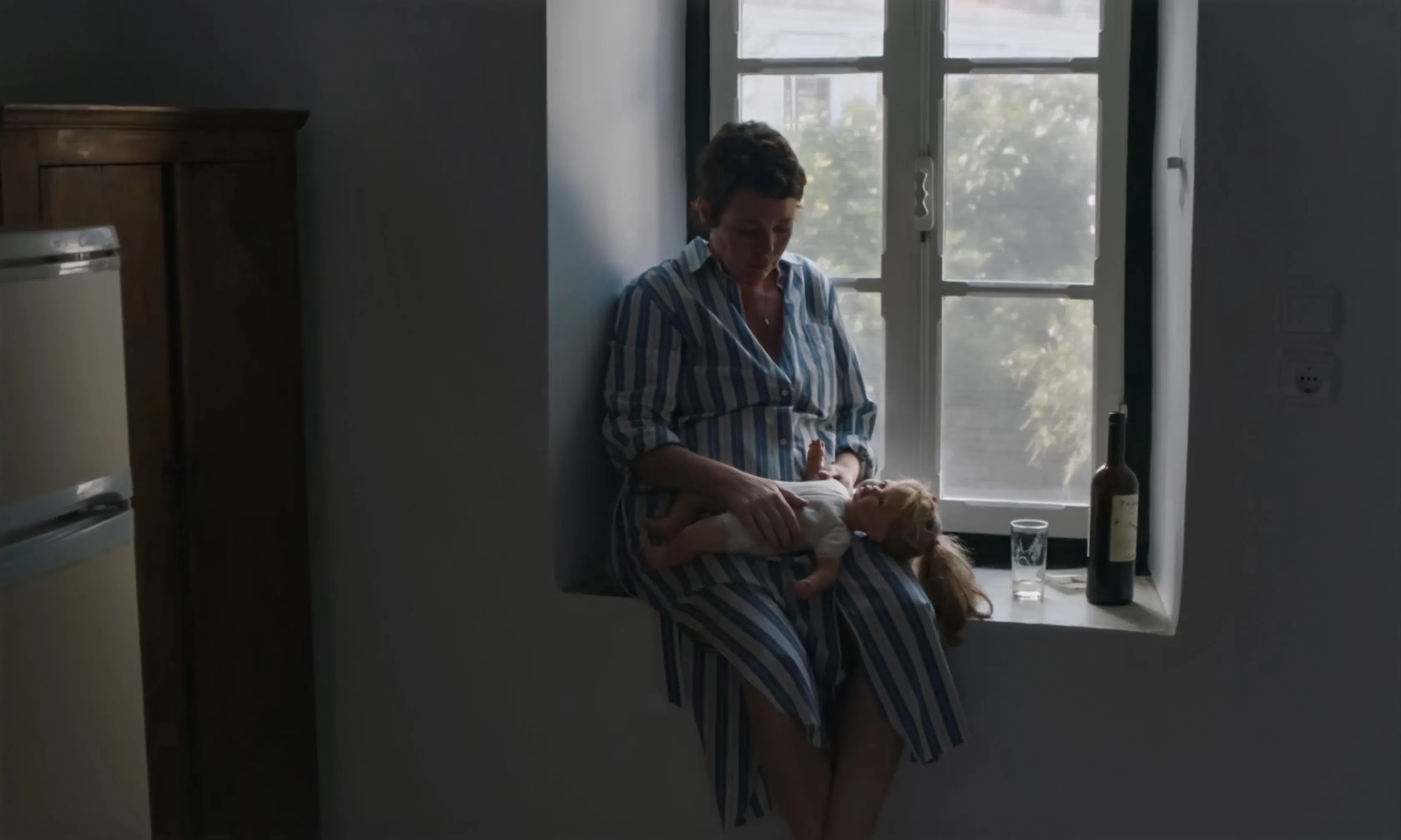
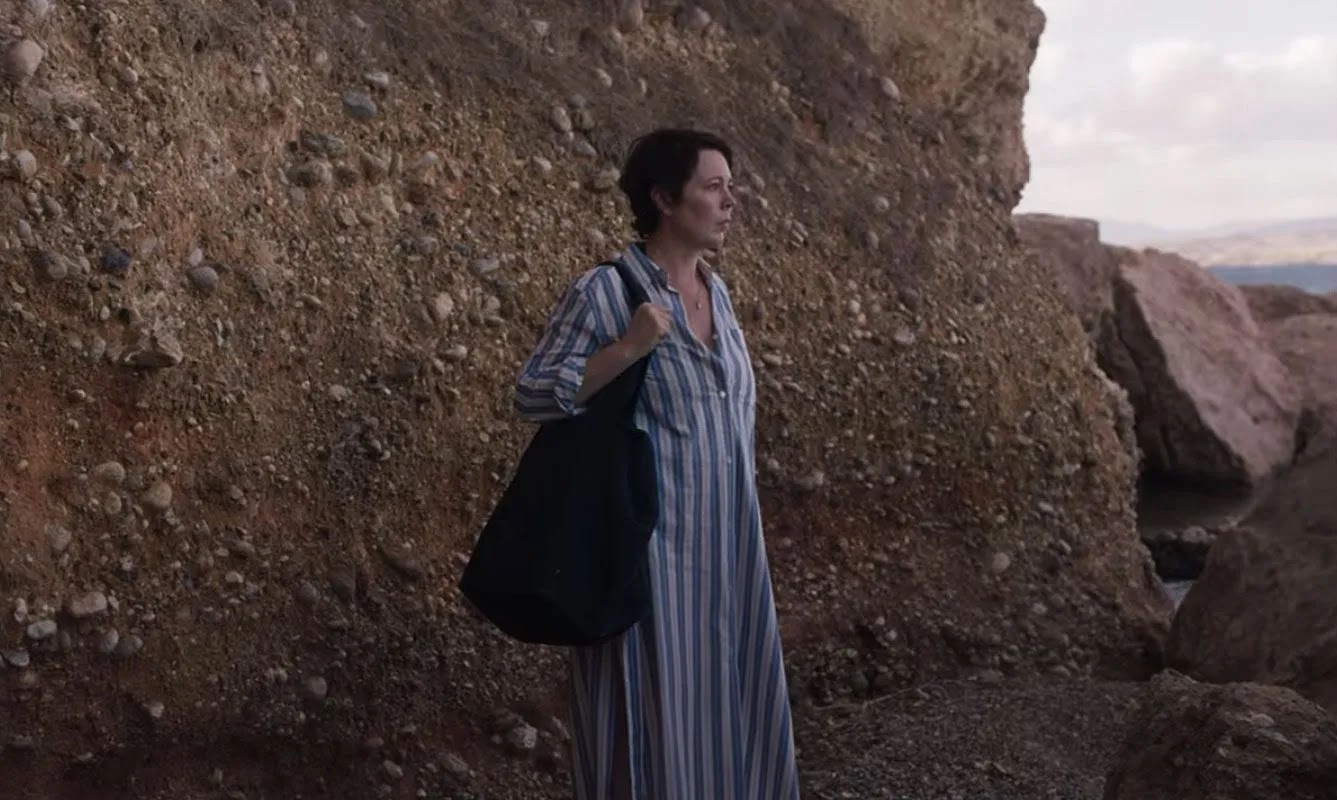
An internalized psychological trauma film that borders on horror, with Gyllenhaal, in her first directed feature, adapting an introspective 2006 novel by Elena Ferrante, a pseudonym for an anonymous author, that becomes a memory play of a Mediterranean summer vacation, as a literary professor on vacation in the Greek isles develops an unhealthy obsession with a young American mother, recalling her own difficult experiences, becoming a challenging comment on the difficulties of motherhood, which can be an incredibly hard and thankless task, particularly when it interferes with professional career choices, usually with little support from the fathers who tend to bail in these situations. For Gyllenhaal (her mother is Oscar-nominated screenwriter Naomi Foner while her father, Stephen Gyllenhaal, had a long directing career, mostly in television), this is not your typical motherhood story and an impressive filmmaking debut, winning the Best Screenplay award at Venice by adapting a first-person novel without the use of voiceovers, instead creating an internalized experience directly through the style of filmmaking, much like Eliza Hittman does with 2020 Top Ten List #5 Never Rarely Sometimes Always, a film that shares the same cinematographer. Essentially the story of a woman overwhelmed by motherhood, with traumatized memories of disastrous moments when prolonged absences took a toll on her two young daughters, one of whom was particularly affected, demanding more of her than she could give, finding it difficult to make the transition from literary scholar to mother, particularly when they feel emotionally neglected, acting out their anxieties in public, making scenes that embarrass the mother, feeling less than adequate in the role of a stressed out parent, often reduced to tears of exasperation. While many could easily overlook this film as an atypical motherhood, casting criticism and blame, yet what’s really remarkable is despite the strangeness and uncomfortable nature of the subject matter, it’s an all too common, somewhat secret experience that many women have. If it was a man, leaving their family for successful career choices would be no big deal, as society would think nothing of letting them off the hook, but when it’s a woman, they are held to a different, and higher standard, as there’s a huge amount of guilt placed on their shoulders simply because they are a woman, subject to moral condemnation, blamed for being selfish and inconsiderate, while inevitably being labeled a bad mother. This film explores the uncomfortable nature of that aspect of motherhood, causing serious internal doubt over their abilities to balance two things at once, as academic scholarship requires plenty of invested time, but so do young developing families. The entire film is told as a flashback, as Leda (Olivia Colman) a 48-year old divorced comparative literature professor with a specialty in Italian translations, goes on a working holiday to spend the summer alone with her books on a Greek island, continually lost in thought, becoming something of a voyeur, running into another woman there, Nina (Dakota Johnson), who is part of a much larger Greek-American contingency from Queens who happen to be loud and rowdy, literally taking over the beach, as if it were their own personal property, often interrupting her experiences with ugly behavior that is borderline abusive, yet what happens to catch her eye is how Nina is struggling with a difficult child that is always crying or clinging to her, apparently suffering from parental fatigue, with a husband Toni (Oliver Jackson-Cohen), who appears to be bad news, part of the overly aggressive male group that tends to be drunk and out of control, offering little help with the rambunctious child. Things take a turn for the worse when the child disappears, leading to a frantic search, discovered by Leda in a nearby woods playing by herself, returning her to her appreciative mother, opening the way for more conversations, discovering they share many qualities, but this event triggers flashbacks of her own difficult experiences as an overwhelmed young mother, taking a beach trip of her own when one of her girls went missing, generating a very curiously developing relationship with Nina, who in many ways reminds her of herself. The older/younger woman dynamic was previously explored in Ozon’s SWIMMING POOL (2003), a clash of contrasts, where an ambiguous relationship between two women turns into a tense, psychological thriller. Here, the little girl discovers her doll is missing, throwing uncontrollable tantrums that extend into several days, becoming utterly inconsolable, causing her mother unending misery and distress. Inexplicably, and perhaps without even realizing it, Leda has stolen the doll after watching the child angrily bite her doll in reaction to her parents having an argument, bringing a disturbingly perverse element to the film, reliving her own tormented experiences through that doll, yet somehow it all remains a bit baffling, as if punishing that little girl for mistreating her doll.
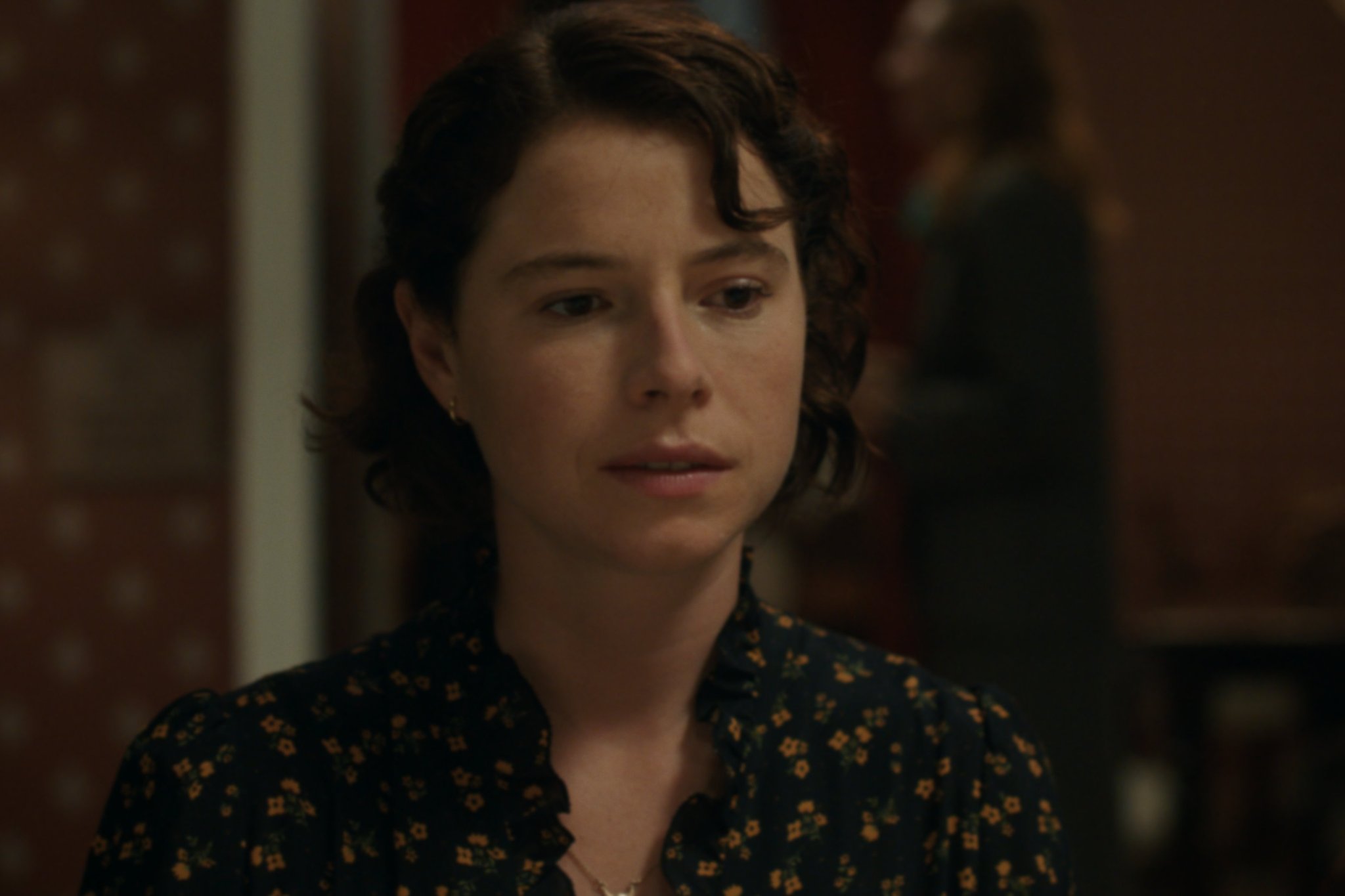
Shot in Spetses, Greece on the fictional Greek island of Kyopeli by cinematographer Hélène Louvart, who also shot the barely seen Karim Aïnouz Brazilian film 2019 Top Ten List #4 Invisible Life (A Vida Invisível), making extensive use of close-ups, expressing a great deal of intimacy, featuring an exquisite musical track by Dickon Hinchliffe, with a lead blues piano and organ score that pulsates underneath what transpires with the introductory character of Leda, Let Me Tell You All About It | The Lost Daughter (Soundtrack ... YouTube (5:00), renting a beach house while working on translations. Her character flashes back to her younger days where Leda is a PhD student played by Jessie Buckley, so good in Charlie Kaufman’s I'm Thinking of Ending Things (2020), who’s got her hands full with two young girls, Bianca and Martha, struggling to do her work with an ineffective husband, Joe (Jack Farthing), also an academic, both faced with similar demands of raising children who cry out for their attention, yet he invokes the male privilege, inherently thinking his work deserves precedence over hers, refusing to do his fair shair of parenting, believing her role is to look after the children. Under those conditions, with neither parent willing to adjust to their children’s needs, she’s unable to balance work with her children’s incessant interruptions, with suggestions that motherhood can be brutal, often losing her temper, yet she’s very proficient in her academic field. Leda is translating British-American poet W.H. Auden into Italian, impressing other scholars, one of whom is Professor Hardy (Peter Sarsgaard, the director’s husband), who she meets at an academic symposium effusively praising her work, leading to a seduction sequence where he quotes the W.B. Yeats poem Leda and the Swan to her in its entirety and in Italian, as she was named after the mythological character who was seduced/raped by Zeus in the form of a swan, where even in Greek mythology men act with impunity, while women suffer the psychological consequences. Part of the film’s intent is to recreate the uncomfortable aspects of motherhood, elevated to the extreme, with the rape metaphor suggesting dominating images with traumatic aftereffects (Leda’s offspring led to the Trojan War), as Leda fled the harshness of her family life, leaving her children for a period of three years to pursue her studies and her career, recalling her own childhood as a “black shithole,” so the appearance of the family on the beach is not just a view of aggression and a harsh reminder of maternity, but a specific recollection of the terrors of her own childhood. The film is basically a distillation of subjective memory, combining the past with the present, while creating a menacing aspect of Greek masculinity, with the men in Nina’s family providing a terrorizing presence, always viewed in a threatening manner, like a Greek chorus of male patriarchy standing in the way of any advancement of women, as evidenced by her attempts to watch a movie in a local theater, but it is constantly interrupted by vulgar remarks and comments that feel more like drunken outbursts from teenage bullies, but much of it is personal, specifically singling her out, at least this is her perception, with the director building sustained tension from her vulnerable predicament of being alone. This experience is repeated at a local dance, when she appears to let herself go, personally identifying with the Bon Jovi song, Livin’ on a Prayer, The Lost Daughter | Bon Jovi reference YouTube (2:28), perhaps reminding her of better times, but then these men make their appearance, running her away from the event altogether, basically ostracizing her from the community, reviving deep feelings of personal shame, in effect, leaving her feeling overwhelmingly disconnected from herself, excoriated in her own mind, turning her own bitterness against her, teeming with self-hatred, still unwilling to forgive herself, even after all these years,. While she is undergoing these experiences, she is also developing a mysteriously secret relationship with the doll, which actually borders on horror, as Nina has put up reward signs for the missing doll, with her daughter sick and overly distraught from its disappearance, constantly misbehaving, refusing to play with her mother, avoiding her altogether, as if shunning her, with the viewer continually perplexed by the extreme degree of cruelty that she is inflicting on an innocent child, making it difficult to empathize with her situation, yet she is the centerpiece and focal point of the film. Curiously, and perhaps thankfully, nothing is ever explained here, things just happen, yet easily one of the most chilling things we hear Leda say is “I’m an unnatural mother.” Batten down the hatches, as that will raise a few eyebrows.
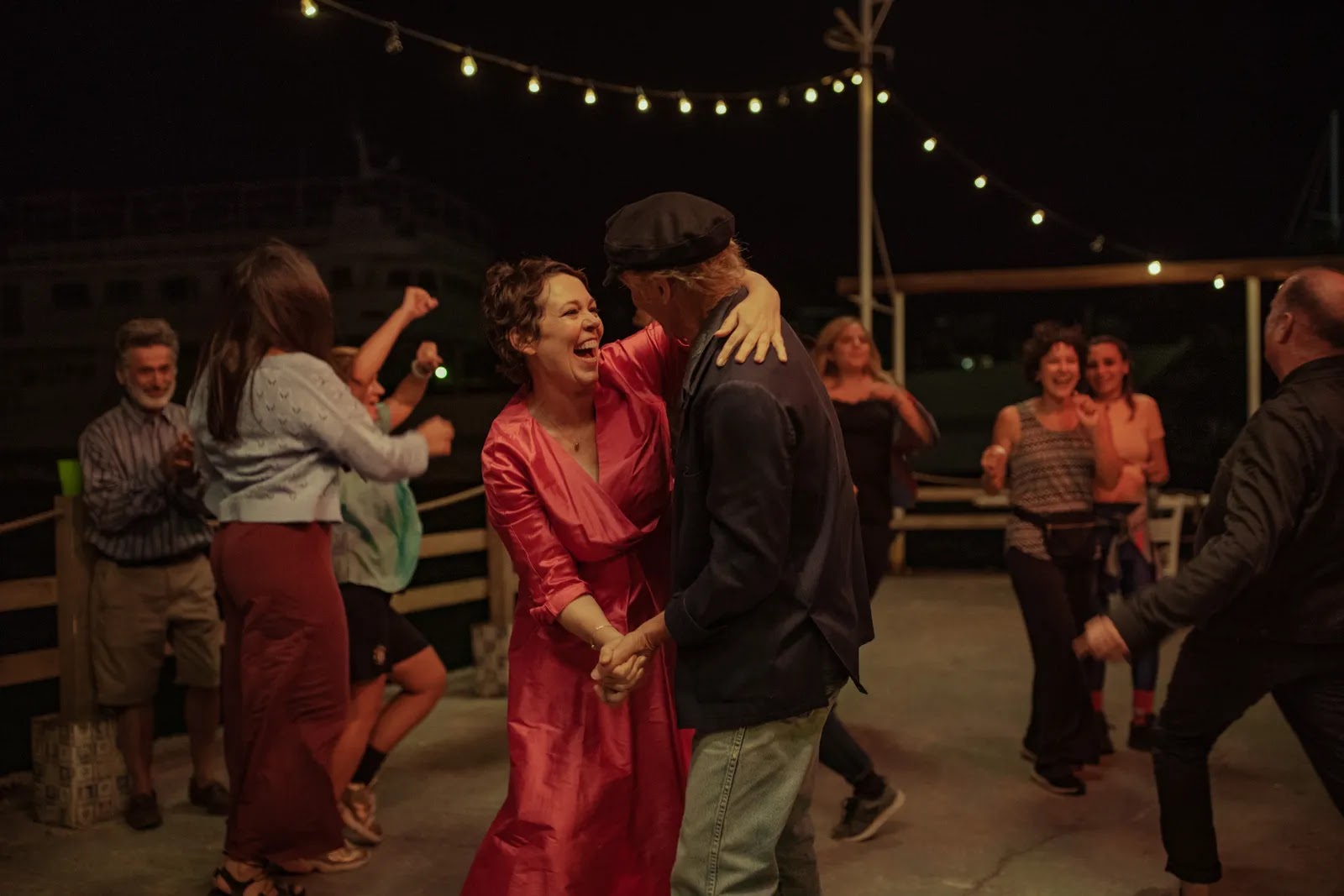
Reminiscent of the gloomy interiority inhabited by Jane Campion’s THE PORTRAIT OF A LADY (1996), a rendering of the cavernous realms of a woman’s unhappiness, largely shaped by societal entrapment, while here Leda drifts through often painful reminiscences of times when she put her own needs above her family life, choices she now feels she’s paying the price for in her solitude. This is a film that would play out differently if seen in a theater, as stylistically it is designed for that uninterrupted experience where the audio and visual interplay is allowed to immerse itself into the subconscious minds of viewers. Exquisitely moving back and forth in time, the overall strategy remains vague and ambiguous, like a puzzle piece, as this notion of a missing child has a hold on the adult Leda, who is fiercely attached to the stolen doll, as one of her younger daughters once was, developing what can only be described as a fetish attachment, becoming a metaphor for her missing needs and wants, which remain strangely out of reach on this distant island. She goes through an awkward flirtation stage with the older house caretaker, Lyle (Ed Harris), who befriends her and attempts to develop a romantic aspect of their friendship, with Leda unsure if she wants to play along, yet occasionally gives him signs that she is, having dinner with him one evening, leaving the doll in open sight at one point, where it’s clear he sees it, but says nothing about it to anyone, suggesting he is a man she could trust. She happily dances with him in an open-air dance, that is until Toni and his male brood appears, making a quick exit out of there afterwards. She also develops a curious friendship with Nina, who continually asks about her own children, attempting to break through the façade of a foreigner on the beach, with Leda hesitant initially, then becoming fully engaged with her, sharing extremely personal recollections of her own difficulties with her children, often growing irritated and depressed, suggesting it doesn’t get any better. Describing herself as a selfish person, she acknowledges the only way things got any better for her was that she left her children altogether, totally exhilarated by the freedom, but returned for them years later because she simply missed them too much. This relationship gets intimate at one point when she buys a hatpin for Nina and delicately pokes it through her hair to keep her sunhat in place, a gesture of good will and friendship, yet this relationship also brings with it the full assault of memories of her own dreadful past, which is accentuated by the aggressive behavior of the surrounding men in Nina’s life who continually haunt Leda with a kind of taunting demeanor, only to find herself in solitude, with a significant weight on her shoulders. She happens to be reading Dante’s Paradiso, the final section of his Divine Comedy, scribbling notes in the margins, where the idyllic nature of this remote paradise on earth seems to continually elude her, yet much of it is her own doing, her own directness, offering a bracingly candid view of the difficulties of motherhood as a “crushing responsibility.” Nina seems to be following in her footsteps, having a sexual affair with Will (Paul Mescal), a young student who works as a cabana boy at the beach, with Will awkwardly asking if they could use her beach house, needing somewhere to get away. Leda feels pressured, believing she has little choice, so when Nina arrives at her door for the keys, she invites her in and casually returns the doll, claiming she was just playing around, which only enrages Nina, going berserk with anger, stabbing her in the stomach with the hatpin and defiantly leaves, sickened and disgusted by her behavior. While the ending remains ambiguous, what’s perhaps most interesting is just how unlikable the characters are, yet they are walking contradictions, not easy to pin down, filled with moments of tenderness and grace, yet also an impulsive selfishness, leading to a kind of open callousness and disregard for others, a duality embraced by the actors with superb performances, yet the film also delves deeply into the interiority of women, considered in intimate detail, adding murkier complexities that are missing altogether from other female exposé movies, where the darker toll of motherhood is rarely explored. This boundary breaking film challenges viewers in unexpected ways, as women aren’t always what we expect them to be, offering unspoken truths about the painstaking difficulties of motherhood, widening our appreciation and understanding of how women can be vulnerable and exposed, yet also selfishly determined, with this film artfully exploring the deeply-felt and wide-ranging aspects of the female experience.


