Showing posts with label desert. Show all posts

Thursday, January 1, 2026

Sirât


Director Oliver Laxe

Laxe receiving Jury Prize at Cannes

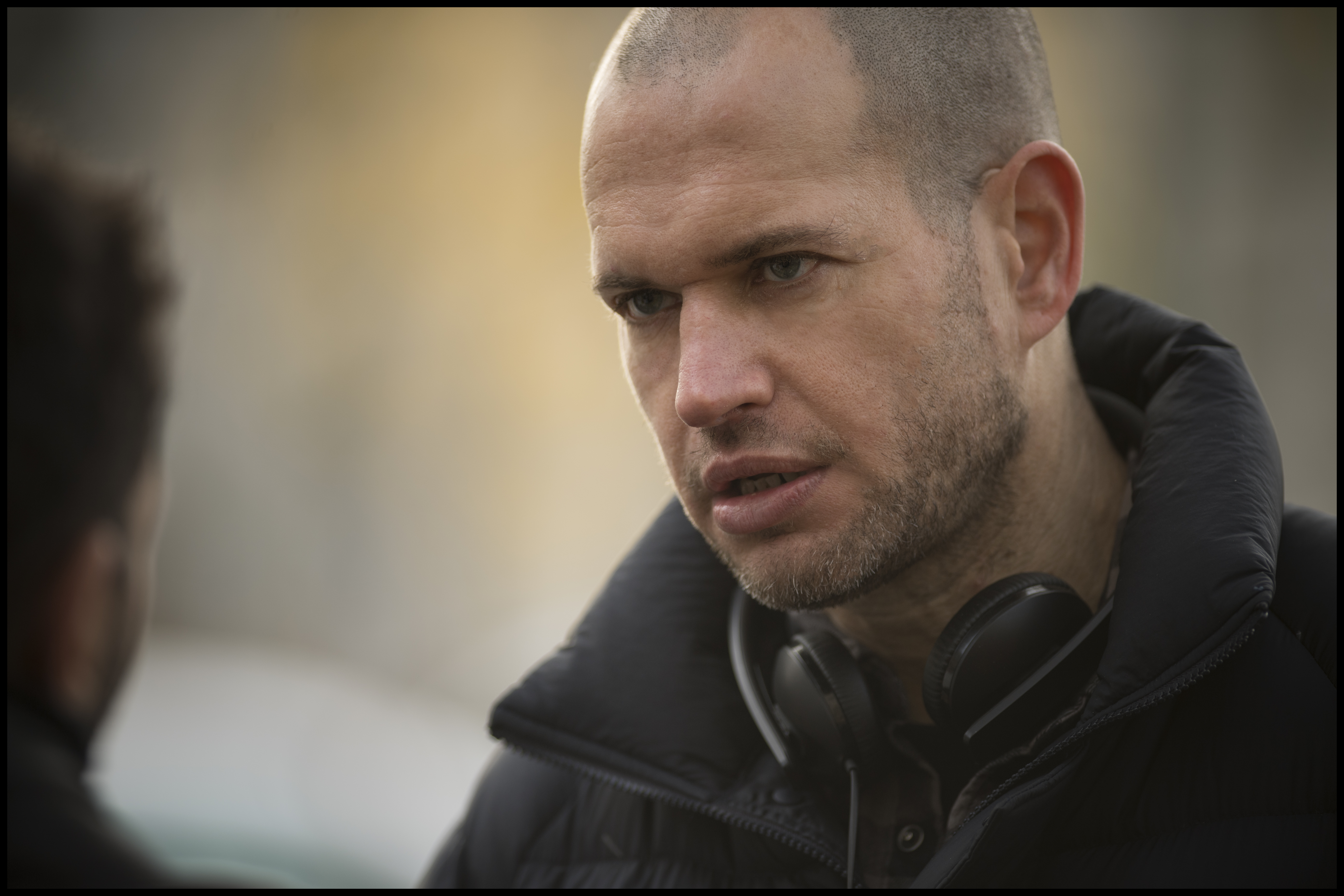
director on the set


SIRÂT             B                                                                                                                     France  (115 mi)  2025  d: Oliver Laxe

Life is a path that has turns; it has alleys on both sides.  Life shakes you; it doesn’t knock at the door.  It appears, suddenly shakes you, and asks, “Who are you?”                                              —Oliver Laxe

MAD MAX meets LOST HIGHWAY in this apocalyptic scenario out in the desert, with a touch of Gus Van Sant’s GERRY (2002) and Henri-Georges Clouzot’s The Wages of Fear (Le Salaire de la Peur) (1953) thrown in just for good measure.  For anyone who’s seen Alexandre Koberidze’s Dry Leaf (2025) or Paul Thomas Anderson’s One Battle After Another (2025), the story is essentially the same, a father seeking his missing daughter, though the journey couldn’t be more radically different.  Using a style that resembles Gaspar Noé, where the adrenaline-pumping, electric techno beat drives the entire film, written by French experimental composer Kangding Ray (aka David Letellier), offering a canvas of EDM sound that matches the vast emptiness of the Moroccan landscapes where the Atlas Mountains meet the Sahara Desert (though predominately shot in the Aragón region of Spain), a place where, preposterously enough, a dance rave is happening out in the middle of the desert, an open-air experience that pulsates with music and frenetic movement, sort of a mix between Coachella and Burning Man, turning into an endless and sleepless party.  Using long-held scenes, designed to be a state-of-the-art theater experience, where sound and image gradually blur, the rhythm of the music and the ecstatic movements of the ravers create an atmosphere that feels almost meditative, like a pilgrimage to Mecca, where viewers are lured into this hypnotic trance, yet it’s remarkable how everyone seems to disappear completely in their own physical movement, isolated, and yet connected, laying a subtle parallel with life itself, as we all follow our own path, but still share a common reality.  In this scenario, we find Luis (Sergi López, best-known as the sadistic army captain in Guillermo del Toro’s PAN’S LABYRINTH in 2006), his young son Esteban (Bruno Núñez Arjona), and their dog Pipa mingling with the crowd and handing out flyers with his missing daughter Mar’s photo asking if anyone’s seen her, as she vanished months ago at one of these staged raves, SIRÂT by Oliver LAXE - Clip 1 YouTube (2:36).  Retracing her steps, they follow the music scene, going from event to event in hopes they’ll run into her, where people are always cordial, but no one’s seen her.  There is an ambiguity and lack of specificity that feels intentional, along with undeveloped, barely sketched characters who feel somehow less important than the blend of boldly high-powered music and equally imposing landscapes.  In the midst of this all-night party scene, with cars, trucks, and campers parked nearby in what looks like the middle of nowhere, things take a darkened turn when the military shows up and shuts the party down, evacuating everyone while transporting heavy guns through the desert, creating a long convoy of vehicles in what looks like the only way out, but in a sudden shift of tone, two of the vehicles turn away and head off into the desert, with Luis instinctively following them, knowing they are heading for the next rave further south in the desert.  This act of defiance makes more sense when we hear radio reports of armed conflict breaking out, a war that threatens their freedom, which can be quickly stripped away in an instant, where music, cinema, and even art can all be forbidden, things we routinely take for granted.  This sets the stage for an alarming apocalyptic tone, as what initially appears to be an ode to youth is transformed into an anthem for freedom, where these speeding trucks in the middle of the desert are really all about preserving their freedoms.  It’s an eerie atmosphere, doused in the pounding techno music and filtered through an awareness of the catastrophe of our present, adding a youthful presence to what may as well be a march into oblivion. 

From the maker of Fire Will Come (O que arde) (2019), which was an audaciously original, near wordless film shot on Super 16mm, with an extraordinary sound design that mixes music with natural and man-made sounds, sometimes indistinguishably, while MIMOSAS (2016) was also a landscape study shot in Morocco, this is a visual spectacle shot on 16mm by longtime Laxe cinematographer Mauro Herce, winner of the Cannes Jury Prize (3rd place), and while operating more on a metaphysical level, the result is terrifying.  The dominant force is the pounding, bass-driven musical soundtrack, SIRÂT | Soundtrack, which literally overwhelms viewers with the crowded frenzy of the animated dance movements, with huge speakers set up, like an enormous altar in front of a gigantic rock face, with the sun rising from the orange-colored sandstone cliffs, creating an immersive multisensory experience for an audacious romp into the unknown.  A rebellious road trip of epic proportions, our father and son team join forces with punkish rave regulars Jade Oukid as the androgynous-looking Jade with a face tattoo, Stefania Gadda as the worldly Earth mother Stef, Joshua Liam Henderson as the spiked-hair Josh, Tonin Janvier as peg-legged Tonin, and Richard Bellamy as heavily tatted, one-handed Bigui with an arm stump, a group of nomadic outcasts who are psychotropic drug enthusiasts, remnants from a society that had no use for them and spit them out.  Matched by the grandiose size of two jigged-up, off-road vehicles, which can crawl just as easily up steep, rock-filled mountain inclines and windswept desert terrains, but Luis has a smaller, old beat-up Citroën van, not really designed for such a harrowing journey, creating an additional hardship for the entire group, as they’re always lagging behind, never exactly sure if they can make it, forcing them to come together as a group, working in unison for the same common goal.  With enormous pressure placed on each of the individuals, the journey is fraught with difficulties, always on the verge of their own demise, as the desert becomes a main character in ways we don’t expect, infused with a vast emptiness, where the desolate landscapes have an almost tangible intensity, making it difficult to contend with sunlight, dust, and extreme heat, where the burning air is suffocating, literally overwhelming viewers with a feeling of immense dread, reminiscent of Erich von Stroheim’s Greed (1924).  Sirât, according to the Islamic Koran, is a suspension bridge that links hell with paradise, described “as thin as a hair and as sharp as a knife,” where only the righteous will be able to cross the bridge, while the unjust will fall into eternal darkness, with much of this film feeling like the characters are stuck in purgatory in search of the promise of a road that will lead them out of the desert without being detected by the military.  None of them have any idea where they are, existing in a no man’s land, thwarting all expectations by avoiding main roads, as the journey becomes both a physical and spiritual reckoning somewhere between life and death, memory and myth, always accompanied by an overwhelming presence of grief.  This is intentionally provocative cinema, designed for extreme visceral reactions, while continually catching viewers off guard.  Blending professional and non-professional actors, this adds a raw authenticity, where much of this feels like a hallucinatory experience, finding themselves continually stuck in limbo in an unforgiving landscape, offering no shelter or shade, where catastrophe strikes with increasing regularity.   

Co-written by Laxe and Argentine screenwriter Santiago Fillol, shrouded with mystery and abstraction, this is an existential meditation on getting lost, a spiritual and physical odyssey where all exits out have failed, finding themselves on a relentless way of no return, but the journey only grows more harrowing, with the desert suggesting freedom is a mirage, as things only grow more perilous, having a similar futuristic vibe with Alfonso Cuarón’s apocalyptic, end of the world scenario in Children of Men (2006).  Radio broadcast reports that a distant World War III-like global conflict is taking place, making the world they left behind in extreme peril, seemingly having no present or future, living in the shadow of unseen threats, while at the same time they are besieged with an everpresent mortal danger, forced to climb perilous cliffs, where one wrong move can mean plunging to their death, running dangerously low on food and fuel, surrounded by one pitfall after another, feeling more like a nightmarish dream scenario, yet this is their hellish Terra incognita reality that they’ve inadvertently wandered into, where they’re rapidly falling into the deadly quicksand-like hazards of a parallel world.  An exploration of contemporary indifference, these characters do not seem to care or want to listen to news from the “outside world,” which has rejected them their entire lives, damaged beyond belief, so creating their own alternative lifestyle is what matters, exemplified by this group of outcast ravers who are running away and trying to forget their problems, as the world is not important to them anymore, yet the more this small community of only a few stragglers is challenged, hopelessness inevitably seeps in.  An overwhelming sense of dread and an all-consuming fatalism affects both participants and viewers alike, engulfed in a doomsday scenario, with Bigui at one point asking Tonin, “Is this how the world is going to end?”  His reply is equally shocking, “It’s been the end of the world for a long time.”  The film marks a significant shift in Laxe's filmography, delving into a more political and radical narrative than his previous works.  As we watch tragedy after tragedy unfold in Gaza, Sudan, Ukraine, Syria, Kashmir, Afghanistan, Mynamar, and other places, the film emerges from an intense search for freedom in places it doesn’t exist, where evacuation becomes the norm, as entire displaced communities coalesce around borders, mixing religions, cultures, and languages, altering the look of society as we know it, more dispersed and disoriented, mirroring the refugee crisis and the growing displacement of millions of people, recalling Christian Petzold’s 2018 Top Ten List #3 Transit (2018), which is a reflection of contemporary anxieties, the plight of the displaced, and the search for sanctuary in a world actively hostile to it.  Exploring the consequences of apathy, Laxe has created a metaphor for the last safe refuge left on earth, where they can still live a rebellious and carefree lifestyle, with no one rendering judgments, yet this film strips away that last safe place, questioning where detachment from the world leads you, imagining just what’s left in the end.  The film feels aggressively one note, infused with a suffocating nihilism mirrored by the continuous beige color of the rocks and desert sand literally surrounding us in all directions.  With no backstory provided to suggest how we arrived at this point, maybe it doesn’t matter, as there’s a slow realization that nothing will ever be the same again.  This is a European counterpoint to Paul Thomas Anderson’s dystopian America in One Battle After Another (2025), where perhaps both filmmakers are trying to tell us is that we’ve already arrived at a point of no return. 

Sunday, January 1, 2023

2022 Top Ten List #4 Ahed's Knee (Ha'berech)


Director Nadav Lapid


Bezalel Smotrich

Lapid at Cannes with Nur Fibak (left) and Avshalom Pollak


Lapid with Fibak (left) and Pollack

Actress Nur Fibak


AHED’S KNEE (Ha'berech)                          A                                                                      Israel  Germany  France  (109 mi)  2022  ‘Scope  d: Nadav Lapid

Maybe there’ll be a miracle.                                                                                                   —nameless television producer speaking on the phone with Y (Avshalom Pollak)

Premiering at Cannes in 2021 where it shared the Jury Prize (3rd Place) with Apichatpong Weerasethakul’s Memoria (2021), yet the two films couldn’t be more decidedly different, as this has a more directly forceful in-your-face quality, as opposed to the slow, long static shots evoking a kind of sleepwalking state of dreaminess, yet both films address a lingering malaise that has affected our contemporary world.  Nadav Lapid is one of Israel’s most innovative young filmmakers, director of Policeman (Ha-shoter) (2011), THE KINDERGARTEN TEACHER (2014), and SYNONYMS (2019), invoking a kind of Kafkaesque moral quandary, yet instead of a passive protagonist like K who suffers through the absurdity of a nameless, unreachably distant bureaucracy, Lapid’s everyman is Y (dance choreographer Avshalom Pollak who runs the Avshalom Pollak Dance Theatre in Tel Aviv), an acerbic filmmaker and video artist whose suppressed anger is targeted at the duplicitous modern state in Israel which he believes is crushing the spirit of its citizenry with an increasingly autocratic bureaucracy fueling new levels of censorship, haunted by mainstream killings of Palestinians and the oppressive Israeli state, exploring the effects that inequitable societal divisions and nationalist policies have over successive generations, rejecting any notion of an Israeli identity, with a fuming guilt over expanding human rights abuses.  Filmed as a collage of music video, video essay, archival news clips, and even a travel journal, Lapid combines two cultural touchstones, Éric Rohmer’s CLAIRE’S KNEE (1970) and Palestinian activist Ahed Tamimi, Who is Ahed Tamimi, the Palestinian teen charged ... - YouTube (1:48), a 16-year old teenager who became a YouTube sensation in 2017 after slapping and kicking a machine-gun toting Israeli soldier in combat gear (probably also a teenager) in retaliation for her cousin being shot in the head during a protest in her West Bank village of Nabi Saleh against the expansion of Israeli settlements that immediately seized control of the natural spring water supply (Nabi Saleh is where I lost my Zionism - +972 Magazine), subsequently arrested and sentenced to eight months in prison, as was her mother Nariman Tamimi who shot the video, both also significantly fined, while her father was in an Israeli jail, with a sister and brother-in-law also shot by Israeli police, yet the incident provoked an outrageous response from Deputy Knesset Speaker Bezalel Smotrich (Habayit Hayehudi), a far-right politician who claimed she should have been shot in the knee, “In my opinion, she should have gotten a bullet, at least in the kneecap.  That would have put her under house arrest for the rest of her life.”  Lapid zeroes in on a close-up on the teenager’s knee, seen through a hole in her jeans, while accentuating how differently things have changed from the alluringly romanticized era of Rohmer’s time to the self-righteous moral crusade of the present where Israel’s perpetual oppression of Palestinians has led to forced submission by shooting bullets into the knee.  Written in just 15 days with a renewed sense of urgency in the wake of his mother’s death, while shot in another 18, the film questions what it means to be an artist in Israel, opening with a high-speed motorcycle ride through a thunderstorm, with the camera peering up to the sky, racing frantically in-between the cars in traffic, where one senses a crash is eminent, yet Lapid saves the crash and burn for the end, and it doesn’t come from a motorcycle.  Yet in the opener, an actress playing the part of Ahed Tamimi is shooting a music video, snarling at the camera with an unleashed ferocity singing Welcome to the Jungle by Guns N’ Roses, Guns N' Roses - Welcome To The Jungle - YouTube (4:38), as Y is apparently casting a new film, searching for an actress to play her.  Based on autobiographical circumstances, including the 2018 death of his mother, Era Lapid, who had been part of the creative force behind all his earlier films working as his editor, grief becomes a prominent underlying component that eats away at the central figure, perhaps explaining his own wounded volatility, while Haim Lapid, the director’s father, is a co-writer for the film.  The director was invited to screen THE KINDERGARTEN TEACHER in Sapir, a tiny, remote settlement in southern Israel as part of a library cultural event, invited by the Deputy Director of Israel’s Libraries at the Ministry of Culture, who happened to be a surprisingly young woman, which took him by surprise, as she held such a distinguished position in the government, so he was expecting someone much older.  Of interest, she mentioned a form he was required to fill out in order to get paid, which also included a list of appropriate subjects allowed by the government that he could talk about.  For him this sent red flags running through his head, as the Minister of Culture (Miri Regev) happened to be running an anti-free speech campaign, who went out of her way to bully artists with open threats to shut down their work while antagonizing the entire arts community, making provocative statements about how she was proud that she had not read Chekhov, also initiating a loyalty to culture law, a pernicious form of bureaucratic censorship forbidding the funding of any artwork deemed unfaithful to the government (The Collapse of the Anti-Democratic “Loyalty in Culture” Bill).  While it never passed, there is a pervasive dread that the law could be passed at any time, revealing a governmental intent to value propaganda and blind nationalism over artistic expression, yet the spirit of nationalist indoctrination was already filtering through the channels of bureaucracy.    

Recoiling at having to live in a society that presents an increasingly unchallenged militaristic point of view, at least part of the film’s appeal lies with its restlessly changing camera movement, with extreme close-ups, odd angles, and frenetic energy, becoming a visceral experience mirroring the constantly shifting, subjective viewpoint of the film director, an alter-ego character whose unpredictable mood changes comprise the emotional centerpiece of what we see.  Following his existential journey, where he’s a strange mix of bluster and curiosity, he’s a character who asks a lot of questions, like a journalist, but isn’t really interested in the answers, as it’s clear he’s consumed by his own hopeless despair, a loner preferring to remain unconnected to anyone except his mother, with interruptions, changes in plans, phone calls, memory flashbacks, and even an unexpected diatribe at the end which shatters our illusions about his moral respectability, becoming an ambiguous figure that produces uncomfortable questions that have no easy answers.  Told over the course of one day, the film depicts Y as a moodily downbeat filmmaker who travels to a remote desert village in Arava to promote one of his films, unfamiliar territory for most Israelis, an arid region south of the Dead Sea, met by the host of the screening, Yahalom (Nur Fibak), an attractive, flirtatious young woman that is also the Ministry of Culture’s Deputy Director of the Division of Public Libraries, who is a huge fan of Y’s work, whose optimistic worldview seems in utter contrast to his morose pessimism, as she obviously has a passionate love for literature and the arts, yet they immediately engage each other, as they’re simply from different geographical regions, with the filmmaker spending nearly all his time in the bustling urban city of Tel Aviv, while she grew up in this desert community as an avid reader, even when no one else shared her passion.  Their back and forth conversation becomes a tug of war between their respective positions, yet her exhilarating appeal lies with her sunny outlook, completely matching the endless desert landscape stretching in all directions, which she urges him to explore, especially since a flash flood left a reservoir of water that is still standing, something she uniquely describes as a miracle, as it’s simply not seen in this vast emptiness of arid desert.  Especially striking are scenes set in the desert, with its haunting mix of landscapes and silences, as he wanders alone out into the outback, but strangely wears headphones that loudly churn out the pop music of Vanessa Paradis, Vanessa Paradis - Be my baby (version US) - YouTube (3:39), a dramatically upbeat 90’s love song that could just as easily be out of the 60’s, a stark contrast from the quiet emptiness of the desert, which he can’t hear, seen dancing in the middle of nowhere, with an overload of sonic frequency booming into his ear, which recurs throughout the film, inevitably altering the mood.  When he discovers the reservoir, he pulls out his iPhone and starts filming the desert panoramically while tenderly narrating a message to his mother, who is sickened with terminal lung cancer, so part of this film experience becomes an intensely personal travelogue dedicated to her, a variation on Akerman’s No Home Movie (2015).  He’s driven to the library by Yoram Honig, who happens to be the founder and director of the Jerusalem Film and Television Fund, who talks about his life while munching on snacks, explaining how global warming bankrupted the local pepper crop, so now he installs solar panels, as they have plentiful sunlight, while also offering a mysterious aside on bees, while playing the sweet soul music of Bill Withers in his car singing Lovely Day, Bill Withers - Lovely Day (Official Audio) (4:16), but then randomly stops, walks into a home in the desert, and spontaneously starts dancing to the Bill Withers music.  It’s a moment of pure inspiration that suggests there’s something in the desert air.  Eventually finding his way to the main event, Yahalom has brought her entire family to fill-up the place, with relatives bringing delicious treats to eat, seemingly extending the range of cultural delights, introducing her sister Narkis (Lidor Edri), who may be star struck or may simply be shyly silent.  It serves as a heartfelt, small town welcoming committee before the film begins, where he slips out, having difficulty watching his own films, with Yahalom joining him, having seen the film twice, both retreating into the emptiness of the desert terrain, openly conversing as they walk, with Y taking an aside to film the sun falling behind the mountains in another message for his mother.  Earlier he viewed scorched and wilted peppers rotting in the sun, heaped by the side of the highway, emblematic of societal rot, “Just think,” he tells his mother, “rotting bell peppers.  A metaphor for this country.”  With this film, Lapid may be expressing not only a goodbye to his mother, but to his mother country of Israel as well. 

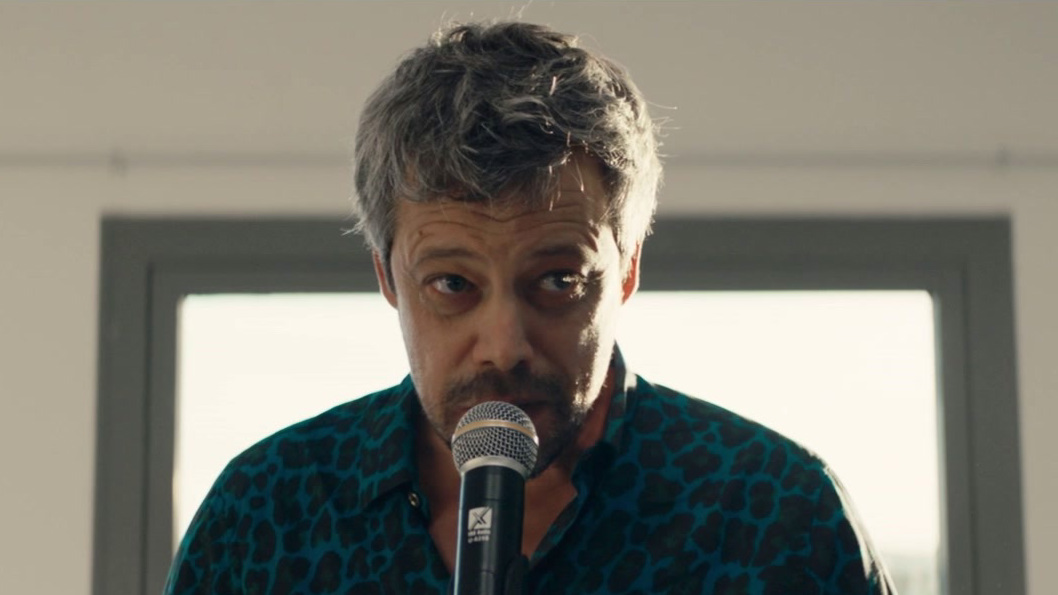
Lapid’s film is a tour de force of audio and visual mix, working in collaboration with cinematographer Shaï Goldman, adding stylistic flourishes to his work, where the abrasiveness of the close-ups enhance the bluntness of the narrative, with its use of dialogue for mood and texture more than plot.  Told with an abrasive style as well, mixing pop music into jarring interludes, with the endless desert landscape offering an utterly serene counterpoint.  Taking us on an unfamiliar road trip to a place rarely seen by anyone, using a series of vignettes that are often beautiful and sometimes powerful, while most of the rest of the film consists of long conversations between Y and Yahalom, perhaps mirror images of one another, as they walk around the desert landscapes.   Y recounts a long and harrowing story about a sadistic initiation ritual during his military service working in the intelligence division, where new recruits were put through shockingly excessive measures to show their loyalty to the nation, expressed through hyperbolic flashback sequences set to loud pop music, using a satiric music video style with scenes of soldiers moshing to hardcore punk, featuring female soldiers dancing with machine guns.  Eventually, Y tells her of a traumatic incident that happened to him near the Lebanon/Syrian border, when his small band of soldiers thought they were trapped behind enemy lines and were about to be captured or killed, when their commanding Sergeant orders them all to take cyanide pills.  Most immediately follow the example set by the Sergeant in taking their pills, except for one lone solder who is harangued and targeted by the entire group for his refusal to abide by the Israeli code of honor (it turns out the cyanide pills were fake), a kind of dark fantasy take on Israeli militarism, recalling Ari Folman’s WALTZ WITH BASHIR (2008) in reconstructing memories of the 1982 invasion of Lebanon (sharing the same editor Nili Feller), where a young army recruit witnesses a massacre of civilians, a kind of day of reckoning, with both films including long reflections on their directors’ military service in the occupation army, both having to come to terms with lingering PTSD issues and repressed memories.  While this sets the tone for his anger and disappointment, clearly feeling violated by the actions of his government, it’s this piece of paper he has to sign that sets him off, a form of humiliation and submission that limits what he can discuss, as he can only speak about certain state sanctioned topics.  Enraged at what he perceives to be an ugly and insidious overreach, the paper becomes a symbol of everything Y detests about his country, as the bulk of the film is Y’s rant against Israeli culture.  With a kind of blistering Notes from Underground Dostoyevskian rage, he rails against the rising neo-fascism of the Israeli state, as it’s a government that hates human freedom, moralizing over a twisted turn in his nation’s identity that he finds utterly repulsive, charging Israel with cultural, moral, and political degradation, with racism and nationalistic aggression, with indoctrination and oppression, a scorching tirade that all but consumes him, focusing on his abject disgust.  In the process, he calls out Yahalom and her official duties, exposing the underlying hypocrisy of the library as an institution that solely decides which artists will be recognized and which will be ignored.  Surprisingly, Yahalom offers an unexpectedly candid assessment of the government’s grip on the arts, acknowledging “everyone who dissents here is crushed,” as artists that refuse are rejected and blacklisted.  It’s a moment of emotional catharsis, with both in tears by the end.  As they re-enter the screening room at the film’s conclusion, Yahalom teases Y that she believes he is the soldier that refused to take the pill, as that sense of victimized moral outrage can be seen in every one of his films, while also raising the question about his reliability as a narrator.  When Y takes to the microphone, the incendiary rant continues, completely changing the polite mood, as he incites a public scandal, turning into a rancorous diatribe that has the audience in a sense of near revolt, aghast at what they hear, quickly turning on him, as he threatens to expose Yahalom for her complicity in the nation’s crimes, exposing the underlying hypocrisy of the institution, claiming it is the death of freedom in their country.  Critical as she may be of her own ministry, she still belongs to the censorship apparatus, yet publicly condemning her before her own family seems like a callous act of betrayal, like a sexist barrage of bullying male misogyny.  This turnabout from her exemplary kindness and interest in him as an artist and human being, displaying nothing but cordiality and grace, literally turns the film upside down, as what kind of pugnacious ass would do a thing like that?  The extended, frenzied scenes of crisis and open confrontation are filmed with a dizzying blend of outrage and internalized pain and anguish, accentuated by disorienting camera work, yet it captures the immediacy of the moment, resembling performance artists who challenge the complacency of public discourse through brazen confrontation, like the exaggerated flamboyance in the finale of Ruben Östlund’s The Square (2017), where this feels more like an artist taking a sledgehammer to the knee of the state.  An acutely personal, self-reflective work of political theater that evolves into a vitriolic assault to the senses, this is one of the more physically intense and emotionally demanding films in recent memory, literally howling with a manic fury at the current state of Israeli society.    

Note

Ironically, the Ministry of Culture that this film rails against ended up providing funding for the film, though that may be due to the more moderate Hili Tropper replacing Miri Regev.  Nonetheless, it has caused a stir in Israel, as Lapid has come under criticism for taking money from the Israel Film Fund, the Israel Film Council, and the Culture and Sport Ministry, all governmental or government-supported entities, leaving some wanting the director’s head, which may explain his sudden move to Paris.