Showing posts with label censorship. Show all posts

Tuesday, January 9, 2024

Rewind & Play


Director Alain Gomis


REWIND & PLAY                B                                                                                                 France  Germany  (65 mi)  2022  d: Alain Gomis

It brings tears to my eyes when I see the shit that my father was going through.                    —T.S. Monk Jr. from Rewind & Play - Forum 2022 

This is an oddly unorthodox little film that reveals the inherent harm in showcasing such a unique jazz artist in such a conventional light, entirely based upon two hours of unused archival footage from a December 1969 French television interview with Thelonious Monk before his final European concert tour performance at the Salle Pleyel in Paris, outtake footage we were never intended to see, where the utter indifference on display from interviewer Henri Renaud to the artist during the recording is difficult to watch, as the spotlight instead is on the sheer inadequacy of the white media who seem unqualified to tell his story, yet that doesn’t stop them from telling one anyway.  Throughout the interview on the French TV show Jazz Portrait, we painfully witness how Monk’s brief responses are immediately deemed unsatisfactory to his interviewers, and are interrupted, dismissed, spoken over in French, and edited out.  In stark contrast, the shots of him playing the piano allow his music to express the deeply complex humanity of the man, whose nature seems unfathomable to the television industry at the time.  Leaning over the piano, Renaud attempts to create an intimate setting, trying to engage the artist in an on-going dialogue, yet a production crew of at least a dozen are continually hovering nearby, walking back and forth, forced to endure retake after retake, showing a complete disregard for how they are affecting Monk’s curt responses, as the artist’s life is manipulated and trivialized to such an extent that in apparent frustration Monk gets up to leave at one point, but is convinced to stay through what appears to be hands-on physical restraint, revealing just how agonizing this insulting experience is to him, as he’s treated like a commodity they are trying to sell, like a packaged product, exposing the shocking disconnect between the black artist and the white media.  This is a film that is not for everyone, barely over an hour in length, yet it’s a reflection of the casual racism that existed in the 60’s, as the KKK’s influence in the American South was everpresent in the region, where arrests, bombings, and murders of blacks, as well as whites sympathetic to their cause, were all too commonplace, while France was fighting colonial wars in a misguided attempt to hold onto their control of black African colonies.  Made by the director of Félicité (2017), born of a Senegalese father and a French Guinee-Bissau mother, Alain Gomis studied art history and earned a master’s degree in cinematographic studies at the Sorbonne.  What this film exposes is how easily black history is erased, as one of the preeminent jazz artists of our time is literally silenced before our eyes, his words purged from the record, and replaced by a dismissive white establishment that prefers to tell a more palatable version to mainstream audiences that is free of controversy, but it amounts to censorship, an act filled with controversy, especially for artists who are the poets of each generation.  However, it’s an immersive experience where you’re in the presence of Thelonious Monk for one solid hour, yet it’s also a revealing look at how celebrities are packaged, and how black entertainers, in particular, are infantilized, placing words in their mouths supposedly to protect them from themselves, where what amounts to friendly intentions become misrepresentation, which, as it turns out, is fairly typical of the daily black experience even today.

The clips include his arrival at the airport, when passengers actually exited planes to the ground, walking outdoors to the gates, accompanied by his effervescent wife Nellie (wearing très chic eyeglasses), meeting up with Renaud at a bar for a quick drink before heading into the Montmartre television studio.  Easily the most watchable aspect of this film are the lengthy piano passages from Monk, as there is no one else on the planet who plays like him, universally respected by his peers.  We have seen rare glimpses of his massive talent on display mixed with his quirky personality in Charlotte Zwerin’s documentary portrait, Thelonious Monk: Straight, No Chaser (1988), which catches him in his element, friendly, honest, and gentle, with a brooding shyness when seen alongside personal friends and other jazz artists.  But those friends are missing here as he’s subtly demeaned and denigrated by an imperceptive TV crew, where it’s a shock how much he was disrespected, offering no window into his artistic vision, and no background whatsoever other than Renaud’s repeated attempts to fill in his own personal narrative, much of which is filmed after Monk has left, creating an eerie impression of just how thoroughly manipulative the media can be.  Instead Monk is left alone in this onslaught of casual disregard, peppered with absurdly meaningless questions, where his discomfort is etched all over his face, sweat constantly dripping under the lights, where his only refuge is quietly tuning them out while playing the piano.  The editing scheme reveals just how chaotic this experience must have been for him, as there are repeated stops, asking the very same question all over again, sometimes in French, each time expecting a different answer more to their liking, leading to lengthy periods where he is made to sit and wait while they sort things out in French, becoming a pointless exercise in futility.  Even when he offers extended, contemplative answers, they incredulously cut off what he actually says, with Renaud claiming “it’s not nice” to mention the bad experiences he had when he first came to France, promoted as the star performer yet he couldn’t bring along his own musicians and had to play with people he never met before, and was paid substantially less than the other musicians.  There’s a brutality to this experience, where honesty is considered far too real for television, as they continually reject what he has to say, yet he never loses his composure, even as it becomes evident that it’s absurdly impossible to say anything at all except what he can express through the piano.  Henri Renaud is not a journalist, but a fellow jazz pianist who has apparently spent some time with Monk in America, even been to his home, but the awkwardness between them is blisteringly apparent, with Renaud never making any adjustments in his style, never taking the artist aside to apologize for the delays or offer any degree of warmth or comfort, never asking how he feels, instead he blazes through each take with the same degree of callousness, turning the spotlight on himself, showing no regard to Monk whatsoever, an example of the formulaic struggles artists face when attempting to expand their audience.  The apt title mirrors the disordered interview style, yet also may be a reference to turning back the clock, suggesting conditions for minorities haven’t really changed in the last half century.     

To many whites viewing this film, they will see nothing out of the ordinary, wondering what all the fuss is about, likely seeing no signs of racism, but the condescending and paternalistic treatment of such a renowned jazz artist is simply astounding, showing no deference to his mood or what he has to say, as he is the star of the show, yet he is not treated like a star, where the studio’s suppression of his voice, never allowing him to express himself in his own words, and the demeaning, stereotypical treatment of such a jazz legend is shameful and deplorable.  Other than getting up to leave, Monk never loses his cool, remaining calm throughout the entire ordeal, occasionally questioning whether it’s actually worth it with the constant interruptions, thinking they’d make better use of their time going out for dinner, as this pretend version of “relaxed” is exhaustive, certainly taking its toll, leaving the artist fatigued after ten years of touring, with Monk making only rare public appearances after this.  Much of this is told in extreme close-ups, becoming a photo essay of the expressions on his face, rarely capturing this degree of intimacy with such a legendary artist, yet the distance between them is inescapable, with Renaud wanting to show admiration, yet the inept nature of his questions shows an innate insensitivity, while his aloof demeanor suggests a total stranger, offering no personal or musical insight, no hint of the artist’s sensitivity, where they may as well be on distant planets.  If truth be told, Monk was a misunderstood artist his entire career, with his angular, often dissonant, and percussive style of play, where it took him more than a decade to be recognized as one of the greats, yet this reputation for “difficulty” followed him his entire lifetime.  Surely Renaud is aware of this, as he was a musical consultant for Bertrand Tavernier ‘s film AROUND MIDNIGHT (1986), based on Monk’s most famous composition, yet he bulldozes through this material without ever paying honor and respect to the man himself, where there is an abyss between them.  It’s not Renaud who will be playing at the Salle Pleyel, it is Monk, the second-most-recorded jazz composer after Duke Ellington, and a supreme artist at the height of his career, yet we never get this impression during the interview.  Instead it is beset with clumsy technical difficulties, which the director amplifies with an ungainly editing structure using outtakes, accentuating silences, deleting sound altogether, highlighting the repetitive technical glitches, where he’s forced to do yet another take, making this uncomfortable to watch, as viewers really want a taste of Monk, and they get it in beautifully extended passages of I Should Care, Thelonious, Crepuscule With Nellie, Ugly Beauty, Don’t Blame Me, Reflections, Epistrophy, Monk’s Mood, Round Midnight, Meet Me In Dreamland, Coming on the Hudson, and Nice Work If You Can Get It, but they also get the infuriating confusion associated with the so-called interview that goes awry.  A companion piece to Terence Dixon’s Meeting the Man: James Baldwin in Paris (1970), where a clearly defiant James Baldwin was angrily resistant to the direction the naïve white filmmaker was taking him, yet to his credit, Gomis edits the film in the manner of Monk’s playing, filled with the physicality, abrupt changes of tempo, and harmonic dissonances that define his unique style, never trying to appease listeners, instead shattering boundaries.  Not an easy watch, but one that opens our eyes to how easily history is eradicated at the expense of the truth.        

Sunday, January 1, 2023

2022 Top Ten List #4 Ahed's Knee (Ha'berech)


Director Nadav Lapid


Bezalel Smotrich

Lapid at Cannes with Nur Fibak (left) and Avshalom Pollak


Lapid with Fibak (left) and Pollack

Actress Nur Fibak


AHED’S KNEE (Ha'berech)                          A                                                                      Israel  Germany  France  (109 mi)  2022  ‘Scope  d: Nadav Lapid

Maybe there’ll be a miracle.                                                                                                   —nameless television producer speaking on the phone with Y (Avshalom Pollak)

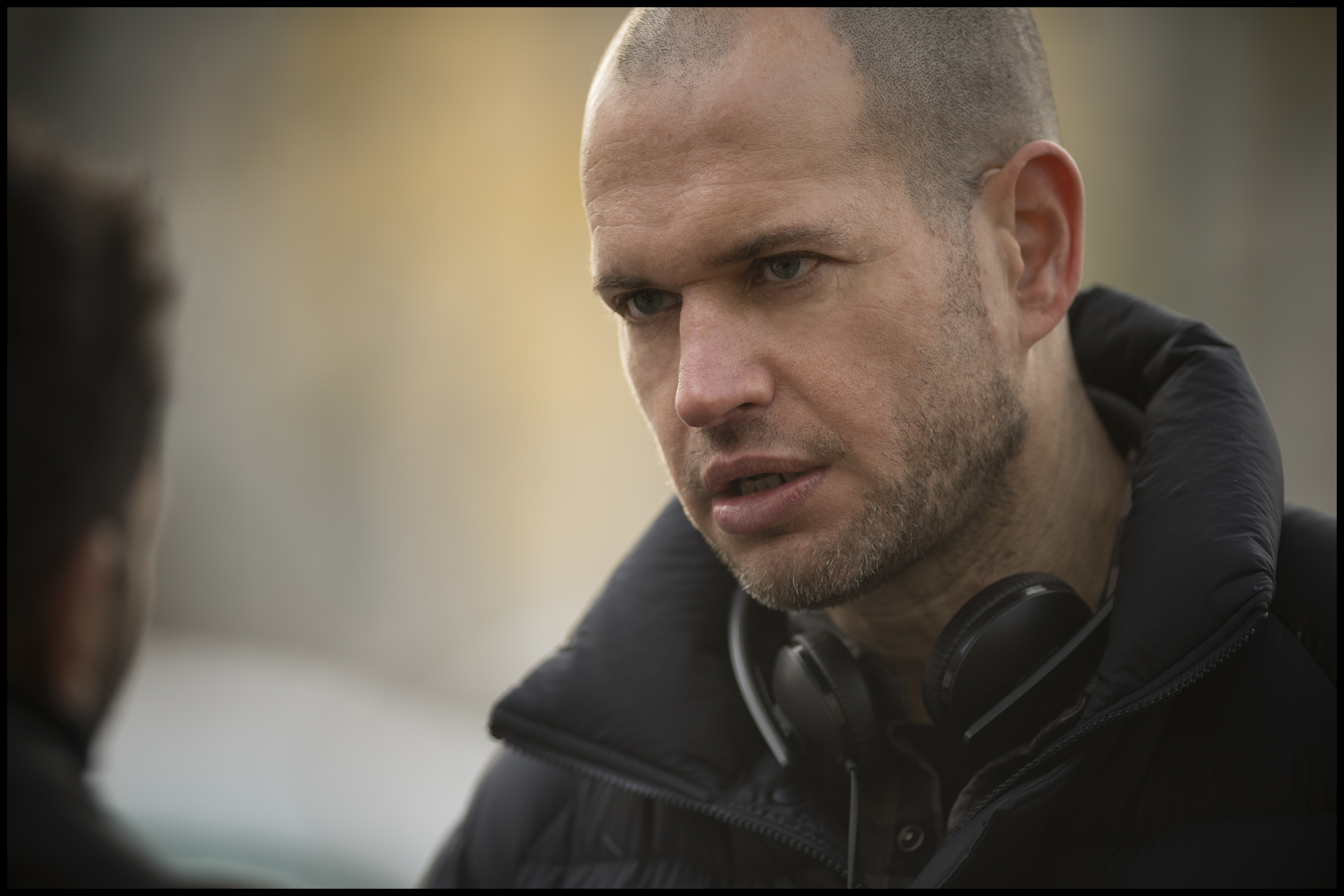
Premiering at Cannes in 2021 where it shared the Jury Prize (3rd Place) with Apichatpong Weerasethakul’s Memoria (2021), yet the two films couldn’t be more decidedly different, as this has a more directly forceful in-your-face quality, as opposed to the slow, long static shots evoking a kind of sleepwalking state of dreaminess, yet both films address a lingering malaise that has affected our contemporary world.  Nadav Lapid is one of Israel’s most innovative young filmmakers, director of Policeman (Ha-shoter) (2011), THE KINDERGARTEN TEACHER (2014), and SYNONYMS (2019), invoking a kind of Kafkaesque moral quandary, yet instead of a passive protagonist like K who suffers through the absurdity of a nameless, unreachably distant bureaucracy, Lapid’s everyman is Y (dance choreographer Avshalom Pollak who runs the Avshalom Pollak Dance Theatre in Tel Aviv), an acerbic filmmaker and video artist whose suppressed anger is targeted at the duplicitous modern state in Israel which he believes is crushing the spirit of its citizenry with an increasingly autocratic bureaucracy fueling new levels of censorship, haunted by mainstream killings of Palestinians and the oppressive Israeli state, exploring the effects that inequitable societal divisions and nationalist policies have over successive generations, rejecting any notion of an Israeli identity, with a fuming guilt over expanding human rights abuses.  Filmed as a collage of music video, video essay, archival news clips, and even a travel journal, Lapid combines two cultural touchstones, Éric Rohmer’s CLAIRE’S KNEE (1970) and Palestinian activist Ahed Tamimi, Who is Ahed Tamimi, the Palestinian teen charged ... - YouTube (1:48), a 16-year old teenager who became a YouTube sensation in 2017 after slapping and kicking a machine-gun toting Israeli soldier in combat gear (probably also a teenager) in retaliation for her cousin being shot in the head during a protest in her West Bank village of Nabi Saleh against the expansion of Israeli settlements that immediately seized control of the natural spring water supply (Nabi Saleh is where I lost my Zionism - +972 Magazine), subsequently arrested and sentenced to eight months in prison, as was her mother Nariman Tamimi who shot the video, both also significantly fined, while her father was in an Israeli jail, with a sister and brother-in-law also shot by Israeli police, yet the incident provoked an outrageous response from Deputy Knesset Speaker Bezalel Smotrich (Habayit Hayehudi), a far-right politician who claimed she should have been shot in the knee, “In my opinion, she should have gotten a bullet, at least in the kneecap.  That would have put her under house arrest for the rest of her life.”  Lapid zeroes in on a close-up on the teenager’s knee, seen through a hole in her jeans, while accentuating how differently things have changed from the alluringly romanticized era of Rohmer’s time to the self-righteous moral crusade of the present where Israel’s perpetual oppression of Palestinians has led to forced submission by shooting bullets into the knee.  Written in just 15 days with a renewed sense of urgency in the wake of his mother’s death, while shot in another 18, the film questions what it means to be an artist in Israel, opening with a high-speed motorcycle ride through a thunderstorm, with the camera peering up to the sky, racing frantically in-between the cars in traffic, where one senses a crash is eminent, yet Lapid saves the crash and burn for the end, and it doesn’t come from a motorcycle.  Yet in the opener, an actress playing the part of Ahed Tamimi is shooting a music video, snarling at the camera with an unleashed ferocity singing Welcome to the Jungle by Guns N’ Roses, Guns N' Roses - Welcome To The Jungle - YouTube (4:38), as Y is apparently casting a new film, searching for an actress to play her.  Based on autobiographical circumstances, including the 2018 death of his mother, Era Lapid, who had been part of the creative force behind all his earlier films working as his editor, grief becomes a prominent underlying component that eats away at the central figure, perhaps explaining his own wounded volatility, while Haim Lapid, the director’s father, is a co-writer for the film.  The director was invited to screen THE KINDERGARTEN TEACHER in Sapir, a tiny, remote settlement in southern Israel as part of a library cultural event, invited by the Deputy Director of Israel’s Libraries at the Ministry of Culture, who happened to be a surprisingly young woman, which took him by surprise, as she held such a distinguished position in the government, so he was expecting someone much older.  Of interest, she mentioned a form he was required to fill out in order to get paid, which also included a list of appropriate subjects allowed by the government that he could talk about.  For him this sent red flags running through his head, as the Minister of Culture (Miri Regev) happened to be running an anti-free speech campaign, who went out of her way to bully artists with open threats to shut down their work while antagonizing the entire arts community, making provocative statements about how she was proud that she had not read Chekhov, also initiating a loyalty to culture law, a pernicious form of bureaucratic censorship forbidding the funding of any artwork deemed unfaithful to the government (The Collapse of the Anti-Democratic “Loyalty in Culture” Bill).  While it never passed, there is a pervasive dread that the law could be passed at any time, revealing a governmental intent to value propaganda and blind nationalism over artistic expression, yet the spirit of nationalist indoctrination was already filtering through the channels of bureaucracy.    

Recoiling at having to live in a society that presents an increasingly unchallenged militaristic point of view, at least part of the film’s appeal lies with its restlessly changing camera movement, with extreme close-ups, odd angles, and frenetic energy, becoming a visceral experience mirroring the constantly shifting, subjective viewpoint of the film director, an alter-ego character whose unpredictable mood changes comprise the emotional centerpiece of what we see.  Following his existential journey, where he’s a strange mix of bluster and curiosity, he’s a character who asks a lot of questions, like a journalist, but isn’t really interested in the answers, as it’s clear he’s consumed by his own hopeless despair, a loner preferring to remain unconnected to anyone except his mother, with interruptions, changes in plans, phone calls, memory flashbacks, and even an unexpected diatribe at the end which shatters our illusions about his moral respectability, becoming an ambiguous figure that produces uncomfortable questions that have no easy answers.  Told over the course of one day, the film depicts Y as a moodily downbeat filmmaker who travels to a remote desert village in Arava to promote one of his films, unfamiliar territory for most Israelis, an arid region south of the Dead Sea, met by the host of the screening, Yahalom (Nur Fibak), an attractive, flirtatious young woman that is also the Ministry of Culture’s Deputy Director of the Division of Public Libraries, who is a huge fan of Y’s work, whose optimistic worldview seems in utter contrast to his morose pessimism, as she obviously has a passionate love for literature and the arts, yet they immediately engage each other, as they’re simply from different geographical regions, with the filmmaker spending nearly all his time in the bustling urban city of Tel Aviv, while she grew up in this desert community as an avid reader, even when no one else shared her passion.  Their back and forth conversation becomes a tug of war between their respective positions, yet her exhilarating appeal lies with her sunny outlook, completely matching the endless desert landscape stretching in all directions, which she urges him to explore, especially since a flash flood left a reservoir of water that is still standing, something she uniquely describes as a miracle, as it’s simply not seen in this vast emptiness of arid desert.  Especially striking are scenes set in the desert, with its haunting mix of landscapes and silences, as he wanders alone out into the outback, but strangely wears headphones that loudly churn out the pop music of Vanessa Paradis, Vanessa Paradis - Be my baby (version US) - YouTube (3:39), a dramatically upbeat 90’s love song that could just as easily be out of the 60’s, a stark contrast from the quiet emptiness of the desert, which he can’t hear, seen dancing in the middle of nowhere, with an overload of sonic frequency booming into his ear, which recurs throughout the film, inevitably altering the mood.  When he discovers the reservoir, he pulls out his iPhone and starts filming the desert panoramically while tenderly narrating a message to his mother, who is sickened with terminal lung cancer, so part of this film experience becomes an intensely personal travelogue dedicated to her, a variation on Akerman’s No Home Movie (2015).  He’s driven to the library by Yoram Honig, who happens to be the founder and director of the Jerusalem Film and Television Fund, who talks about his life while munching on snacks, explaining how global warming bankrupted the local pepper crop, so now he installs solar panels, as they have plentiful sunlight, while also offering a mysterious aside on bees, while playing the sweet soul music of Bill Withers in his car singing Lovely Day, Bill Withers - Lovely Day (Official Audio) (4:16), but then randomly stops, walks into a home in the desert, and spontaneously starts dancing to the Bill Withers music.  It’s a moment of pure inspiration that suggests there’s something in the desert air.  Eventually finding his way to the main event, Yahalom has brought her entire family to fill-up the place, with relatives bringing delicious treats to eat, seemingly extending the range of cultural delights, introducing her sister Narkis (Lidor Edri), who may be star struck or may simply be shyly silent.  It serves as a heartfelt, small town welcoming committee before the film begins, where he slips out, having difficulty watching his own films, with Yahalom joining him, having seen the film twice, both retreating into the emptiness of the desert terrain, openly conversing as they walk, with Y taking an aside to film the sun falling behind the mountains in another message for his mother.  Earlier he viewed scorched and wilted peppers rotting in the sun, heaped by the side of the highway, emblematic of societal rot, “Just think,” he tells his mother, “rotting bell peppers.  A metaphor for this country.”  With this film, Lapid may be expressing not only a goodbye to his mother, but to his mother country of Israel as well. 

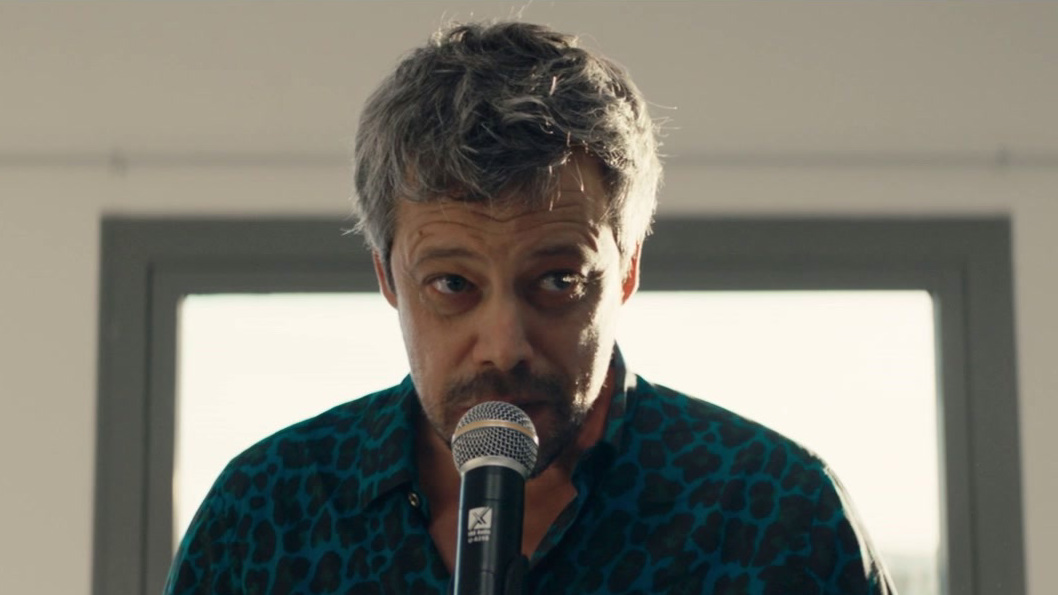
Lapid’s film is a tour de force of audio and visual mix, working in collaboration with cinematographer Shaï Goldman, adding stylistic flourishes to his work, where the abrasiveness of the close-ups enhance the bluntness of the narrative, with its use of dialogue for mood and texture more than plot.  Told with an abrasive style as well, mixing pop music into jarring interludes, with the endless desert landscape offering an utterly serene counterpoint.  Taking us on an unfamiliar road trip to a place rarely seen by anyone, using a series of vignettes that are often beautiful and sometimes powerful, while most of the rest of the film consists of long conversations between Y and Yahalom, perhaps mirror images of one another, as they walk around the desert landscapes.   Y recounts a long and harrowing story about a sadistic initiation ritual during his military service working in the intelligence division, where new recruits were put through shockingly excessive measures to show their loyalty to the nation, expressed through hyperbolic flashback sequences set to loud pop music, using a satiric music video style with scenes of soldiers moshing to hardcore punk, featuring female soldiers dancing with machine guns.  Eventually, Y tells her of a traumatic incident that happened to him near the Lebanon/Syrian border, when his small band of soldiers thought they were trapped behind enemy lines and were about to be captured or killed, when their commanding Sergeant orders them all to take cyanide pills.  Most immediately follow the example set by the Sergeant in taking their pills, except for one lone solder who is harangued and targeted by the entire group for his refusal to abide by the Israeli code of honor (it turns out the cyanide pills were fake), a kind of dark fantasy take on Israeli militarism, recalling Ari Folman’s WALTZ WITH BASHIR (2008) in reconstructing memories of the 1982 invasion of Lebanon (sharing the same editor Nili Feller), where a young army recruit witnesses a massacre of civilians, a kind of day of reckoning, with both films including long reflections on their directors’ military service in the occupation army, both having to come to terms with lingering PTSD issues and repressed memories.  While this sets the tone for his anger and disappointment, clearly feeling violated by the actions of his government, it’s this piece of paper he has to sign that sets him off, a form of humiliation and submission that limits what he can discuss, as he can only speak about certain state sanctioned topics.  Enraged at what he perceives to be an ugly and insidious overreach, the paper becomes a symbol of everything Y detests about his country, as the bulk of the film is Y’s rant against Israeli culture.  With a kind of blistering Notes from Underground Dostoyevskian rage, he rails against the rising neo-fascism of the Israeli state, as it’s a government that hates human freedom, moralizing over a twisted turn in his nation’s identity that he finds utterly repulsive, charging Israel with cultural, moral, and political degradation, with racism and nationalistic aggression, with indoctrination and oppression, a scorching tirade that all but consumes him, focusing on his abject disgust.  In the process, he calls out Yahalom and her official duties, exposing the underlying hypocrisy of the library as an institution that solely decides which artists will be recognized and which will be ignored.  Surprisingly, Yahalom offers an unexpectedly candid assessment of the government’s grip on the arts, acknowledging “everyone who dissents here is crushed,” as artists that refuse are rejected and blacklisted.  It’s a moment of emotional catharsis, with both in tears by the end.  As they re-enter the screening room at the film’s conclusion, Yahalom teases Y that she believes he is the soldier that refused to take the pill, as that sense of victimized moral outrage can be seen in every one of his films, while also raising the question about his reliability as a narrator.  When Y takes to the microphone, the incendiary rant continues, completely changing the polite mood, as he incites a public scandal, turning into a rancorous diatribe that has the audience in a sense of near revolt, aghast at what they hear, quickly turning on him, as he threatens to expose Yahalom for her complicity in the nation’s crimes, exposing the underlying hypocrisy of the institution, claiming it is the death of freedom in their country.  Critical as she may be of her own ministry, she still belongs to the censorship apparatus, yet publicly condemning her before her own family seems like a callous act of betrayal, like a sexist barrage of bullying male misogyny.  This turnabout from her exemplary kindness and interest in him as an artist and human being, displaying nothing but cordiality and grace, literally turns the film upside down, as what kind of pugnacious ass would do a thing like that?  The extended, frenzied scenes of crisis and open confrontation are filmed with a dizzying blend of outrage and internalized pain and anguish, accentuated by disorienting camera work, yet it captures the immediacy of the moment, resembling performance artists who challenge the complacency of public discourse through brazen confrontation, like the exaggerated flamboyance in the finale of Ruben Östlund’s The Square (2017), where this feels more like an artist taking a sledgehammer to the knee of the state.  An acutely personal, self-reflective work of political theater that evolves into a vitriolic assault to the senses, this is one of the more physically intense and emotionally demanding films in recent memory, literally howling with a manic fury at the current state of Israeli society.    

Note

Ironically, the Ministry of Culture that this film rails against ended up providing funding for the film, though that may be due to the more moderate Hili Tropper replacing Miri Regev.  Nonetheless, it has caused a stir in Israel, as Lapid has come under criticism for taking money from the Israel Film Fund, the Israel Film Council, and the Culture and Sport Ministry, all governmental or government-supported entities, leaving some wanting the director’s head, which may explain his sudden move to Paris.