Showing posts with label ballet. Show all posts

Friday, June 9, 2023

Girl


Director Lukas Dhont

Dhont with Victor Polster

Victor Polster

Dhont with Victor Polster


Angelo Tijssens, Victor Polster, and Lukas Dhont


GIRL              B+                                                                                                                      Belgium  Netherlands  (105 mi)  2018  d: Lukas Dhont                             

I don’t want to be an example.  I want to be a girl.                                                                          —Lara (Victor Polster)

A somewhat radical work inspired by the life of trans dancer Nora Monsecour, born male with aspirations of becoming a ballerina, it initially screened in the Un Certain Regard section at the 2018 Cannes Film Festival with Monsecour in attendance, where it received a standing ovation that lasted through the entirety of the credits, winning the Camera d’Or award for best first feature film, also winning the Queer Palm, while 15-year-old actor Victor Polster won the Un Certain Regard Jury Award for Best Performance.  This is a deeply moving and in-your-face portrait of the travails associated with gender conversion, where hormone therapy and the anticipation of gender reassignment surgery accentuate not only the physical challenges, but the existential duress of having to wait, which becomes overly suffocating, underscored by the overly restrained performance of Polster, perfectly capturing her repressed inner thoughts and feelings, where she even gets bullied by the other girls, who have an advantage, as they’ve always been a girl, so they feel comfortable in their self-identity, while a woman in transition is flooded by anxiety and self-doubt, where nothing ever feels right, forever waiting to just feel comfortable in your own body.  The film has faced some heavy criticism because the main character isn’t played by an actual transgender, fueled by trans critic Oliver Whitney’s alarmist guest essay from The Hollywood Reporter, describing the film as a “danger to the transgender community,” claiming the film has a “disturbing fascination with trans bodies,” focusing on a dramatically impactful scene near the end, describing it as sadistic exploitation, basically trans trauma porn for uneducated audiences, echoed by Northwestern Gender & Sexual Studies professor Nick Davis in Film Comment, who believes the film is part of a long history of cruel, transphobic storytelling, Short Take: Girl, finding the voyeuristic finale unforgiving, Nick-Davis.com: Girl, Cathy Brennan from BFI Sight and Sound thinks it accentuates fears, (It's winning awards, but Girl is no victory for trans ...), Caden Mark Gardner from Reverse Shot (Girl) thinks the film is potentially harmful in its “abhorrent irresponsibility,” Tre’vell Anderson from Out magazine claims it’s a missed opportunity to properly contextualize the experience, (Netflix's 'Girl' is Dangerous and Doesn't Deserve an Oscar), while further skepticism is voiced by K. Austin Collins from Vanity Fair (There's No Good Reason to Watch Belgium's Controversial ...), expressing outright anger in the reckless way the trans experience is overly traumatized, with a collective view finding it dangerously self-destructive while bordering on transphobic.  Clearly the film has polarized the gay and trans community on which it focuses, yet Dhont has weathered the criticism and steadfastly defended his “right” to tell the story, where there’s nothing erotic or fetishized in his style, while Monsecour responded to Whitney with her own guest essay (Belgium Oscar Submission 'Girl' Is a “Message of Courage”), writing that “those criticizing Girl are preventing another trans story from being shared in the world, and are also attempting to silence me and my trans identity.”  While the criticisms are valid and should not be overlooked, they feel like a distinctly American reaction, excessively harsh, fixated on rendering judgment, as if there’s a “right way” to contextualize the trans experience, yet there are more benefits to this film than is suggested.  This film does not attempt to speak for everyone, but provides an authentic character–driven narrative that’s applicable to one person’s search for identity, which is beautifully realized, serving as an example to a young director, courageously believing a trans story deserved to be heard, offering a unique window into an experience that viewers would not otherwise have, which couldn’t be more relevant.   Despite having a loving and supporting family, encountering difficulties is the norm, with nearly half of transgender and nonbinary youth in America considering suicide in 2022, and just under one in five attempting suicide (the numbers are higher for people of color), which is exacerbated by anti-trans laws that outlaw literature, art, histories, and even health care, a sentiment raging through the Republican Party in America at the moment, introducing more than 400 anti-trans bills already this year in an attempt to legislate them out of existence. Republican legislative leaders in Montana, in a strictly party-line vote, just voted to banish Democratic Rep. Zooey Zephyr (ZoAndBehold - Rep. Zooey Zephyr), the state’s first transgender legislator, from participating in the legislative session on the House floor, barred from all debates, prohibited from entering the chambers until the end of the legislative session, relegated to a bench in the hallway and will only be allowed to vote remotely, Montana Republicans bar transgender lawmaker from House floor for rest of session.  There is no sense that this film in any way shapes that political argument, which is motivated purely by transphobic hatred, yet this deeply humane film does offer an immersive psychological perspective that may help lead to a more educated and openly empathetic viewpoint, shedding light on a subject that has long been ignored. 

It should be noted that Lukas Dhont is an openly gay filmmaker who embraces LGBTQ themes, having worked as a costume design assistant on film and television sets when he was a teenager while his mother works as a fashion teacher at an art school.  Still in the closet when he entered film school, with a younger brother Michiel who’s also gay, he had his own experiences making that transition into being himself, describing that period in his life, “Not only about my sexuality, I was just also not myself.  I think I had created this armor to protect me.  One of my teachers said, ‘You don’t seem to have a personality.’  She was so right.  I had become this collage of other people’s personalities.”  Discovering his own identity after watching Belgium filmmaker Chantal Akerman’s Jeanne Dielman, 23, quai du Commerce,1080 Bruxelles (1975), he immersed himself into the works of gay filmmakers Céline Sciamma, Xavier Dolan, and Pedro Almodóvar, and there is an intimacy to the film that evokes the near documentary style of Sciamma’s Tomboy (2011), with an original score by Valentin Hadjadj, 22D Prod / Valentin Hadjadj - Flying (From "GIRL" Original ... YouTube (3:17).  Written in collaboration with theater director Angelo Tijssens, taking ten years before bringing this work into fruition, their real objective was to make a film about gender dysphoria that transgenders could identify with, as there are so few films they can connect with, one of the few being Sebastián Lelio’s A Fantastic Woman (Una Mujer Fantástica) (2018), which features a remarkable performance from a transgender actress.  It should also be pointed out that Nora Monsecour, who worked closely with both Dhont and Polster on the film, was “really offended” by Whitney’s comments, especially those that invalidate her experience with suggestions that Dhont made the film out of his cisgender perspective.  In an interview with indieWIRE (Girl: Netflix Film Stirs Controversy Over Who Owns Trans ...), she clarified that “My story is not a fantasy of the cis director.  Lara’s story is my story,” and while it isn’t a biography, “the essence of the story is the same.”  According to Monsecour, she was similarly bullied, and had teachers who “didn’t believe that transgender was something that existed in the world,” eventually moving away from ballet into contemporary dance.  She has enthusiastically endorsed Polster’s performance, acknowledging, “In one of our first conversations, I said to Lukas that I didn’t care at all if the actor was male, female, transgender, lesbian, gay.  For me, it was very important that Lara… be played by someone who had a lot of love and empathy for the character, [and] was also a very good dancer.  When I saw pictures of Victor, I thought to myself, ‘this is it, he is it.’ ”  The film follows Lara (Victor Polster), a 15-year old trans girl and aspiring ballet dancer who is frustrated that her hormone therapy isn’t working fast enough and that her body is different from the other girls in her class, constantly checking herself in the mirror, becoming an intensive exposé of her inner conflict and her struggle for self-acceptance.  To dance as a woman requires en pointe skills (Pointe technique), only taught to girls, so Lara is years behind, yet to dance professionally she needs to be accepted into a highly competitive girls’ class at the prestigious Royal Ballet School in Antwerp, with additional one-on-one time needed from a private instructor, played by the real-life Belgian choreographer Marie-Louise Wilderijckx.  Featuring extensive footage of physically demanding classes, Lara is both in her element and out of it at the same time, blending in beautifully with a group of extremely talented young dancers, yet the meticulous steps she takes to tape her male genitals to her body has its costs, placing her body through additional stress, enduring more pain than the others, which accumulates with each session, preferring to use a private restroom afterwards, remaining isolated as she removes the tape, leaving behind nasty red marks.  Interspered are regular visits with a team of sex reassignment doctors, including psychiatrist Dr. Pascal (Valentijn Dhaenens) and surgeon Dr. Naert (Katelijne Damen), who evaluate her readiness for the procedure, requiring multiple evaluations, always accompanied by her father (Arieh Worthalter), and while consistently offering encouragement, she’s obviously frustrated at the length of time it takes before scheduling the surgery.  Making matters worse, she refuses to discuss her feelings with her father, always indicating everything’s fine, though she’s rapidly losing weight from the grueling rehearsals and enveloping anxiety.  

Lara never conveys the emotions bubbling under the surface and struggles to maintain an even disposition, but there are moments where a line is crossed.  She has an affectionate relationship with her younger brother Milo (Olivar Bodart), often falling asleep in her arms, and while there’s an absent mother, there are indications this is a loving and supportive family.  Rushing to get Milo ready for school one morning, her little brother is uncooperative, forcing Lara to dress him, but he rebuffs her attempts, angrily calling her Victor, the male name she was born with, creating a deafening pause that seems to last an eternity.  Never one to overreact, she keeps her emotions in check, but she’s devastated by the cruel intent coming from such a loving source.  Complicating matters, Lara is going through adolescent puberty, encouraged by her psychiatrist to explore her romantic inclinations, as that’s something she needn’t put on hold, suggesting she’s just like anyone else in this regard.  There’s a neighbor in her building that interests her, Lewis (Tijmen Govaerts), so she cleverly choreographs chance meetings, hoping her attraction will open up new opportunities, yet as things get intimate, she hesitates, terrified about being exposed, and ends up bolting out of fear.  While she’s led to believe she already is a woman, and who she wants to be, she’s just not there yet.  While she is surprisingly accepted at school (reflective of Belgium’s progressive social tolerance), allowed to use the woman’s restroom with no issue, not really standing out, the same can’t be said for how she’s viewed by the other female dancers, who are more than a little curious about her male anatomy, and while the girls shower together after class, Lara always disappears, which only heightens their growing suspicions.  One of the dancers openly confronts her, handing her a towel, leaving her no avenues of escape, so she joins the other girls while wearing shorts in the communal shower, yet it clearly pains her to be there, choosing to be off to the side, while the others joke around and talk amongst themselves like teenage girls.  This leads to a sleepover, where she’s led to believe she’s been accepted as one of the girls, yet she’s offered separate living quarters away from the other girls, an ominous sign, but then she’s cornered by a dozen women and bullied into exposing her male anatomy, causing great distress, fleeing in embarrassment afterwards, arriving home unexpectedly, surprising her father who’s with another woman on an apparent date, which just elevates the awkwardness of the moment.  The tension only escalates, as her doctors are concerned by the breakdown of body tissue from her continual taping during dance rehearsals, something they don’t recommend, as the possibility for infection increases over time, which will further delay her plans for surgery.  The emotional trauma is really exposed in this film, as Lara feels more and more like a stranger in someone else’s body.  When she takes her doctor’s advice and dances without the tape, the anxiety it causes is overwhelming, which affects her ability to dance, losing her balance and sense of self, where it’s a struggle to make it through the lesson, sweating profusely, something she never does.  This becomes an excruciating ordeal that borders on psychological horror, veering into the grotesque, a metaphor for the disturbing territory of suicidal impulses that are taking over, becoming a calamity of epic proportions, reflecting the reality of the experience where so many have lost their lives because they could not accept themselves.  While it is never an issue whether a trans women is able to perform with her biological counterparts, the psychological toll it takes is simply overwhelming, exposing her darkest thoughts, where it can become insufferable after a while.  Filming by Frank van den Eeden is mostly done with hand-held cameras, often shot in close quarters, emphasizing a feeling of being cramped and claustrophobic.  It’s a moving and highly accomplished portrait of the difficulties associated with any transgender realignment, told through a social realist lens, where the obsession with the human anatomy is especially applicable in the world of ballet, as the human form expresses the artistic vision in a relentless pursuit of perfection, with the film offering a real sense of the physicality of ballet and the toll it takes on Lara’s body.  The isolation she experiences is accentuated by what’s uniquely different about her, where the harrowing journey is about struggling to find acceptance, learning to love yourself, offering hope for those struggling through similar circumstances, with the director meticulously taking viewers through the depths of the experience.    

watch dancer Nora Monsecour perform YouTube (2:24)

Tuesday, March 29, 2022

Ailey


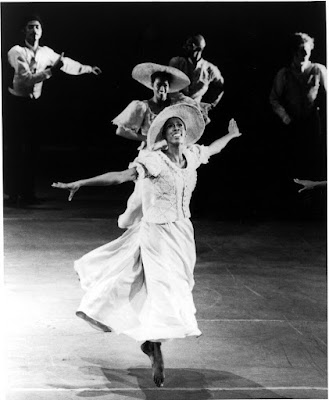
Judith Jamison


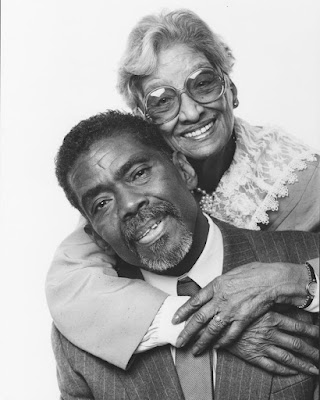
Alvin Ailey with his mother


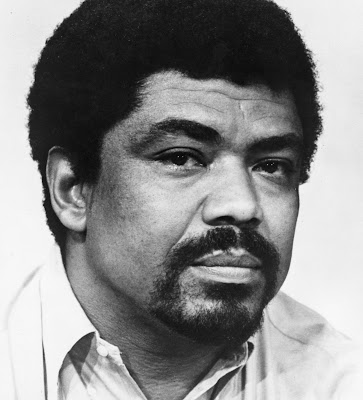
Alvin Ailey, 1965


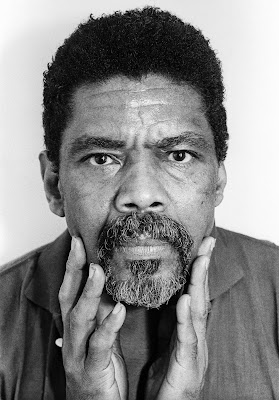
Alvin Ailey, 1986

Director Jamila Wignot


AILEY – made for TV                         B+                                                                                     USA  (94 mi)  2021  d: Jamila Wignot

Sometimes your name becomes bigger than yourself.  Do you really know who that is?           —Carmen de Lavallade

Made for the American Masters TV series, long overdue, as the subject is an American treasure, Alvin Ailey, dancer, choreographer, and founder of the Alvin Ailey American Dance Troupe, one of the world’s most renowned modern dance companies, which has gone on to perform for an estimated 25 million people at theaters in 48 states and 71 countries on six continents.  Presenting works that speak to the black American experience, blending important works of the past with newly commissioned works, more than 235 works by over 90 choreographers have been part of the company’s repertory.  Much of it told in his own words, featuring rarely seen archival footage along with interviews of those who knew and worked with him, Wignot’s documentary is a revealing exposé on the life of a black artist in America seeking to define himself when there was literally no outlet for his creativity, yet he burst on the scene anyway, founding his own dance company in 1958.   The film opens with a brief introductory segment in 1988 with Cicely Tyson presenting Ailey with a Kennedy Center Honor for a lifetime contribution to American culture, with a cut to President Ronald Reagan and first lady Nancy applauding cheerfully, an ironic twist to the festivities, as Reagan ignored the AIDS crisis, waiting four years after the crisis began before publicly acknowledging AIDS, well after nearly 90,000 thousand had already died.  Coming just a year prior to his death, dying at age 58 from complications from AIDS, the film cuts to the current Upper West Side Manhattan headquarters of the Alvin Ailey American Dance Troupe in New York, which includes a massive window-lined rehearsal hall substantially larger than any stage, as choreographer Rennie Harris, flanked by company associate Masazumi Chaya, introduces Artistic Director Robert Battle as they begin rehearsals on a larger work entitled Lazarus delving into aspects of the life of Alvin Ailey, like a memory play, peeling back the layers of his life, honoring the 60th anniversary of the company he founded.  The true star of the show, however, is uncredited rehearsal director Nina Flagg, who leads them in “irk and jerk” hip-hop movements, with bodies popping in motion, adding an electric choreographed synchronicity, where this kick-starts the film into gear, Ailey dancers perform an excerpt from 'Lazarus,' together while apart YouTube (2:08).  It’s a blistering tribute to the beauty of dance movement, as Ailey sought to convey truth through movement, becoming a study of the man and his enduring vision.  Taking us back to his childhood during the Depression, mixing in archival footage with audio interviews of Ailey, rarely ever heard speaking about himself, let alone in such an unguarded fashion, as he grew up in rural Texas, never knowing his father, raised by his mother, “I remember the sunsets.  I remember people moving in the twilight,” recalling being carried on her hip as she moved from place to place looking for work, picking cotton, cleaning white folks homes, even witnessing her being raped by a white man when he was just 5-years old.  He also recalls sneaking out at night to visit the juke joints, marveling in the freedom of expression and the pleasure of watching others dance, but he also remembers experiences with a best friend, saved from nearly drowning, with his friend covering his body, lying on top of one another, offering a titillating sensation.  At age 12, his mother moved to Los Angeles, where he had to hide his interest in dance, which for boys was viewed as being a sissy, with a coach asking him to try out for the football team, but he had no interest in knocking people down.  Instead, at 14 he watched a performance of the Ballet Russe de Monte Carlo that literally changed his life, as he wanted to see more of that.  What particularly inspired him was watching a performance of the Katherine Dunham Dance Company, viewing it as a revelation, as it reflected the black experience, taking dance to new heights, finding himself taking classes with Lester Horton, one of the first racially integrated dance schools in America, sitting way up in a corner, never doing anything until Horton finally moved him onstage to see what he could do, eventually joining his dance company in the early 50’s alongside his high school friend Carmen de Lavallade, taking over as the artistic director of the dance troupe when Horton died suddenly.            

Early footage of Ailey dancing is seen, young and muscular, partnering with Carmen de Lavallade, as he began to choreograph his own works.  In the 1950’s and 60’s, Ailey danced in shows starring Harry Belafonte and Lena Horne (no mention is made of his performing act with Maya Angelou), while performing in four Broadway shows, including House Of Flowers, gaining some notoriety, but once the run was over, he quickly lost all his contacts, where he was simply left all on his own, as there was no future for a black dancer and choreographer, who also happened to be gay, so he began to question himself, where much of this film revolves around those existential questions, for which he had no answers at the time, as there was no model to draw inspiration from.  Instead he had to look inward, as he was just 27-years old when he formed his own dance company with just 7 dancers, discovering his unique voice as a creative artist, recalling ancestral “blood memories” when he choreographed Blues Suite, just his 6th ballet, set in a sporting house, or brothel during the Depression, where men and women who frequent the place flirt, drink, and dance all night to the music of the blues, while morning brings the sound of a train and church bells.  Ailey put real people onstage, characters pulled out of his rural Texas childhood, who were largely underrepresented in the American theater.  Ailey, for instance, preceded playwright August Wilson in the stage theater by more than a decade, with both uniquely chronicling the black experience of 20th century America.  Ailey took his company on the road, all stuffed into one station wagon, including costumes, lighting, and stage props, while staying in some flimsy motels along the way, as it was during the Jim Crow era when blacks were still designated to segregated areas.  Bill Hammond, the white stage manager, sent pictures of the entire ensemble to the motels ahead of time so they would not be surprised when they arrived, as being turned away at the door would have a devastating impact on the dignity and morale of the group.  In 1960, Ailey released his signature work, Revelations, which even today remains a staple of their repertoire, performed continuously around the globe, a celebration transcending faith and nationality, probably seen by more people around the world than any other modern dance, taking audiences back to church spirituals, gospel songs, and the holy blues, exploring the deepest grief and the most jubilant hallelujahs, expressing the heart and soul of the black church, where houses of worship provided a safe sanctuary since the days of slavery, offering salvation and hope, becoming part of the inner consciousness and collective identity of black people in America, Revelations - Alvin Ailey American Dance Theater YouTube (33:44).  For Ailey, he wanted his dance troupe to offer a similar safe space, where his dancers could act as diplomats gracefully guiding audiences along a spiritual and historical journey.  In 1962, President Kennedy sent the Ailey company to tour the Far East, Southeast Asia, and Australia as part of a good will ambassador tour, the first black company asked to participate, Ailey Dancers in the Streets of Paris YouTube (1:52).  The film also includes many performances by the phenomenal Judith Jamison, an Ailey dancer who joined the company in 1965, becoming the star for fifteen years before succeeding Ailey as the Artistic Director after his death in 1989, a role she assumed for the next 21 years, succeeded by Robert Battle in 2011.  When describing Revelations, Jamison revealed, “What took me away was the prowess and the technique and the fluidity and the excellence.  That was the miracle.”  Jamison and Lavallade appear as interview subjects in the film, along with former dancers and company associates George Faison, Mary Barnett, Sylvia Waters, Sarita Allen, Masazumi Chaya, and choreographer Bill T. Jones, whose modernist approach was brought in to keep abreast with the times.  While all shared experiences, perhaps only Jones, with his unapologetic candor, attempted to answer the lingering question of just who Alvin Ailey was as a man and fellow artist, suggesting he wanted to transcend the restrictive label of being a black artist, as artists may create beautiful things, but they also have to give representation to the turbulence of the times as well as their own troubled inner spirits.  “What about the troubled artist, who is often turned in and barbed?”  Part of the transparency of dance is that the choreographer has to reveal so much of himself onstage, suggesting “This was a very vulnerable thing to witness.  But I saw him really trying to go in search of what I believe had probably made him a choreographer.  He wanted a poetry.”

While very few dance movies hold up over time, cinema instead features dance as an integral part of a larger feature, like Bob Fosse’s CABARET (1972) or All That Jazz (1979), the Fred Astaire and Ginger Rogers movies, and a whole host of MGM musicals, yet what stands out for superlatives are the 17-minute long Gene Kelly and Leslie Caron dance sequence from Vincente Minnelli’s AN AMERICAN IN PARIS (1951), “An American in Paris Ballet” Gene Kelly, Leslie Caron and Ensemble “An American in Paris” (1951) YouTube (8:31), a magical scene in film history taking viewers on a tour of French art history, or the extended Hans Christian Andersen fairy tale ballet in Powell and Pressburger’s THE RED SHOES (1948), The Ballet - The Red Shoes (1948) YouTube (20:56), one of the most visually astounding 20-minute sequences ever made, a celebration of artistic obsession and a cautionary tale, with suggestions that you may have to die for your art.  As for uniquely original films entirely based upon dancing, Wim Wenders’ Pina in 3D (2011) comes to mind, though Frederick Wiseman’s exquisitely beautiful BALLET (1995) may be the most captivating, a near three-hour tour de force documentary made exclusively from behind-the scenes rehearsal footage mixed with largely unedited onstage performances.  What makes this film so compelling is the way Wignot creates an intensely personalized dialogue between the present and the past, where the 60th anniversary choreography footage of Lazarus contrasts with the entirety of Ailey’s work, literally resurrecting his entire career, where the work becomes an intricately connected memory piece.  His dances were revolutionary social statements expressed with a theatrical flourish, creating an extroverted style of dancers with strong personalities and identifiable skills, as powerful in his own time as ours today.  Ailey makes black life indispensable to the American story, deserving a central place on the world stage as quintessential American art, created by a working class, gay black man who rose to prominence in a society that systematically strove to exclude him, transforming the world of dance for those on the margins.  Reveling with a multiracial sense of pride, audiences around the world responded to his themes of oppression, personal struggle, and transcendence.  In 1971, almost in secret, he choreographed a new piece for Judith Jamison entitled Cry as a surprise birthday present to his mother who was celebrating her birthday in New York, featuring a female dancer clad in a white leotard and a long ruffled skirt, Alvin Ailey and the AMAZING Donna Wood in CRY 1982 YouTube (10:31), taking the audience on a journey of bitter sorrow, brutal hardship, and ecstatic joy, dedicated to “all black women everywhere – especially our mothers.”  Yet perhaps harder to find is the man behind the curtain, a largely closeted figure spending a great deal of his career isolated and alone, a gay man closely watched by the FBI, referring to Ailey’s homosexuality as “lewd and criminal tendencies,” threatening his company with bankruptcy if he showed any signs of effeminate or homosexual behavior while on tour, leading a solitary life, even at the height of his success, suggesting there was an elusive man inside the man that few ever knew, rarely confiding his personal pressures even within his inner circle.  A melancholic tone pervades throughout the film, as he seems to have lost himself in his workaholism, fame, and success, where questions remain how a black man made it in a predominately white world, evoking other questions that are painfully urgent and personal, often taking him to a dark place.  It hit him hard losing one of his premiere dancers and closest friends, Joyce Tisler, from an untimely death in her 40’s, or the sudden, inexplicable disappearance of a lover, Abdullah, brought to New York after having met in Paris.  He retreated into that mental space fraught with personal anguish and pain, suffering a mental breakdown requiring hospitalization, before dying all too young from AIDS during the New York AIDS scare of the 80’s, something he tried to hide, a time when people’s appearances were changing, getting thinner and seemingly dying everywhere, with Ailey having to choose a suitable successor to run his treasured dance company.  Dancer and choreographer Bill T. Jones insightfully offers his own assessment, “Men are men on Ailey’s stage and women are women on Ailey’s stage, and they are exemplary, and they are the survivors of racism and slavery, and they are beautiful and they are strong, and they will live forever and leap higher and higher.  And you’re telling me that they have sex?  And they have sex that could kill them?  You’re telling me Mr. Ailey himself?  Oh, that’s too much.  That’s too much.  We have to edit that out of the history.  And he participated in the editing of it.  He was alone.  What community of gay people was he with that could say, ‘Alvin, this is happening to us’?”  Yet it’s that rhythmically intricate footwork from Lazarus that leaves us with a spiritual force that’s uplifting, accentuating dancing with an irresistible beat, featuring the glorious music of Nina Simone, coming from a choreography based on a Philadelphia dance stepping style called GQ.  More than anything, however, Ailey understood dance as a tool for personal transcendence that epitomized an idealized freedom and liberation through movement, a catharsis for the bleak realities of the human experience, offering dreamlike visions evoking the full range of human emotions, like carefully preserved time capsules for the future.