




 |
| Writer/director Radu Jude |


BAD LUCK BANGING OR LOONY PORN (Babardeala cu bucluc sau porno balamuc) B Romania Luxembourg Czech Republic Croatia Switzerland Great Britain (106 mi) 2021 ‘Scope d: Radu Jude
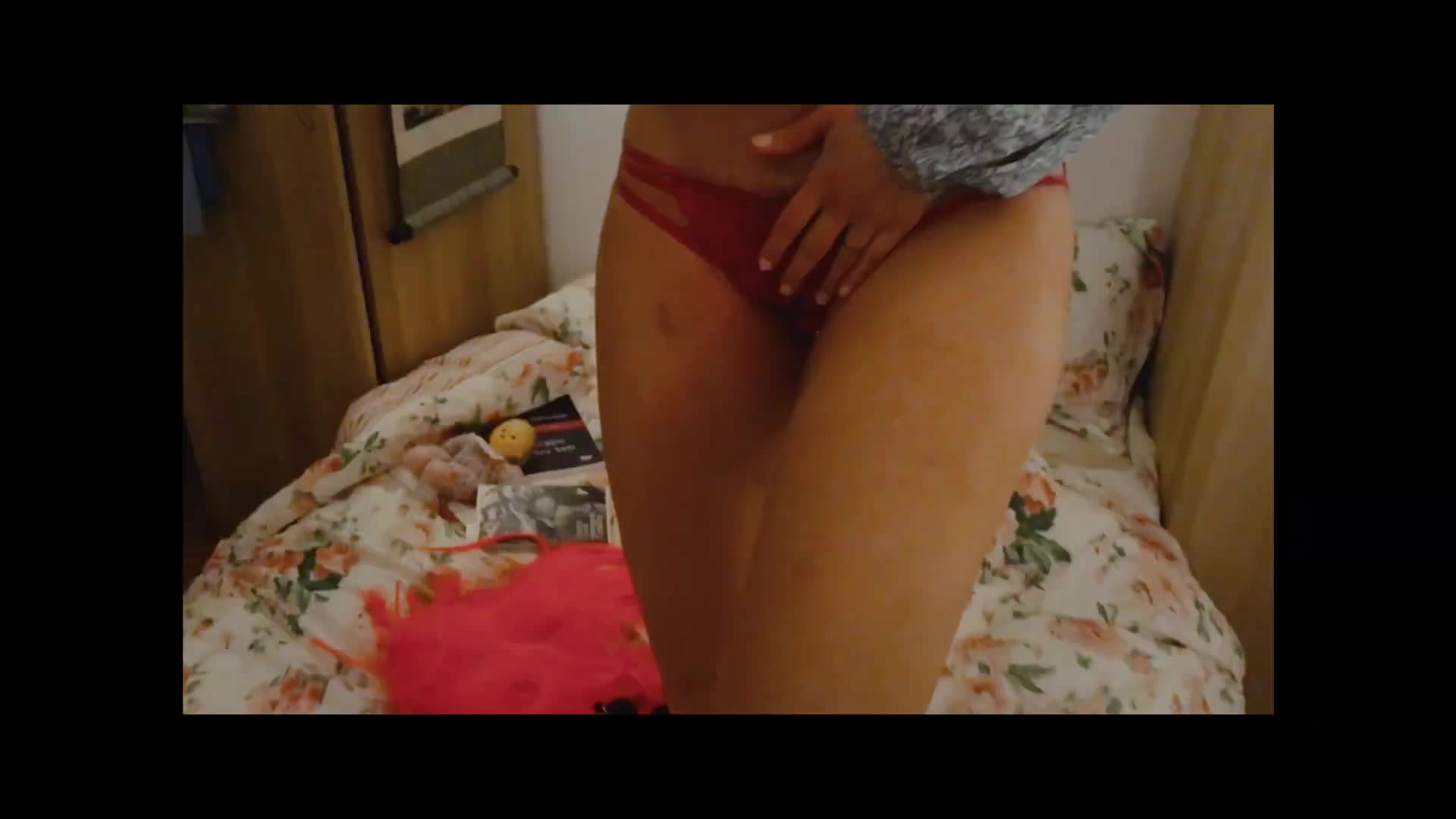
Bucharest in the year of Covid, a wildly provocative and controversial a film, sure to inspire hisses and groans, yet also uncontrollable laughter, as this rather demented, in-your-face entry into the Berlin Film Fest took away the Golden Bear for Best Film at the first-ever virtual event, where winners offered their congratulation thoughts by Zoom afterwards. Coming on the heels of I Don't Care if We Go Down in History as Barbarians (Îmi este indiferent daca în istorie vom intra ca barbari) (2018), where a Romanian filmmaker held his own country accountable for what happened during the war, as Romania was complicit in the Holocaust with anti-Semitic Nazi war crimes, responsible for the killing of more Jews than any other country except Germany, yet the nation would prefer to overlook those tiny details, still viewing their military heroes with reverence, with the director claiming it was taboo to even speak about this subject when he was growing up, resorting to comic sarcasm and absurd black comedy, as in Romania the door has opened for more far-right nationalists to push anti-Semitic hate speech among their xenophobic rhetoric. But that seems mild compared to this film, which opens with an X-rated sex scene that has been censored for American distribution, placing a full-screen block over the material with comic book style wording that reveals what you’re missing, yet few scenes are more absurd than a woman hilariously attempting to carry on a conversation with someone in the next room while delivering a blow job. Adding the presence of whips, spicy language, dirty talk, and edgy, salacious material only whips audiences into a frenzy, where at the moment, only iTunes carries an uncensored version in America. This raises an interesting question for today’s society, as what’s worse, porn or genocide? Explicit violence is routinely shown on television, yet nudity is not, revealing the moral hypocrisy of our own media standards, as nudity sparks public outrage, while no one has any problem with murder or genocide, which often lead the nightly news broadcasts. Often pointing to the protection of children, apparently showing them nudity is far more harmful than escalating degrees of extreme violence. But the central premise may be moral hypocrisy, recalling the societal satire of Luis Buñuel, or Godard’s philosophical rants in Two or Three Things I Know About Her (2 ou 3 Choses que Je Sais d’Elle) (1967), where according to Screendaily’s Jonathan Romney ('Bad Luck Banging Or Loony Porn': Berlin Review - Screen Daily), “The real pornography that has overrun Romania, it seems, is the obscenity of capitalism.” Resorting to an almost Monty Python comic tone, the exaggerated satiric style is often hard to digest, as much of this is presented fast and furious at a relentless pace, where mocking laughter can frequently be heard on the audio soundtrack. One of the few films depicting a society wearing masks during the Covid crisis, including the lead character, Emi Cilibiu (Katia Pascariu), who ironically played a nun in Mungiu’s Beyond the Hills (După dealuri) (2012), a history teacher at a prominent “Oxford quality” high school for the Romanian elite, seen in the opening having baudy sex with her husband comically set to the music of “Lili Marlene,” 1939 Lale Andersen - Lili Marlene (original German version) YouTube (3:12), a sentimental German love song co-opted by the Nazis during the war, with the husband uploading the sex tape to his phone, creating a public scandal when the tape is leaked from a private web site and the pornographic video starts appearing on various Internet sites, with parents and students outraged at what they see. Emi is quickly informed that there will be an impromptu parent-teacher meeting later that evening to decide the fate of her teaching career, an event that hangs over her head for the rest of the day.
Broken down into three segments, the detached and overly somber first reveals Emi wandering through the streets of Bucharest, a kind of scriptless cinéma vérité montage as she wanders in and out of various stores, blending into street traffic and pedestrians, occasionally talking to her husband on the phone, only to receive more bad news, as a series of phone calls suggest that the situation is escalating out of her control, as all attempts to take down the video have failed, eventually walking into a neighborhood pharmacy asking for a single Xanax pill, as she’s suffering from a particularly bad day. They refuse to fill the prescription without a doctor’s order, but offer her a plant-based alternative instead, which she gladly takes at an outdoor coffee café. An underlying angst is felt throughout this segment, with the camera often cutting away, finding something else that grabs one’s attention, before relocating Emi meeting overly rude or violently angry men that seem to be thinking only of themselves, blocking sidewalks in their monster cars or yelling obscenities at anyone who objects. This overriding sense of entitlement via aggression seems to pervade throughout Bucharest, reminiscent of Ulrich Seidl’s take on Vienna in DOG DAYS (2001), revealing characters who are either bigoted, small-minded, or just plain revolting, with an angry motorist deliberately running over a pedestrian who claims to have the right of way, where it’s impossible to tell which is spreading faster, the Covid virus or the pervasive spread of intolerance. The second narrative-free segment is entitled Short Dictionary of Anecdotes, Signs and Wonders, offering a series of caustic observations that alternate between witty remarks and damning facts, like a malicious human collage of collective stupidity, a surreal audiovisual montage not seen since the days of Dušan Makavejev in WR: MYSTERIES OF THE ORGANISM (1971), or SWEET MOVIE (1974), though his earliest films Man Is Not a Bird (1965) and Love Affair, or The Case of the Missing Switchboard Operator (1967) show irreverent signs of living behind the Iron Curtain, becoming a cinema manifesto on the paradox of living in Romania, often contrasting the communist past with its capitalist present. Using something of a subversive comic book tone, a Romanian Mad magazine, the film pokes fun at Ceaușescu and the former communist state, using a multitude of archival footage, where one scene shows little kids gathered together singing fascist songs that glorify nationalist patriotism through war, which is entitled “Children, political prisoners of their parents.” After Ceauşescu banned abortion in 1965 (just legalized in 1957), Romania saw the highest maternal and infant mortality rates in all of Europe, followed by the prevalence of dangerous black market abortions, which was well documented by Cristian Mungiu’s Palme d’Or winning film 4 Months, 3 Weeks, and 2 Days (4 luni, 3 saptamâni si 2 zile) (2007). If that’s not enough, there’s a follow-up sequence informing viewers just how strongly the Romanian Orthodox Church supported the ultra-right fascist state and the atrocities they committed, informing us that during the 1989 Romanian revolution to overthrow Ceaușescu, “when revolutionaries sought shelter from Army bullets, the cathedral kept its doors closed,” with footage of nuns happily singing fascist songs. These sequences leave brief imprints in the minds of viewers, recalling what it was like to grow up in Eastern European countries, particularly under the dictatorial authority of Ceaușescu. Jude even pokes fun at history, and capitalism, revealing how the French and Romanian Revolutions have become commercial brands of cigarettes and wine. In a contemporary sequence, farmers are seen dancing during the pandemic, yet maintaining social distancing by holding long sticks between them. There are curious references to the early days of pornography in cinema, while also documenting that “blowjob” is the most-searched word in the Romanian Internet Dictionary, while the subject of rape is culturally skewed, with statistics highlighting a male-dominated culture that continues to maintain a backwards view of women, still seen as subservient to the needs of men, who maintain their right to take “what is theirs” by force, as apparently 55% of Romanians believe rape is justified in some instances, such as women wearing provocative clothing. Since the fall of Ceaușescu in 1989, there has been a growing sentiment of hatred towards minorities and the disadvantaged with each passing year, suggesting that Romania lives in a Darwinian universe where only the strongest survives. Perhaps unsurprisingly, we learn that six out of ten Romanian children experience physical abuse at home.
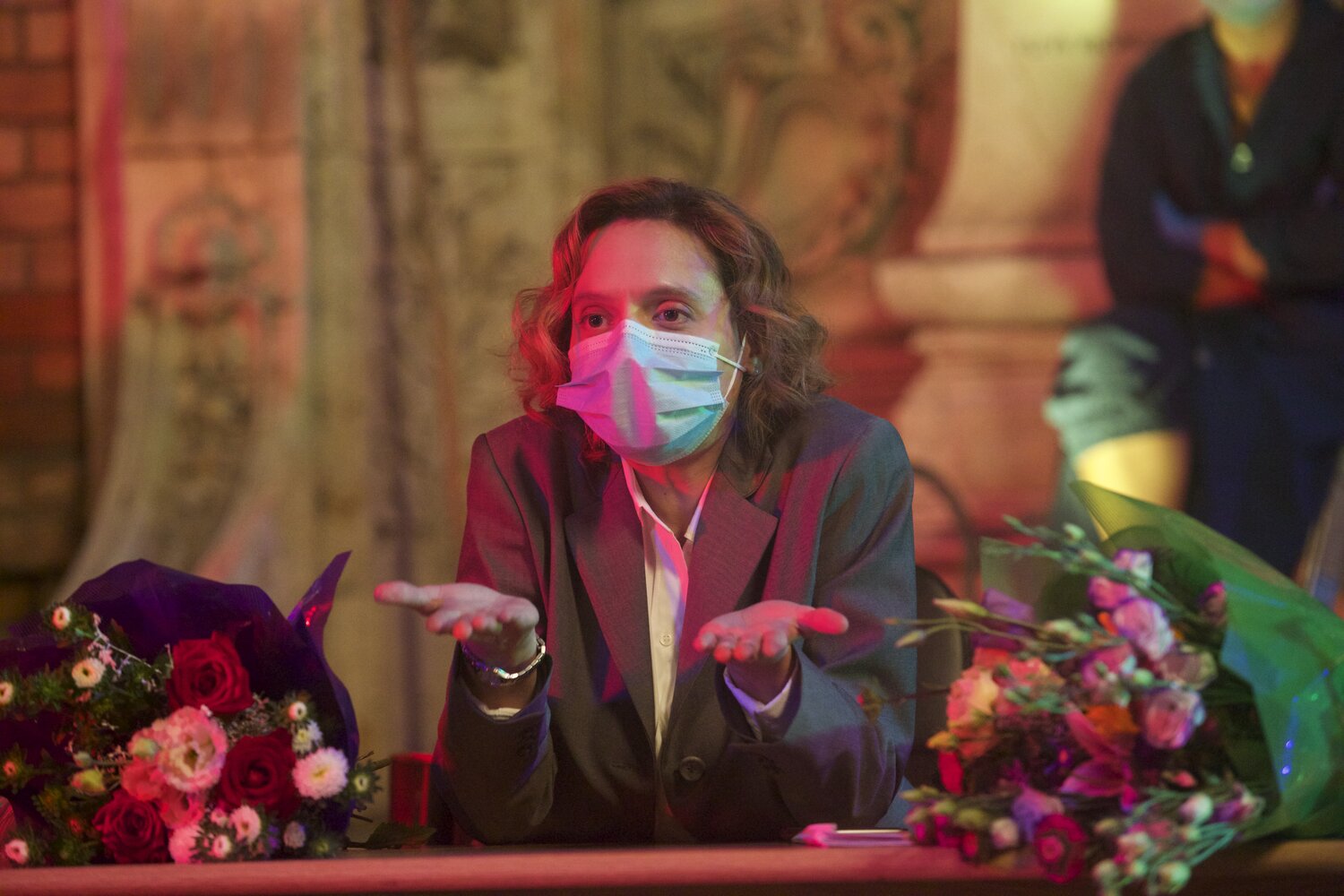
In the style of a chamber play, the parent-teacher meeting of the third segment takes place in an outdoor schoolyard setting, due to Covid restrictions, reminiscent of Abderrahmane Sissako’s film BAMAKO (2006), where an African Truth and Justice commission places war criminals on trial in an outdoor setting where neighborhood people can drop by and linger while listening to the testimony. In this sequence, Emi faces her accusers, all wearing a variety of masks, who offer condemnation for her shocking video which is played in its entirety before the mingling crowd, each coming closer to get a better look, particularly the men, with one man leering at the projected images before the full force of the community weighs against her, calling her a porn star, a harlot, a whore, and all manner of shunned creatures that have no business teaching their children. Emi strenuously defends herself, claiming she neither put the recording on the Internet, nor distributed it, claiming what she does on her own time is private, as the video represents consensual acts between two married people, then questioning why children have access to adult websites where they are strictly forbidden. As a teacher she has an impeccable record, with an excellent relationship with the students in her class, but the jury of parents takes on the picture of an eclectic social group, consisting of a priest, an intellectual, a police officer, a military figure, an airline pilot, a diplomat, a career woman, even a Czech émigré who out of nowhere spews some commentary on Václav Havel. Hounded for her immorality and incredible bad taste, she is barraged by a series of insults, called every name in the book, with the assembled mob taking on a lynch mob mentality, where she is guilty even if facts prove otherwise. As this mock trial goes on, it becomes a savage indictment of Romanian society, as it deviates into different detours along the way, with parents questioning some of her lesson assignments, promoting “Jewish lies about the Holocaust,” suggesting she may be indoctrinating the children by revealing Romania’s complicity with the Nazi’s during the Holocaust, something they refuse to believe, visibly obsessed with pre-modern ideas on what is considered acceptable class content, harkening back to the pre-Ceaușescu days when they attended school, which plays into Emi’s hands, as she defends herself well, even re-iterating some saucy language written by Romania’s national poet Mihai Eminescu (whose domineering bust sits behind Emi, continually seen being polished by a cleaning woman), quoting one of his verses from memory, which the gathering throng describes as a blatant lie, claiming she’s making it all up. The intellectual pulls out a strong defense about what’s in the best interest of children, offering lengthy quotes from his phone to support her position, where the director offers an enlightened position, turning this into an intellectual discussion on education that is quite provocative, but then someone will complain about a particular class assignment that required excessive memorization, where she has to defend her teaching methods, quoting the benefits to the developing mind, even if the passages are forgotten after a while. There are accusations that she’s anti-Antonescu, who presided over a period of authoritarian dictatorship, yet still beloved by the military, even if his fascist and anti-Semitic methods are frowned upon today, with the parents mirroring the prejudices of Romanian society, particularly their outright hatred of Jews, Gypsies, and gays. What this turns into is a rather exhilarating discussion of ideas, referencing Hannah Arendt and Isaac Babel, yet the shameful name-calling brings the discussion back down to earth, refusing to consider her actual qualities, concluding she’s too morally indecent to teach their precious children. The film has three different endings, none of them good, as each plays out as a version of the truth, yet the distinctive differences add a humorous element of exaggeration and farce, making something of a mockery of the idea of a public trial, turning the teacher into a super hero who implements her own brand of justice. The director tries to show that sex is a part of life, just like war, public discourse, consumerism, and Covid, where this film succinctly summarizes the culture wars that are currently being fought in a number of Eastern European countries, with the urban elites defending all the achievements of liberal democracies since the 1990’s, yet there is also a regressive wing that prefers a heavier hand of authority, with Romania experiencing a far-right resurgence, opening the door for the more rigidly dogmatic politics from the communist era, yet few films expose what’s happening in contemporary Romania better than Alexander Nanau’s Collective (Colectiv) (2019).


