Showing posts with label Raoul Coutard. Show all posts

Monday, July 24, 2023

Le Petit Soldat


Godard making his Hitchcockian cameo


Writer/director Jean-Luc Godard

Godard with cinematographer Raoul Coutard

Godard on the set


LE PETIT SOLDAT (The Little Soldier)                   B                                                                 France  (88 mi)  1963  d: Jean-Luc Godard

 The time for action is past.  I have grown older.  The time for reflection has come.                  ―opening narration from Bruno Forestier (Michel Subor)

In a 1971 essay, filmmaker Satyajit Ray summed up this early film (Tribute To Jean Luc Godard), “A cinema of the head and not of the heart, and therefore a cinema of the minority.” In the late 1960’s and early 1970’s, Godard made a number of politically radical films, with the mass general strike of May 68 in France figuring prominently in his development at this time, openly embracing Marxist orthodoxies, where the turning point is LA CHINOISE (1967), an absurdist, pop-art parody of Maoist/Leftist student activism coming a year earlier, followed just months later by the surreal anarchist portrayal of society’s collapse in WEEKEND (1967), with the film’s ominous final caption, Fin de Cinéma.  Coming in the midst of his most groundbreaking period of early 60’s films, Jean-Luc Godard: the Early Years, where he’s generally considered the pioneer of the French New Wave, he makes this outlier of a film, perhaps more interesting for what it foreshadows in Godard’s career than anything else, shot in the spring of 1960 in Geneva and Zürich immediately after Breathless (À Bout de Souffle) (1959), but it didn’t open in Paris until the year after My Life to Live (Vivre Sa Vie: Film en douze tableaux) (1962), making this his fourth film, but it’s actually his second, as it was banned from release in France until January 1963 due to its controversial display of torture on both the French and Algerian sides during the Algerian War, revealing the dirty little secret that French soldiers tortured Algerian prisoners and sympathizers, while the implicit anti-war message was not in keeping with the nationalist fervor.  The French government also threatened to bar Godard, a Swiss citizen, from France and the film’s producer, Georges de Beauregard, from the movie industry if it were shown internationally.  The struggle for Algerian independence was achieved in 1962 (The Algerian Revolution Changed the World for the Better), so eloquently documented in Gillo Pontecorvo’s The Battle of Algiers (1965), and the ban was overturned soon after the war was over.  While the politics of the film are vague and confusing, not really advocating one position over another, it does take a look at the dubious methods employed during the Algerian war, while also amusingly showing a photo of an alleged co-conspirator during an extended torture scene, which turns out to be producer Georges de Beauregard.  Godard joined forces with avowed leftist journalist Jean-Pierre Gorin, making a series of radical films with the Dziga Vertov Group, moving away from dramatic films, preferring to blend Brechtian distancing techniques with Marxist ideology, vowing not to make “political films,” preferring instead to “make films politically.”  Eventually abandoning his Marxist ideology of the 70’s, he never stopped making political films, as KING LEAR (1987) is not the Shakespearean play one expects, instead it’s rooted in the Chernobyl disaster, while FOR EVER MOZART (1996) dramatizes the civil war in the former Yugoslavia.  Godard was raised in bourgeois comfort along the shores of Lake Geneva in Switzerland, coming from an extravagantly wealthy family, as his father was a Swiss doctor while his mother was a medical assistant and daughter of one of the most prominent bankers in France, who was also well-connected in literary circles, as his closest friend was poet Paul Valéry.  Postwar Paris was a place of great philosophical and political debate, where the dominant intellectual figure was Jean-Paul Sartre, a prolific writer and advocate of existentialism, believing it was essential, after the experience of the war, that writers and artists become engaged with politics, taking sides if necessary.  The preeminent film critic was André Bazin, placing an emphasis on film technique, valuing the aesthetic and spiritual qualities of cinema more than any social message.  Godard was transformed by both, quickly becoming friends with two other film fanatics, François Truffaut and Jacques Rivette, often seeing three or four films every day, eventually joining forces in 1949 with editor Éric Rohmer in a short-lived film magazine La Gazette du cinema, with Godard, only nineteen years old at the time, already writing complex articles and reviews.  By the mid 50’s, these young guns turned Cahiers du cinema into the leading film publication in the country, still maintaining considerable influence today.

One of the few Godard films set in an earlier time, as the entire film is a flashback, as reflected by that opening voiceover, never having the privilege of accessing the present, so it actually takes place a few years earlier, playing out against a backdrop of a succession of radio broadcasts dating back to the spring of 1958 which explicitly refer to the Algerian uprising, yet there are also newspaper headlines with a date corresponding to when the film was actually shot, the same year, incidentally, that JFK became President.  A French colony since 1830, Algeria was in a state of revolt, with militants fighting a guerrilla war for independence since 1955.  French citizens as well as the military soldiers came under sustained attack from the Algerian resistance, with the army responding with escalating brutality, determined that Algeria would remain French.  General Charles De Gaulle rode that wave of military escalation to the French Presidency in 1959, having no intention to liberate French colonies, incorrectly assuming retention of colonial interests was their last chance to conserve French international power, rewriting the constitution while establishing the Fifth Republic, as the fourth had been weakened by a series of colonial losses from French Indochina to Morocco and Tunisia.  The insurrection in Algeria was viewed as the final straw, much like America viewed Vietnam, yet both ended up as humiliating debacles of colonial misadventure.  Delving into the behind-the-scenes espionage battles for each side, in typical Godard fashion it features a love affair with a girl, a gun, and a car, in this case a souped-up 1951 Chevrolet Styleline Deluxe, turning the terrorism that was tearing France apart into a pulp fiction B-movie, complete with incessant images of cigarettes and sunglasses.  Bruno Forestier, played by a brooding Michel Subor, appearing 40-years later in two of the best films Claire Denis ever made, Beau Travail (1999), which imagines this same character much later in life, also the otherworldly The Intruder (L’intrus) (2004), is an army deserter on the run in France, taking refuge in Geneva, Switzerland, and because of his precarious position as a deserter, he is blackmailed into doing dirty jobs for the right-wing French OAS (Organisation armée secrète), finding himself posing as a journalist and photographer, with Godard making a cameo appearance behind Bruno at a train station, anxiously looking at his watch about eight minutes into the film.  Much like Michel Poiccard in Breathless (À Bout de Souffle), Bruno is self-involved, but colder, harder, and more disdainful, evolving into his own existential dilemmas, portraying a kind of intellectual and moral confusion, reflective of man’s alienated existence, mirroring the existential inner dialogue of Bresson’s Pickpocket (1959), made about the same time, expressing a deeply tormented subconscious, where his voiceover narration takes us into film noir territory, one of which includes Godard’s most famous line, spoken during a photo-shoot sequence, “Photography is truth.  And cinema is truth 24 times per second.”  Before Godard, the Jump cut was a mistake, a sign of amateurism, yet in his hands, it was symbolic emphasis announcing that the rules of cinema were meant to be broken, like removing most of the ambient sound, which is especially noticeable in outdoor street scenes or driving through traffic, while emphasizing the protagonist’s fractured uncertainty with an abrupt editing style, almost entirely dubbed, as was his first film, where the voiceover takes the place of a nearly non-existent musical soundtrack, though Maurice Laroux’s deliberately oppressive atonal piano music adds to a disorienting mood.  Bruno’s immediate superior is Jacques (Henri-Jacques Huet), a veteran of the Indochina war, ordering him to carry out an assassination of Arthur Palivoda, a radio host who is pro-FLN (National Liberation Front) and adamantly in favor of Algerian independence.  But Bruno hesitates, questioning his lack of political convictions, discovering he really has no compelling interest, feeling morally empty and vacuous, revealing a side that is completely different than how he sees himself, where the character he most resembles is Jean-Louis Trintignant in Bertolucci’s The Conformist (Il Conformista) (1970), which also exhibits a complicated flashback technique, reflecting the character’s anxiety-ridden state of mind.  As a kind of diversion, and quite unexpectedly, Bruno loses a bet that he wouldn’t fall in love with a girl, Le Petit Soldat - The Bet (CC) YouTube (4:04), but instead falls head-over-heels in love with Véronica Dreyer (Anna Karina in her first feature role, discovered as a successful young model in a soap ad for Palmolive), a friend of a friend who, unbeknownst to him, may be working for the FLN, though this is never mentioned until the end. 

The photo-shoot with Véronica is also an existential monologue, “When you photograph a face, you photograph the soul behind it,” Le petit soldat [The Little Soldier] (1961) by Jean-Luc Godard ... YouTube (4:16).  While this suggests a certain amount of philosophical self-reflection, spoken in the midst of a budding love affair, it’s more surface than real, as Bruno pretends to political activism, while deferring from action, becoming a story about a man without ideals, perhaps hoping freedom will come from the barrel of a gun, yet this becomes a perplexing dilemma, with Véronica bluntly getting to the heart of the matter near the end, “I could see the French are wrong.  The others have an ideal, but not the French.  Against the Germans, the French had an ideal.  Not against the Algerians.  They’ll lose.”  Lacking a moral center, Bruno’s ambivalence may reflect how ordinary French citizens viewed the Algerian crisis, which was mostly happening on distant shores, and not really anyone’s immediate concern, so they had little vested interest, and by the time the film was finally released, the war was over, which may explain the viewer indifference, yet it was made without knowing the outcome, revealing the problems of war and its moral repercussions.  As he tries to seduce her with his camera, he asks infantile questions while making silly requests, “Shake your hair like this, or light a cigarette, take a shower,” hoping the camera will reveal the secrets he’s unable to uncover, exploding irrationally when he learns she wants to be an actress, exhibiting paternalistic and sexist attitudes, which may reflect Godard’s own views, as he seems equally befuddled by her own alluring feminine mystique, where he uses her initial awkwardness in front of a camera to his advantage, becoming a dominating presence in his next films.  They were a couple by the end of the picture, marrying not long afterwards, becoming one of the most celebrated pairings of the 1960’s, making seven critically acclaimed films together before suffering one of the most well-publicized break-ups.  While there is a casual reference to the car-bombing of Professor Lachenal, this is in reference to the March 26, 1960 letter bomb murder of Professor Georges Laperche at the University of Liège (Two Books of Questions, One Opera and a Composition ...), known for his opposition to the French occupation of Algiers, where incidents of this kind led to the conflict being described as a “dirty war,” as the government secretly targets the arms dealers before going after FLN sympathizers.  Bruno’s hesitation is viewed with distrust, suspecting he’s a double agent who’s been compromised, leading to his kidnapping and torture by Algerian militants attempting to identify who he is working for, which is chilling in its nonchalance of burning flesh, electrocution, and waterboarding, creating a murky atmosphere of unrelenting anxiety and tension, while later, behind the scenes, we discover the pro-colonial French do exactly the same, making reference to French-Algerian journalist and French Communist Party member Henri Alleg’s autobiographical account of enduring French torture sessions in his 1958 book La Question, an instant best-seller that was re-issued by a Swiss publisher after it was banned by the French government.  French soldiers were subject to brutal torture from the Nazi’s during the war, so the thought of them now inflicting these same atrocities against the Algerians and even some of their own citizens was unconscionable.  Bruno’s character embodies Sartre’s existential quandary about man’s fate in the modern world, and the limits of freedom of choice when it comes to political action, mirroring Godard’s own existential predicament at the time, juxtaposed against the dirty secrets and double-crosses behind the Algerian War.  As both factions, French and Algerian, close in on him, he desperately wants to flee to safety with Véronica, but he also faces a lingering sense of duty, the same profound anguish faced by the Communist characters in Andre Malraux’s The Human Condition.  At times this becomes a dry political exposé spouting didactic phrases with a stream-of-conscious sensibility in line with his later films, quoting revolutionaries, or literary figures seemingly at random, having the same tiresome effect as the William S. Burroughs Cut-up technique, as it’s never integrated into a meaningful or cohesive narrative, feeling hollow and fractured, and deeply pessimistic, where it hits the same repetitive note over and over again with little relief, Le Petit Soldat (1963) Jean-Luc Godard - promising ending scene (with subtitles) YouTube (6:43).  It’s easy to see why this darkly somber and contemplative film didn’t fit with his other more spontaneously upbeat works at the time, all shot by Raoul Coutard, and even when seen from today’s vantage point, there’s never a real sense of urgency, instead it provides an ugly backdrop for the underhanded power struggles going on behind the scenes, where the political left and right are indistinguishable, equally deplorable, reflecting the same amorality that exists in gangster films, where there’s no beauty or truth, only a detached yet heavy-handed fatalism about the future, where ideals and values are worthless, having been corrupted to the point of meaninglessness, mirroring his final act of desperation, hoping to find relief in escapism, but there is no relief, only inevitability.    

Le Petit Soldat (1963) - Jean-Luc Godard Criterion film on YouTube (1:28:24)

Watch Le Petit Soldat Full Movie Online Free With English ...  entire film available on FshareTV with multiple subtitle options (1:28:00)

Monday, May 23, 2022

Z


Director Konstantin Costa-Gavras

Grigoris Lambrakis a month before his assassination


Christos Sartzetakis


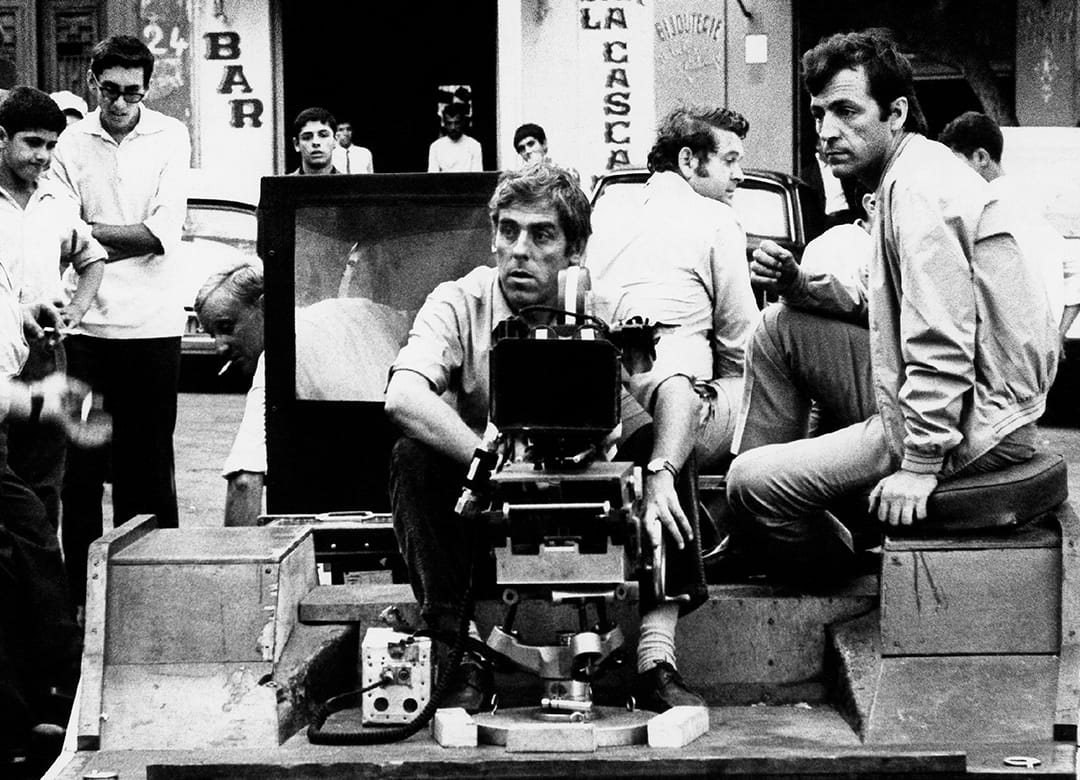
Raoul Coutard behind the camera with Costa-Gavras

Costa-Gavras with Yves Montand

Costa-Gavras with Jacques Perrin


Z                      A                                                                                                                      France  Algeria  (128 mi)  1969  d: Konstantin Costa-Gavras

Any resemblance to actual events, to persons living or dead, is not the result of chance.  It is DELIBERATE.                                                                                                                               —The opening title card of Z

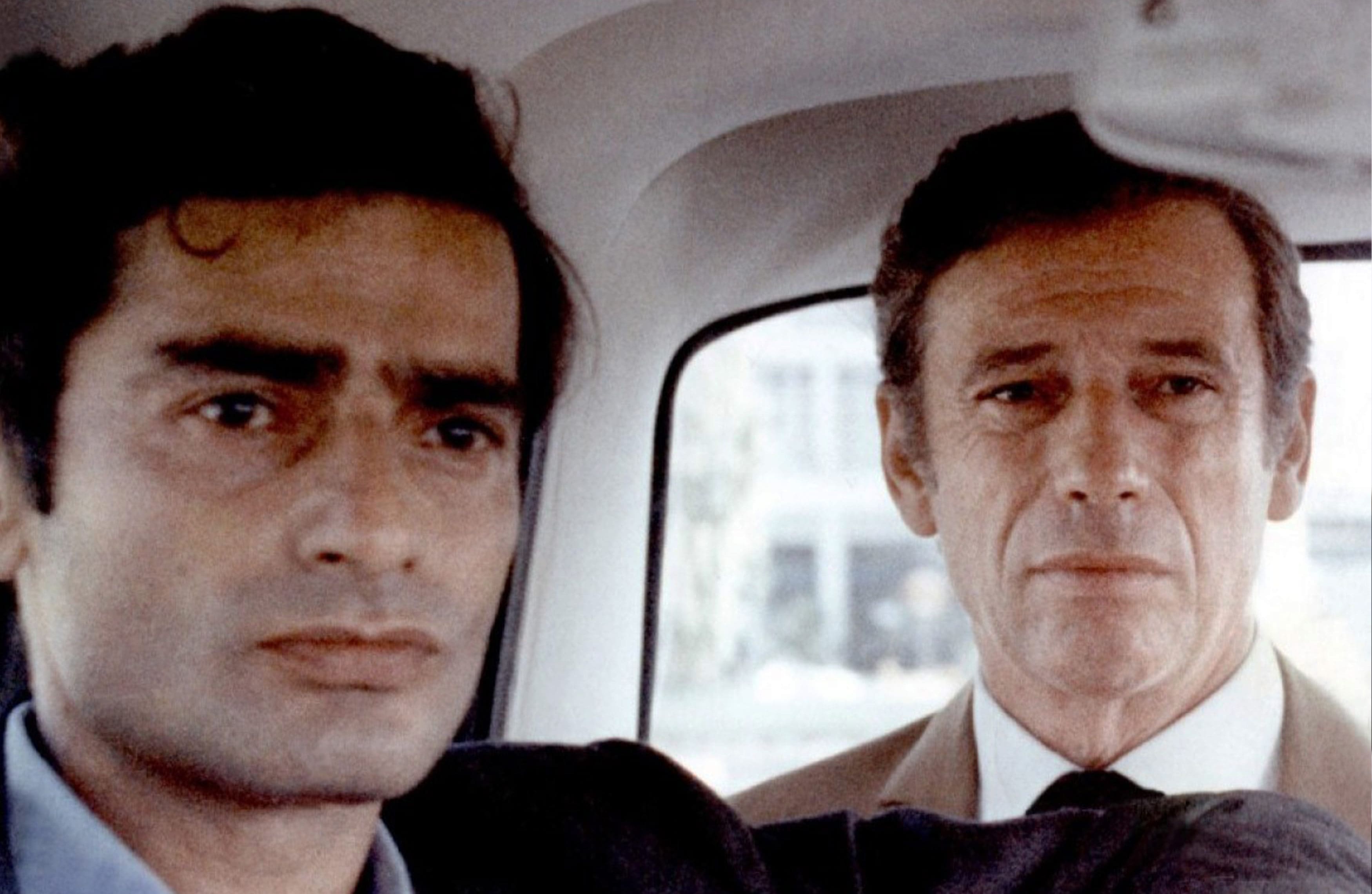
An incendiary political thriller based on the 1966 Vassilis Vassilikos novel, which lists no government authority by name, only their position, documenting the events leading up to the 1963 assassination of Greek pacifist and social democrat reformer Grigoris Lambrakis (played by Yves Montand), known as the “Lambrakis Affair,” whose death unleashed an unexpected scrutiny of a fabricated series of explanations provided by the police, all eventually exposed as lies, introducing the world to one of the more important figures in cinema, the Investigating Judge, or Examining Magistrate (Jean-Louis Trintignant as Christos Sartzetakis), who overlooks all the threats to his life and career, as well as his own political ideology (the son of a military colonel) and actually uncovers factual evidence contradicting the façade of police reports, and one-by-one placing the conspiracy of Greek military leaders under arrest, touching the social consciousness of young cineastes, critics, and political activists around the globe who had never seen a movie like this.  Premiering at the Cannes Film Festival (strangely spoken in French), mostly shot in Algeria, it won the Jury Prize, with Jean-Louis Trintignant, who would go on to star in Bertolucci’s The Conformist (Il Conformista) (1970), also picking up the Best Actor Award, making over $14 million dollars internationally, inspiring a generation of conspiracy dramas, while the film also won Academy Awards for Best Editing and Best Foreign Film.  Hugely successful in France and abroad (though banned in Greece), screenwriter Jorge Semprún fought fascism under the Franco regime in Spain, shot by French New Wave cinematographer Raoul Coutard, edited by Françoise Bonnot, while the musical score was by Greek composer Mikis Theodorakis, the film unveils themes that are central to the work of Costa-Gavras, the repercussions of tyranny and the subtle variations of guilt.  The director made a Political Trilogy of films with Yves Montand, a renowned actor and singer already associated with progressive causes (alongside his equally legendary wife Simone Signoret), including THE CONFESSION (1970), another political thriller based on a true incident, the kidnapping of a Czech Communist Party functionary (Yves Montand) that becomes a critique of Eastern Bloc Communism, and STATE OF SIEGE (1972), another fictionalized treatment of an actual event, when an American intelligence agent (Yves Montand) is tortured/interrogated/assassinated by Uruguayan Marxist terrorists, all films that meticulously detail a sequence of events with harrowing ramifications.  The director has come under an array of criticism from Marxist sympathizers who suggest his dramatic methods tend to invoke sympathy for individual victims of political repression.  A tireless champion of artistic freedom, Costa-Gavras’s father fought against the Nazis in the left-wing Greek resistance movement, but after World War II was labeled a communist by the country’s new government and frequently imprisoned.  The political blacklisting of his father eliminated higher educational opportunities for his son, who was a leading ballet dancer in Greece, but unable to hold a driver’s license, also denied permission to study film in the United States, so instead he emigrated to Paris to study law and filmmaking, becoming synonymous with tireless research and storytelling of profound skill and integrity.  Breaking into the public consciousness with this film, it is a shattering and viscerally potent experience, with viewers enticed and manipulated by a new manner of experiencing events and ideas, featuring a level of immediacy and urgency that is exceedingly rare to cinema, something along the lines of Gillo Pontecorvo’s The Battle of Algiers (1966) or Paolo Sorrentino’s Il Divo (Il divo: La spettacolare vita di Giulio Andreotti) (2007), taking us into the bowels of the Italian General Assembly and Giulio Andreotti, serving seven times as the Italian Prime Minister, able to withstand multiple murder trials, reported connections to the mafia, while also accentuating the kidnapping and eventual murder of then Italian Prime Minister Aldo Moro.  It also brings to mind a more local experience, Howard Alk’s The Murder of Fred Hampton (1971), where a Black Panther activist was assassinated by police, but their tracks were similarly covered by a web of deceitful lies by the police, and at the time, there was no Examining Magistrate to sort out fact from fiction, so that job was left to the filmmaker himself.  Drawing from films with an intense political message, capturing the tensions and energies of the time, much of this resembles the paranoid conspiracy films of the 70’s, clearly inspired by a decade of assassinations in the 60’s (Assassinations and attempts), from John F. Kennedy, Robert F. Kennedy, Patrice Lumumba, Mehdi Ben Barka, Che Guevara, Malcolm X, Martin Luther King, and Fred Hampton, yet what’s unique to this film are the slow introduction of at least 30 different characters, each seemingly having their own point of view, all providing subjective, alternative, and contradictory versions of the same incident, as flashbacks only increase the psychological tension, turning this into a RASHOMON (1950) style inquiry that poses particular challenges to the viewer. 

In 1967, two years before filming started, the far-right military junta, under the authoritarian dictatorship of Georgios Papadopoulos and the Colonels’ Coup, took control of the Greek government through a coup d’état, instantly declaring martial law, the suspension of political expression, and the arrest of political enemies, while implementing draconian restrictions on individual liberties and freedom of the press.  Much of this is reflected in both the opening and closing scenes of the film, as in the introduction an Assistant Minister of Agriculture is revealing methods to eradicate mildew or crop disease, which he equates with leftist foreign interference, a metaphor for communism, which requires indoctrination at schools, universities, or working-class factory plants, suggesting their unwanted presence needs to be completely eradicated from Greek society through an aggressive use of voter intimidation and a cooperative police and military plan at the local level to switch votes to their own party.  What this film demonstrates, then and now, is how the mechanics of fascist corruption are firmly hidden under a mask of law and order.  Greece was undergoing a decade-long struggle for political dominance between the left and right, leading to a rise of military conservatism seeking to oust the outside Soviet influence clashing with leftist, communist-leaning organizations seeking to create a Modern Greek state free of American influence, specifically a proposed U.S. Polaris missile submarine base.  Both sides had nationalist agendas free of outside political agitation, so when the Deputy, leftist activist Grigoris Lambrakis, a member of parliament for the opposition Union of the Democratic Left, is called upon to give an anti-American and anti-nuclear speech in the Greek port city of Thessaloniki on May 22, 1963, the local government shuts off all options, refusing permits to both indoor and outdoor auditoriums, confining the event to one single option that they could prepare for, a tiny union hall just across the street from the hotel where Lambrakis is staying, filling the streets with anti-leftist hooligans, basically paid rabble rousers utilized by the police to stir up trouble, interrupting speeches with clubs and sticks, targeting communists and students, sending many to the hospital.  Despite receiving a credible death threat earlier in the day, the police intentionally ignored it, claiming this was a tactic often-used to gain headlines in the newspapers.  Nonetheless, Matt (Bernard Fresson) and Manuel (Charles Denner), two leftist lawyers, are hastily making arrangements, only to be thwarted at every turn, reconfiguring things at the last moment, notifying the pubic of the changed venue through the distribution of student pamphlets, yet they are harassed and interrupted as carloads of agitators are unleashed upon them, many subject to brutal beatings, creating a manic disturbance even before things are allowed to begin.  By the time Lambrakis arrives at the airport and transported to his hotel, he has difficulty crossing the street, as the assembled police simply ignore the marauding crowd, with one of them bashing Lambrakis in the head even before he climbs the stairs to the union headquarters, broadcasting his speech via outdoor speakers, yet the police have built a heavy presence of right-wing thugs out on the street who unleash a barrage of rocks, clubs, and fists as the night explodes in a torrent of confusion and panic, described as “hoodlums” and “wage slaves without wages” in his speech denouncing Greece’s use of nuclear armaments while arguing for a move from the country’s right-wing, pro-war stance to a more pacifist approach, contending half the entire budget goes to military expenditures.   When Lambrakis tries to return to his hotel, a three-wheeled truck known as a kamakazi comes out of the crowd driven by Yago (Renato Salvatori as Spyro Gotzamanis), targeting the Deputy, with Vago (Marcel Bozzuffi as Emmanouel Emmannouilidis), a man in the back hitting him with a devastating blow to the head, knocking him first to his knees, before falling to the ground in a pool of blood, which gets replayed through witness testimony in slow motion, much like the Zapruder film.  In the ensuing pandemonium, a man leaps onto the kamikazi and attempts to engage them, but they fight him off, leaving him heavily injured on the street, where they would have finished him off except pedestrians arrive along with the police, with the driver immediately contradicting the witness testimony.  Nonetheless, Yago is hauled down to the police station.  It’s not the assassination, however, but the ensuing investigation that dominates the film, following a systematic structure, something first realized in Fritz Lang’s M (1931), following the culprits, confronting the avalanche of lies, the attempts to silence witnesses, and the eventual arrests of the real criminals.   

In something of a change of pace, the scene shifts to the Deputy’s wife, Hélène (Irène Pappas), who gives a remarkable performance, nearly all of it wordless, emulating the grief yet quiet dignity of Jacquelyn Kennedy following President Kennedy’s assassination in the same year of 1963.  At the time, it would have been impossible not to recognize the comparison.  The tragedy of her grief at the hospital is overwhelming, conveyed though flashbacks to better times in a master class of understated emotion, holding it all in, changing the entire focus of the film, as Lambrakis holds on for a few days before he dies (half a million Greeks marched at his funeral), yet she’s forced to witness doctors talking about her husband in the most excruciatingly dire medical terminology, yet she endures it all.  By the time she returns to her hotel room, finally left alone, she lets it all out.  The astonishing performance Pappas provides cannot be underestimated, as it profoundly elevates and humanizes the experience. The military junta has all their witnesses lined up, concocting a story about two drunken nobodies out on a wild adventure swarming through the crowds before anyone could react, accidentally running over the Deputy, ready to close the case as death by unfortunate accident, with over a dozen witnesses swearing both Yago and Vago were drinking heavily at a bar just prior to the accident.  This contradicts what the viewer has already seen for themselves, as both Yago and Vago were mingling through the crowd, creating a scene by attacking leftists and clubbing them over the head.  When the arresting police officer has Yago confined at the station, he is carrying a club and there is no alcohol on his breath.  Within days, the military Generals have him officially change his report to delete those tiny details.  Initially, only one person is willing to come forward to testify before the Magistrate, but he is attacked by a speeding car and also clubbed over the head, yet when he falls, there are a dozen witnesses who swear he is drunk and fell off the curb, transporting him to a hospital, where he is placed under police guard.  The General, (Pierre Dux, based on Konstantinos Mitsou) and his right hand man The Colonel (Julien Guiomar, based on Efthimios Kamoutsis), both remind him that he was drunk, against all his personal protests, caught up in a Kafkaesque universe where nothing makes sense.  Also, an autopsy performed at the hospital provides conclusive evidence that the Deputy was killed by a severe blow to the head, contradicting the parade of police witnesses offering phony testimony.  Once again the scene shifts to the Examining Magistrate, as he is charged with sifting through the diversionary smokescreen, suddenly interrogating many of the witnesses, some of them provided by a Photojournalist (Jacques Perrin, based on Giorgos Bertsos) who has photos that contradict the police testimony, while in an electrifying sequence they attempt to run down Manuel on the street to prevent his testimony.  Within no time, the Magistrate has cracked a secret right-wing organization favored by the police to cause havoc when they need it, changing the entire scope of the investigation, where a telling moment occurs when what he has routinely been calling an “incident” becomes labelled a “murder” investigation, hauling in a parade of witnesses, who absurdly use the exact same words to describe events, suggesting they were told what to say, finally discovering that it wasn’t the acts of drunken citizens or riled up protestors, but a deviously concocted plan initiated by higher ups in the government.  Sartzetakis came under heavy pressure to wrap up the case quickly without extending the investigation, but he held firm, leading to an exhilarating climax, resulting in a rhythmic procession of heavily decorated military leaders being called in for questioning before being indicted for both perjury and murder charges, a quick succession of events that plays out like a cavalry charge, with rapid-fire editing that may have laid the groundwork for Francis Ford Coppola’s procession of mafia killings in THE GODFATHER (1972), while the typewriters in close-up tapping out the indictments are copied in Alan J. Pakula’s ALL THE PRESIDENT’S MEN (1976).  The assembled forces for the greater good finally stand up for themselves, bringing a warranted jubilation to the audience, with leftist groups proclaiming victory afterwards, all but assured of winning the upcoming elections.  Yet the final epilogue crushes their spirits, as two months later the Magistrate is mysteriously removed from the case, witnesses die under suspicious circumstances, and 21 defendants are acquitted, the two assassins receive relatively short sentences, both pardoned by the junta shortly afterwards, and the military officers receive only reprimands.  Sartzetakis was expelled from the judiciary, arrested multiple times and tortured while imprisoned for a year, though he eventually served as the President of Greece from 1985 to 1990.  The end credits list all the things from A-Z that were banned by the junta government, most too absurd to believe, including long hair on men, miniskirts, the Beatles, Mark Twain, modern and popular music, sociology, labor unions, modern math, strikes, Chekhov, Beckett, Pinter, Albee, Dostoyevsky, Tolstoy, Sartre, Ionesco, Aristophanes, Aeschylus, Euripides, Socrates, Sophocles, Tolstoy, Trotsky, the bar association, peace movements, Russian-style toasts, learning Russian, the Vassilikos novel, the letter Z, which means “he lives,” while composer Mikis Theodorakis was placed under house arrest in the Peloponnese Islands.

Postscript                                                                                                                                       Greece and the Global Sixties | HuffPost null  Tom Hayden, former SDS President and California State Senator, March 18, 2010

Perhaps “Greece in the Sixties” is remembered in another historical category because of the dictatorship, but the omission in Sixties historical literature is a serious one, promoting the popular understanding of the Sixties as mainly concerned with middle class lifestyles.  This is distorted historiography.  Greece after all was the fulcrum of the Cold War which dominated the Sixties generation.  The 1967 coup was one of many CIA-assisted ventures that were typical of the time.  The Greek dictatorship was imposed in response to the departure from Cold War politics that the Center Union coalition represented.  The November 17 movement’s resistance to tanks on the Polytechnic campus was a symbol as great historically as that of Tlatelolco Square in Mexico City five years earlier.  If I may say so, Melina Mercouri was as great a global figure representing a revolution in the arts as was Jane Fonda — and Mikis Theodorakis as great as Pete Seeger, and Costa-Gavras as great as Stanley Kubrick.