Showing posts with label coup d’état. Show all posts

Saturday, March 16, 2013


NO             B-            
Chile  France  USA  (116 mi)  2011  d:  Pablo Larraín

This is another heavily awarded film that seems a curious choice at best, the only Chilean film to have been nominated for an Academy Award in the Foreign Film category, also winning the Art Cinema top prize in the Director’s Fortnight at Cannes where it received a “rousing standing ovation” when it screened.  While few South American films receive this kind of recognition, the award may be more for the director’s dogged persistence in completing his Trilogy using a background of Chilean General Augusto Pinochet’s 15-year military dictatorship, also including TONY MANERO (2008), an extremely provocative take on the Fascist mindset of the era, turning a disco dancer into a psychopathic serial killer with an ever accumulating body count, where the military presence looms ominously in the background, and POST MORTEM (2010), where a similar sociopathic character (played by the same actor Alfredo Castro) is a mortuary assistant who remains obsessed with a nightclub dancer even as the bodies pile up, remaining blind to the accumulating horrors of Pinochet's military regime.  Both films were shot in a grainy 16 mm blown up to 35 mm, where the director obviously feels comfortable with this grungy aesthetic, choosing a primitive U.S.-bought, 1983 U-matic video camera in the final installment that helps the film achieve the gritty authenticity of archival news footage from the era.  While some may accept the pale, washed out colors and the persistent blurriness throughout, resembling standard television shows from the 50’s or 60’s as opposed to the late 80’s, this easily qualifies as one of the ugliest looking films seen in decades.  While it was obviously the director’s choice, one would think it would only look worse on a small television screen, as it only seems to alienate or further isolate the viewer from the subject matter, especially since so little archival footage is actually used other than television broadcasts.  But what footage there is does blend seamlessly into the rest of the movie, but it begs the question, is that really necessary?  Do we not already understand the ugliness of the situation?  What’s different about NO from the other two films is rather than delve into the Fascist mindset, this one shows a Chilean population finally doing something about it, expressed in often darkly satiric images that show a fundamental understanding of how creatively developed media advertising, through originality alone, can overcome the apparent political stranglehold in government controlled mass media.       

While the film provides no background information whatsoever, Pinochet was installed in a U.S. backed military coup d’état in 1973 when democratically elected Socialist President Salvador Allende allegedly took his own life while under siege, surrounded by an armed opposition.  Pinochet’s Fascist military dictatorship ended democratic rule and targeted all political opponents, where thousands of leftists were killed, 30,000 tortured, and 80,000 arrested indefinitely, often disappearing without a trace, most all of which happened immediately after assuming power in 1973.  Nearly a quarter of a million left the country in exile, claiming political persecution from a Fascist police state that allowed no political dissent, and more followed when the nation’s economy continued to fail throughout the decade, where Pinochet was believed to have embezzled as much as $28 million dollars.  Nonetheless, at the behest of the U.S. that installed him, Pinochet agreed to abide by the outcome of a Constitutional referendum, the 1988 plebiscite, which would democratically legitimize his power.  In the month before the vote, the government controlled television airwaves allowed each side 15 minutes daily to make their case for or against Pinochet, scheduled late at night to suppress the viewership.  The film is a fictionalized adaptation by Pedro Peirano from an Antonio Skármeta play Referendum (both of whom appear as Pinochet supporters), where Gael García Bernal plays René Saavedra, a young hotshot advertising executive whose father was an infamous political exile.  His ultra conservative boss is Alfredo Castro, the star of the earlier Trilogy films, playing Lucho Guzmán, who’s none too pleased when he gets word that René has been approached by Urrutia (Luis Gnecco), a vanguard Socialist representing a heavily factionalized group of 16 opposition parties to design an advertising campaign against Pinochet, where they play upon the actual word “no,” suggesting no more, no violence, no repression, no dictatorship, no disappearances, etc.  But as many voices as there are in this coalition, there are as many disagreements, especially when René decides to take a positive and upbeat approach, distinguishing themselves from the repressed Pinochet conformity, marketing new and original ideas as the nation’s hope for the future.  What the leftists see, however, is a strategy to sell democracy much as they would any other capitalist product, making pleasing Pepsi generation commercials endorsing the No vote, where “Happiness is coming if you vote No,” instead of the more informative leftist political rhetoric, often leading to dismissive outrage, Escena de: "No" - Película de Pablo Larraín YouTube (5:11).
    
What the film does especially well is establish a shadowy, noirish atmosphere of lurking menace, where René’s car and property are vandalized while police vehicles remain parked outside, or he receives threatening phone calls that harm may come to his young son, and his boss makes still more threats about what could happen to him, so it’s a bit ironic that while others insist upon gloomy reminders of the horrors of living under a military dictatorship in their approach, René sticks to the positive, targeting youth culture with rainbow images of happiness and joy, young people dancing in the streets and singing a familiar “We Are the World” style theme song Michael Jackson - WE ARE THE WORLD - HD STEREO ... - YouTube (7:05) turning into something like this, Exclusive clip from Pablo Larraín's new film No, starring Gael García Bernal YouTube (1:53).  Within this murky existence, the film fails to address the sins of the Pinochet regime other than by insinuation, where facts and archival footage are surprisingly absent.  When Guzmán is assigned by the Fascists to head the Yes campaign, where in the Pinochet military vernacular they’re running against “faggots and commies,” pitting a subordinate against his boss, he threatens to use strong-armed tactics that are never employed.  For instance, what’s stopping a boss from demanding excessive work hours from René so he has no time left to spend on the campaign, or, as Guzmán has armed militants at his disposal, a police state from destroying the No television studio and all their equipment, making it impossible to produce nightly segments?  Hell, this kind of stuff was shown in Sam Fuller’s PARK ROW (1952) during rival newspaper wars, one side’s dirty tactics pitted against the other, until one is bombed out of business.  Instead, the audience continually sees short 30 to 60 second TV spots, without a clue how they’re filling 15 minutes every night, or how well their spots are doing with the public.  It’s likely there were other forces at work besides the TV campaign, but they’re not a part of this film, suggesting it was the work of this group alone that finally toppled a dictatorship, winning 56% of the vote, where 97% of the electorate voted, eventually leading to democratic elections for the Presidency and Parliament.  Television is a powerful medium, combined with the savvy political effectiveness of well calculated advertising, like candidate Obama’s very effective 2008 slogans promising “Change we can believe in,” or “Yes we can,” where this victory in Chile after 15 years of living under the thumb of a police state must have felt like the elation of electing the first black President in the United States.  There’s very little build up, however, or a rush of excitement, as the workers were led to believe they had little chance, where Gael García Bernal’s acting performance is emotionally subdued throughout, rarely showing any emotion except his outbursts against downbeat leftist rhetoric.  Even when victory is declared, he can’t even crack a smile, still living under the constant fear of reprisals.

Friday, March 15, 2013

Piazza Fontana: The Italian Conspiracy (Romanzo di una strage)


PIAZZA FONTANA:  THE ITALIAN CONSPIRACY (Romanzo di una strage)    B+  
Italy  France  (129 mi)  2012  ‘Scope  d:  Marco Tullio Giordana

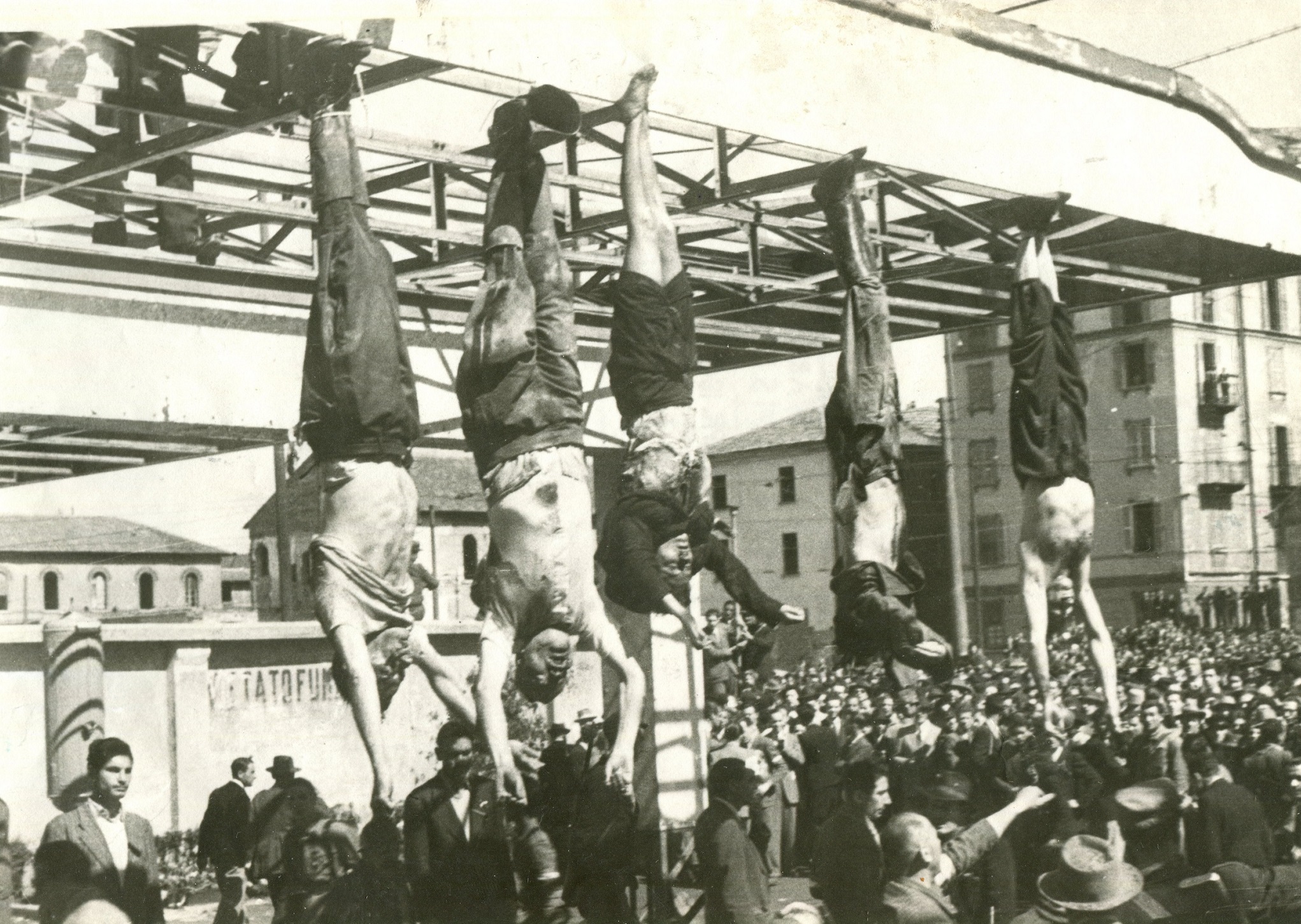
Marco Tullio Giordana is the director best known for THE BEST OF YOUTH (2003), a 6-hour made-for-TV mini-series that screened to great acclaim at Cannes, following two brothers in an Italian family from the mid-60’s to the present, a film that contrasts the failed leftist political activism of the beginning with the faded apathy in the later years, a lead-in to the Berlusconi era.  Giordana was born in Milan, the second largest city in Italy with a strong working class reputation, where Fascist leader Benito Mussolini first organized his Blackshirts, used initially by the government in 1920 as strikebreakers to crush the rising socialist movement.  After trade unions were dissolved, Mussolini consolidated his Fascist movement throughout the nation, culminating with his March on Rome, where the Prime Minister declared a state of siege that Italian King Victor Emmanuel III refused to enforce, fearing a Civil War between the Army and the Fascists, handing over military power instead to Mussolini who went on to install a dictatorship in 1924 after Fascists kidnapped and murdered the socialist opposition candidate Giacomo Matteotti, who openly denounced Fascist election violence and vote fraud.  Three Fascist leaders were convicted of his murder, but released shortly afterwards, given amnesty by the King.  Only after the war was another trial convened and the three men given life sentences.  Mussolini proclaimed Fascism the “superb passion of the best youth of Italy,” and ruled until the end of World War II when Allied American troops marched into Milan.  But before they arrived, members of the resistance movement seized control of the city and executed Mussolini, his mistress, and three other Fascist leaders, hanging them by their feet in the Piazzale Loreto, a public square (from left to right, Nicola Bombacci, Benito Mussolini, Claretta Petacci, Alessandro Pavolini, and Achille Starace, seen here:  Mussolini_e_Petacci_a_Piazzale_Loreto,_1945.jpg).  The historical influence of Fascism in Milan is significant, giving rise to Giordana’s new film, an in-depth, behind-the-scenes look at the untold conspiracy behind the bombing of a downtown bank in 1969 that left 17 dead and more than 100 wounded.  

It’s impossible to see this film and not think of the Costa-Gavras film Z (1969), a somewhat fictionalized but extraordinarily dramatic account of the 1963 murder of a left-wing politician in Greece, Gregoris Lambrakis, orchestrated by the secret police at the behest of a right-wing military organization, an event that lead to a military coup d’état, where a week before a scheduled election the Prime Minister and all the left-wing politicians were arrested and held incommunicado by the conspirators, including mass arrests of ordinary citizens suspected of left-wing sympathies.  The takeover was led by a military junta known as the Regime of the Colonels who ruled Greece from 1967 – 1974, led by Colonel George Papadopoulos, one of the ringleaders, who, along with 19 other co-conspirators were eventually tried in 1975 for high treason and insurrection.  The Italian far right, however, was highly impressed by the methods of Papadopoulos and his military junta, where in 1968, 50 members were invited to view the junta’s methods firsthand, returning to Italy afterwards where they escalated a campaign of terror, specializing in car bombings and other violence that killed and injured hundreds, always blaming the violence on the communists.  Though the movie doesn’t show it, this is the backdrop to the film, where the Italian government deeply feared a repeat of what happened in Greece, where the coordinated actions of secret right-wing factions in the army, government, and judiciary suggest a Fascist military coup d’état was in place, as the bombing campaigns were designed to step up the pressure on the political and military authorities to declare a state of emergency, at which point the Fascists would step in.  Called the strategy of tension, this was a disinformation campaign designed to divide, manipulate, and control public opinion through a strategy of publicly organized fear and propaganda tactics, starting rumors of CIA and NATO plots against the rapid spread of communism in Italy and Turkey, spreading panic among the population that would lead to a demand for stronger, more dictatorial governments eventually run by far-right military organizations.  

The film is told through quickly evolving chapter headings and largely seen through the eyes of Luigi Calabresi (Valerio Mastandrea), a likeable Milan police inspector with a quiet domestic life that includes a beautiful and very pregnant wife, Gemma (Laura Chiatti), where their marital happiness suggests a harmonious moral balance while all around them various political factions of Communists, Anarchists, and Fascists are demonstrating on the streets, all protesting the nation’s instability, usually resulting in violent confrontations with riot police.  The government fears the military junta in Greece will inspire a similar coup in Italy, where one of these factions will step in, believing Anarchists are behind the nationwide bombing campaign, but after the Milan bank bombing, all the known Anarchists are hauled in for questioning.  Most are let go, but a few leaders remain under intense, sleep-deprived interrogation, including Gisueppe Pinelli, (Pierfrancesco Favino), an articulate and outspoken Anarchist that many in the police division would like to blame, even though he despises both the extreme left and the right.  While there’s a developing connection between bomb materials and a former Anarchist, where the police believe his recent falling out with Pinelli is too convenient of an alibi, suspecting they masterminded the bombing.  But Calabresi is not convinced, as there’s no evidence connecting Pinelli to the crime, but police headquarters insists upon a bait and switch method, informing Pinelli that his partner has confessed, implicating his guilt, which has little effect initially, but the police demand he sign a document framing his former comrade.  When Calabresi steps out of the room briefly to prepare the statement, Pinelli goes flying out of an open window, falling to his death below.  The police in the room all claim he jumped, anguished over his apparent guilt, but Calabresi suspects something more, as does his widow who doesn’t for a second believe the reported suicide.  This alleged suicide breaks open the tense divisions between the various police, government, and judicial interests, where the police insist the Anarchists are behind the bombings, though they are thoroughly scrutinized by an Italian press that remains unconvinced.    

What follows is a swirling choreography of investigative inquiry, where government leaders and the police delve into possible leads and suspects, where Calabresi continues his search for the truth as well, which remains elusive, though newly uncovered evidence suggests it’s the far right that has been carrying out the campaign of terror all along, operating under the instructions of secret Fascist powers imbedded deep within the Italian government itself, but due to highly placed officials in all branches of government, they refuse to pursue this possibility, claiming the case is closed, so anything more is purely speculative, alleging political interference.  Rumors run rampant, however, where the CIA and NATO are implicated, also highly influential U.S. officials, though forensic reports determine the explosives themselves are of such a sophisticated nature that only the Italian Army has access to them.  By the time Calabresi develops a clear evidentiary path to the perpetrators, some three years after the bombings, he is murdered, shot in the head outside his apartment.  Not only does this stall the investigation, but even worse, since his death, all accused persons for the bombings have been acquitted, so no guilty parties have ever been found.  While the filmmaking is outstanding, meticulously researched, where the attention to detail is stunning, and the acting superb on all levels, making this one of the better political conspiracy movies since Z, but unlike that film, there is plenty of confusion surrounding so many characters, as the accumulation of information becomes overwhelming.  Like an epic movie, it feels like there is a cast of thousands, where outside of a few identifiable characters, the rest of the assembled cast can get lost in a blur of constantly disseminating information, where the audience loses tract of who many of the people are onscreen.  This is a familiar trait in recent Italian movies, where the critically acclaimed GOMORRAH (2008) was exactly the same way, another long and sprawling narrative that is utterly confusing, where it’s hard to tell which players are on what side.  Giordana might have made an even longer film, say three hours or more, as he toyed with length when he made THE BEST OF YOUTH, but he took certain liberties to keep the film close to two hours, streamlining the film with quick edits where at times it feels hurried and rushed, yet part of the enjoyment of the film is that electrifyingly fast pace that lends itself to a sleek and sophisticated political thriller.  Even with a few missed details, the film is extremely intelligent and highly entertaining throughout.