Showing posts with label Mia Hansen-Løve. Show all posts

Friday, May 19, 2023

One Fine Morning (Un Beau Matin)


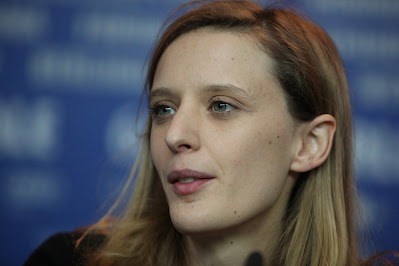
Writer/director Mia Hansen-Løve

Léa Seydoux with the director


ONE FINE MORNING (Un Beau Matin)                B+                                                           France  Great Britain  Germany  (112 mi)  2022  d: Mia Hansen-Løve

Premiering at Directors’ Fortnight at the 2022 Cannes Film Festival, Mia Hansen-Løve describes her films as “imagination and experience meeting,” as they tend to be about women who find themselves on a journey of discovery during pivotal moments in their lives, reflective of her own personal experience, a practice she has established throughout her career with films like All Is Forgiven (Tout est pardonée) (2007), Goodbye First Love (Un Amour de Jeunesse) (2011), Eden (2014), Things to Come (L'avenir) (2016), and Bergman Island (2021), where this story was written just before the death of her father, exploring the lasting impact of such an imprinting relationship.  Both of Hansen-Løve’s parents were philosophy professors, with her father also working as a translator, while she studied German and minored in philosophy at university, with this film establishing profound philosophical implications that mirror her own journey, yet she’s one of the few filmmakers to offer a deeply meditative portrait of humanity with such a light touch.  Producing gentle slice-of-life films, shot on 35mm by Denis Lenoir, who also shot her three previous films, this features a woman in her thirties who works as an official interpreter during a turning point in her life, having lost her husband years earlier, raising her young daughter alone in the bustling city of Paris, yet two life-changing events collide with a resounding impact, the declining health of her father, a longtime professor debilitated from a neurodegenerative disease, no longer able to care for himself (her father suffered from the same ailment), and romantic sparks from a lifelong friend who is unhappily stuck in a loveless marriage, offering sober reflections on loss and separation while simultaneously a new love develops.  Often blurring the boundaries between fiction and reality, with a flair for subtle nuances and precise observation, Hansen-Løve’s films are built by establishing rhythms of life, using narrative strands to establish character, much like a short story writer, creating a naturalistic language of her own that is tender and poetic, designed to establish empathy, and can be uniquely transformative, bearing some resemblance to the meticulous detail of André Téchiné, a master technician whose elegant films are similarly actor-forward and delve into the complexities of human emotion and relationships.  There’s also a minimalist simplicity to this film that resembles the tender father-daughter relationship in Ozu’s Late Spring (Banshun) (1949), both offering a haunting glimpse of life without adding documentary detail.  In an interesting aside, the lead protagonist is a translator of the works of Annemarie Schwarzenbach, a Swiss author who wrote in German, reading her published letters to Klaus Mann, one of Thomas Mann’s children, which is the subject of Mia Hansen-Løve’s next film project, something percolating for about fifteen years, developing an obsessional interest, turning into a made-for-TV miniseries (The Flame), though Hansen-Løve acknowledges she doesn’t even own a television.  This film was written with Léa Seydoux in mind, a generational French actress who typically exercises emotional restraint, which was evident early on in films like Christophe Honoré’s La Belle Personne (The Beautiful Person) (2008) and Rebecca Zlotowski’s Belle Épine (2010), before becoming a breakout international star after the success of Abdellatif Kechiche’s controversial Palme d’Or winning film Blue Is the Warmest Color (La Vie d'Adèle, Chapitres 1 et 2) (2013), the first to award the prize not only to the director but the two lead actresses as well.  Seydoux reported the male director’s style was overly abusive during the sex scenes, and repetitive, taking ten days to complete a lengthy sex scene, making her feel like a prostitute, so Hansen-Løve was very protective of her (Mia Hansen-Løve Denounces Hollywood's Sex Scenes), acknowledging she is an extremely shy actress, so she worked to establish a degree of safety and trust before shooting the kissing and graphic sex scenes, where it’s significant to point out that women filmmakers demonstrate a different awareness in this area, with Seydoux praising the director afterwards, insisting, “Mia has a remarkable blend of precision and sensitivity.”  While Hansen-Løve acknowledges she finds it much easier to direct women, making films exclusively with female protagonists since 2015, Seydoux has rewarded her with one of her finest performances, where the self-contained, raw emotion on display is the centerpiece of the film, allowing larger issues to fully penetrate on a deeper scale.   

Sandra Kienzler (Léa Seydoux in an unglamorous role wearing no makeup, with a short-cropped, Jean Seberg-style pixie haircut), lives with her young 8-year old daughter Linn (Camille Leban Martins), who still sneaks into her mother’s bed at night to snuggle, exhibiting a warm and affectionate relationship, where it’s clear they enjoy each other’s company, doing projects together, seen picking her up after school, while also making regular visits to grandparents, including the director’s own 98-year-old grandmother with all her mental faculties still intact, and despite things physically breaking down over time, she refuses to be viewed with pity, and her father Georg, played by an aging Pascal Greggory, who once appeared as an effusive talker and jealous love interest in Éric Rohmer’s PAULINE AT THE BEACH (1983).  Georg has an established reputation in academia as a renowned German literature and philosophy professor, a man who values “clarity and rigor,” but his health has taken a sharp turn for the worse, diagnosed with Benson’s syndrome, a creeping brain deterioration already affecting his ability to read and write, leaving him nearly blind, including symptoms of dementia, where he’s having a hard time living on his own, unable to complete his own thoughts, but Sandra patiently cares for him with a noticeable tenderness, often completing his sentences, but he’s already exhibiting extreme signs of forgetfulness, needing guidance for every mundane activity, like eating or going to the bathroom, while there’s a heartbreaking sequence where she has to instruct him how to open the door.  While in the park with Linn, she runs into an old friend of her husband, Clément, Melvil Poupaud, who once starred as a young heartthrob in Éric Rohmer’s A Summer's Tale (Conte d'été) (1996), having shed his boyishness yet still maintaining a middle-aged charm, as the director establishes a rhythm alternating between beautiful and sad moments, with Sandra going through a roller coaster ride of constantly shifting emotions.  Their troubled romance subverts the norm, becoming a messy and unvarnished affair filled with unpleasant twists and turns, resembling our own troublesome lives, where there’s always an unwelcome or unexpected intrusion.  His job as a chemical cosmologist takes him to the ends of the earth, having recently returned from Antarctica, studying extraterrestrial meteorite dust left around the globe, (5200 tons of meteorite dust falls to Earth every year), where the extended time away from home has put a strain on his marriage, yet they manage to joke around over who kissed the other first, igniting a torrid love affair, her own avenue of escape from the brutal reality of her father’s disease, though he yo-yo’s back and forth dividing his time between the two women, unable to break away from his wife and young son.  Adding to the distress, Sandra’s mother Françoise (Nicole Garcia), who divorced Georg ages ago but helps care for him, reveals that he can no longer live on his own and that they need to find a nursing home, a deeply depressing prospect, as it’s difficult to spend any time in these dreary facilities because patient care is not prioritized, so they are basically left on their own.  With no other options, however, he moves around through various facilities in an arduous odyssey searching for the right one, exploring public versus private, discovering beds are not readily available, revealing the shortcomings of available services, while at the same time, they have to pack up his belongings and try to figure out what to do with them, which is an emotionally exhaustive process.  This may be the most true-to-life of any of Hansen-Løve’s films, as it’s grounded in such distressing and emotionally frustrating experiences that just about everyone has to deal with, as parents grow old and infirmed, where this is about having compassion for old age, while also learning to deal with deadly diseases inevitably leading to tragic endings.  This film hides none of that, told in measured tones fluctuating between the summer and winter seasons, exposing the toll it takes on family members, ONE FINE MORNING (2022) | Official Clip YouTube (49 seconds), yet paring this traumatic experience with the Madame Bovary consequences of adultery, while reserving all moral judgement, makes this feel distinctly French.  There are joyous moments as well, like when Sandra and Clément take a break from having nonstop sex in her cloistered apartment and visit an art museum, where she blends in with Monet’s Water Lilies at the Musée de l'Orangerie (Seydoux appears in a Louis Vuitton ad in the same location), or the affectionately drawn mother-daughter moment when Sandra asks Linn for a lick of her ice cream and then steals the whole cone, or the hilarious Christmas Eve family reenactment of the arrival of Santa and his reindeer to the delight of giggling children who are discreetly tucked away and listening with their ears to the door.

Hansen-Løve is known for compassionate character studies, and here they are vibrantly created, filled with personality and charm, especially Françoise, an aging 60’s radical who still thrives on disruptive and often illegal civil disobedience protests with Extinction Rebellion, adding a jolt to her personality, though Sandra at one point indicates she’s not particularly trustworthy, all of which gives her a distinctive edge.  Sandra and Clément can be exhilarating together, featuring scintillating dialogue and naturalistic sex scenes, but then they’re bogged down by issues with his family, who we never see, with the camera remaining focused upon Sandra, who is caught between hope and disappointment, staying fixated on her phone waiting for a response from him, One Fine Morning Movie Clip - I Love You (2023) YouTube (1:02).  Her job as a French-German-English interpreter takes her into formal diplomatic sessions taking place in closed-door parliamentary meetings, her profession isn’t reliant upon one culture or language, embracing a larger world sensibility, so there’s a curious cinematic reference when we see Sandra in a theater watching Brigitte Helm in the Hanns Schwarz German silent drama THE WONDERFUL LIES OF NINA PETROVNA (1929, which allows her to be seen in a silent setting.  Yet one of the most dramatically compelling sequences happens at a Memorial tribute commemorating the Normandy D-Day landing (D-Day: The Allies Invade Europe), a chilling historical reminder, and while the scene is short and compact, probably just a minute or so of screen time, the power of sacrifice still resonates with its hair-raising implications.  At the nursing home, Georg talks constantly about his girlfriend Leila (Fejria Deliba), seen only briefly, and while she visits regularly, he can be seen wandering the halls searching for her, as she’s the only one he actually remembers, having forgotten everybody else, including his daughter, who is completely devoted to him.  Sandra finds a notebook her father used to keep track of his declining health, which reminds him of Kafka’s Metamorphosis, an astonishing and somewhat surreal revelation, feeling trapped in the illness, like being caught in an abyss where there is no beginning and no end.  She also identifies a rough manuscript for the memoirs he always intended to write, which she reveals to her family during a Christmas dinner, noting the title of one of the notebooks was written in German, Um einem schönen Morgen, which translates to One Fine Morning, with this film serving as a transmitted completion of that unwritten work.  Included in the director’s submitted ballot for the once per decade 2012 BFI Sight and Sound poll for greatest films, Mia Hansen-Løve, listed again on her 2022 ballot, (All voters - Sight and Sound), she includes Maurice Pialat’s The House in the Woods (La Maison des Bois) (1971), an expansive six-hour film made for French television, yet it unfolds with a literary style, using a recurring musical theme that plays at the end of each of the 7 chapter headings.  She employs a similar device here, where a recurring musical theme feels like pages turning in a book, Jan Johansson - Liksom en herdinna (Official Audio) - YouTube (2:57), borrowing this theme from Bergman’s THE TOUCH (1971), also featuring an adulterous affair, with suggestions that music carries with it the memories of those associated with it.  In similar fashion, there’s a beautiful moment where Sandra, looking at her father’s extensive library collection with complete editions of Goethe, Nietzsche, and Kafka, his most prized possessions that took a lifetime to accumulate (actually filming her own father’s books), confesses “I feel closer to him around his books than when I’m around him.”  This association lingers well after death, as these memories are our way of holding onto those we cherish.  Perhaps the most heartbreaking moment occurs when she brings her father a CD player, allowing him to listen to his favorite music, yet when she plays his most beloved piece, Schubert: Piano Sonata No. 20 in A, D.959 - 2. Andantino YouTube (7:17), he recognizes it instantly, but quickly needs her to shut it off, as it’s too painful for him, written with the composer’s knowledge that his death was imminent, playing again in her head during the bus ride home.  It’s a tragic reveal, as he’s already lost his ability to read, which he valued more than anything, where all that’s left is a further descent into forgetfulness.  Charged with understated filmmaking, the subtle yet poignant power of this film offers clear insight into death and aging, yet it’s never overwrought or melodramatic, interjecting humor in the most improbable moments, offering a surprising amount of clarity that few other films can offer, making beautiful use of the Sacré-Cœur Basilica in an eye-opening panoramic view of Paris from the dome lookout, ending with a film-defining song, Bill Fay - Love Will Remain (Official Audio) - YouTube (2:24).

Wednesday, March 9, 2022

All Is Forgiven (Tout est pardonée)


Writer/director Mia Hansen-Løve


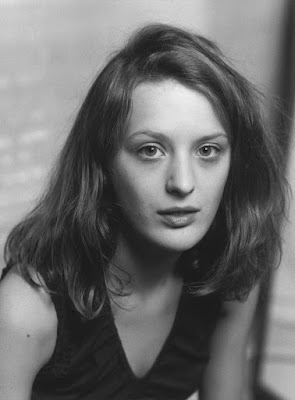
actress Constance Rousseau

Mia Hansen-Løve


ALL IS FORGIVEN (Tout est pardonée)                 A-                                                               France  (105 mi)  2007  d: Mia Hansen-Love

Mia Hansen-Love is a former actress first seen as a young teenager in Olivier Assayas’s Late August, Early September (Fin août, début septembre) (1998) and Les Destinées Sentimentales (2000), where they eventually lived together for fifteen years, though he is twenty-six years older, and had a daughter together, but separated in 2017.   For much of that period, it would not be wrong to suggest she was living under the shadow of Assayas, a more universally acclaimed artist who is among the best working French directors alive today.  This early film, however, suggests otherwise, largely overlooked at the time of its release, though receiving some recognition in France, premiering at the Director’s Fortnight at Cannes, a shared winner of the Louis Delluc Prize for Best First Film in France, but only now receiving its premiere release in the United States.  Both of Hansen-Love’s parents were philosophy professors, while she studied German and philosophy as well before studying at the Conservatory of Dramatic Arts in Paris in 2001, but after two years she dropped out to write film criticism at the prestigious Cahiers du Cinéma magazine, where Assayas also wrote, preferring the job of writing film criticism to any formal instruction at a film school like La Fémis. She admired New Wave directors, who created their own cinematic language, but at the age of 25, upon receipt of an advanced grant, she had the opportunity to direct her own film, knowing immediately this is what she wanted to do.  Perhaps her background in acting has profoundly influenced her filmmaking, which is character-driven in the truest sense, following a central character in nearly every scene over an extended period of time.  Her first film is a remarkable debut and a much stronger contender than first realized, striving for filmmaking transparency, avoiding flashy cinematic techniques in favor of a delicately subtle and more understated approach, already exhibiting familiar signs of her empathetic directing style, making emotional and intensely personal films, frequently semi-autobiographical, often blurring the boundaries between fiction and reality.  Notably, her stories begin focusing on one central character, but then unexpectedly switch to another after a calamitous event.  What’s particularly evident is her contribution to women’s cinema, creating her own progressive design that basically eliminates any patriarchal relationship with viewers, instead creating a naturalistic language of her own, tender and poetic, always writing her own films which become meticulously designed character studies, extremely humanistic, gently female-oriented, yet deeply felt, personal, and uniquely transformative.  Much like Assayas, she has an inspired use of music in her films, which play a crucial role in establishing mood and tonal assuredness, including a striking soundtrack in this film with a Scottish coal miner’s lullaby sung by a father to his daughters as he descends into the darkness of the mine that both opens and closes the film, Matt McGinn- Coorie Doon (miners lullaby) - YouTube (3:35), where the intelligence and lyrical quality of her films is reminiscent of Éric Rohmer, extremely well-written and well-acted, not nearly as wordy, but this first film has more of a raw, emotional intensity than her subsequent films, which stands out, as this is already a fully mature artist breaking into the cinematic landscape.  While few actually recognized her for the talent she was then and still is today, this first film deserves a healthy reassessment, as it may actually be her best film, where the beauty is in the accumulative details.  Hansen-Love is like a short story writer, as her films are measured, concise, and starkly personal, honing in on what matters, even if viewers themselves aren’t capable of appreciating the subtleties of her craft.  Many seem to have gotten bogged down by the subject matter, as prolific drug use onscreen may be a downbeat turnoff, but there’s more going on here under the surface.  For instance, why in every subsequent generation do healthy and intelligent artists turn to drugs, often to the point where it destroys their lives?  What does it say about self-esteem and a general regard for others?  How can someone get so wrapped up in themselves that all rationale ceases to exist?  Artists have always tested the margins, from Edgar Allen Poe to William S. Burroughs, including any number of rock musicians who died prematurely.  Certainly death plays a prominent part in their lives, routinely playing a kind of Russian-Roulette where their risk-taking is enormous, yet there’s a unique observation of the grim, under-the-surface desperation of life on the margins that makes this film different.  But all that is merely suggested in this film, as there are no villains in Mia Hansen-Løve films, and no easy answers, remaining non-judgmental, instead there is a blurring of reality where human beings struggle to adapt to their changing circumstances with varying degrees of success.  Dedicated to French actor and producer Humbert Balsan, who committed suicide in 2005, he was an early mentor who worked closely with this director and helped secure financing for this film.  His death may have served as a creative inspiration, as the flurry of letters at the end may, in fact, be her own testimonial and remembrance.

While the title has an almost theological implication, the full weight of the film suggests otherwise, as the director’s impressionistic observations of the interactions between adults and children are acutely convincing.  This film cleverly examines both mid-life and adolescent views within the same film, while also examining the ramifications of lives grounded in family and relationships suddenly fractured by domestic dissolution, where once you’re out of the protected cocoon of family, the real world has a tendency to lay emotional haymakers in your life.  At the time this film was made, nearly half (49.1 percent) of all French marriages end in divorce, suggesting marriage as an institution is in steep decline.  It follows a young woman in the throes of a destructive relationship, with an extremely healthy and positive-minded young daughter who observes everything.  Yet what distinguishes this film is the director’s choices of what to emphasize, writing nuanced characters within a world of the ordinary and mundane, where male characters have a strain of unreliability, yet she completely eschews melodrama, while the most dramatic events occur offscreen.  Set in Vienna in 1995, Victor (Paul Blain) is an intelligent and well-read Frenchman seemingly incapable of holding down a job, instead seen floundering as a failed writer and wayward husband while living with his colder and more reserved bourgeois wife, Annette (Marie-Christine Friedrich), and their charming six-year-old daughter Pamela (Victoire Rousseau).  What’s initially shown is an unforced tenderness of the characters, exhibiting a playful style with each other, yet Victor’s consumption of alcohol early in the day on his daughter’s birthday foreshadows his troubled disposition.  Later he makes an excuse to run an errand, meeting a friend where he can score drugs, a nearly Bressonian scene in its minimalist expression, as barely any words are exchanged, and no hint of his activity is communicated to Annette, though we see him locked in the bathroom afterwards for extensive periods of time.  Meeting up with his family on a late afternoon, crossing a bridge across the Danube River, he teases his daughter about the Reichsbrücke Bridge, which collapsed unexpectedly when it was 100-years old, a modern urban disaster.  While she’s clearly alarmed at the thought, her mother quickly reassures her that modern day bridges are built out of strong materials, and that “bridges are indestructible.”  Mother and daughter quickly walk ahead, leaving Victor behind in a brazen act of dismissal.  While Victor is close to his daughter, he is increasingly melancholic and addled by his addictions, putting their marriage under constant strain,  Among the more curious scenes involves a live piano performance by a cousin of Annette’s named Nektar (Elena Fischer-Dieskau, granddaughter of the famous German baritone Dietrich Fischer-Dieskau, in her only film role, herself a successful professional pianist) playing part of a Beethoven piano sonata as well as several pieces from Schumann’s 1848 Album à la Jeunesse at a family party in Vienna, with Annette observing open flirtation going on between Nektar with Victor, as she gives him a volume of German poems, which is quickly snatched by Annette, reading aloud as a means of inserting herself between the two. Eventually they move back to Paris, switching easily between German and French, hoping that back on familiar grounds it will cure a demoralized Victor of his doldrums, but his drug use becomes more frequent, including bouts of verbal and physical abuse.  Victor makes little attempt to find meaningful employment, while his previous work teaching literature at university level was sufficient to support his family, but he’s lost interest, consumed by idle time where instead his days are centered around morning writing, afternoon walks, and his evenings doing drugs, growing more and more isolated and distant.  He has a supportive sister, Martine (Carole Franck), urging him to come to her when he needs to talk instead of seeking solace or understanding from his conventional young wife.  Perhaps the scene of the film is their final breakfast together, with Pamela sitting at the head of the table eating cereal, with the camera staring straight at her, where you hear the crunch of each bite, yet those eyes are like a hawk, moving from one parent to the other, devouring every move as Victor quietly apologizes before Annette announces their intentions to leave him behind during Christmas holidays, reuniting with her family in Vienna.  (Ouch!)  Impossible not to notice a child’s drawing of the three of them happily together just over Annette’s shoulder, their lives forever changed by that one indelible moment.  Victor only grows more risky with his drug use, meeting a heroin addict named Gisèle (Olivia Ross), growing helplessly attracted watching her dance at a party to The Raincoats - Lola (from their 1979 album The Raincoats) YouTube (4:05), where he starts to share her habit, eventually separating from his family altogether and moving in with his drug dealer, Zoltan (Wieland Amand), only to awaken one morning to find Gisèle dead from an overdose.  This incident shocks him enough to seek treatment, never realizing the extent of his dependency, with Annette visiting him there, explaining she and Pamela would be moving out of the country, expressing her desire to never see or hear from him again.  Apparently that marital bridge is not indestructible.   

Reminiscent of Philippe Garrel’s cinéma vérité, dysfunctional relationship films, in particular his autobiographical drug escapades during the 70’s with Velvet Underground’s Nico in I Don’t Hear the Guitar Anymore (J'entends plus la guitare) (1991), though perhaps not as bleak or extreme, this more genteel break-up couldn’t be more refined and polite, with no shouting, and little to no animosity anywhere to be seen, yet the quietly devastating ramifications are deafening.  The 90’s looks surprisingly like the 60’s or 70’s, with fatalities and drug overdoses, where death is a prominent theme, yet what’s remarkable is what is left out, with open spaces filling in all the carefully constructed details and emotional connections that other films overlook.  The film jumps ahead 11 years, with Annette remarried to André (Pascal Bongard), consolidating her middle class position becoming curator of 19th-century decorative art at the prestigious Musée d’Orsay (one of the film’s sponsors), yet the perspective changes entirely to young teenage daughter Pamela (now played by older sister Constance Rousseau), an ordinary high school girl who prefers hanging out with friends instead of family.  While her stepfather appears to be a decent guy who doesn’t pressure her, he does announce that Martine, her father’s sister, has been trying to meet with her, which draws fierce resistance from her mother, who wants no part of that, but her stepfather is more open, allowing Pamela to decide for herself.  She’s the real victim of having split parents, yet appears to lead a comfortable life as she considers reestablishing a relationship with an absent father who mysteriously disappeared from her life under ambiguous circumstances.  Against her mother’s wishes, she decides to meet with her aunt Martine, revealing the anguishing extent she has gone through to bring about this reconciliation, as her mother blocked all previous attempts, destroying each and all letters attempting to reach out to her while turning her father into a vile creature that never wanted to see her.  Martine offers insights into her father’s previously deteriorating state of mind, never sugar coating it, suggesting drugs moved him to a dark place, helping him avoid the pressures of having to conform to normal ideals of marriage and masculinity, suggesting he’s more at peace with himself today, making his living as a writer, and lives not far away, having never left Paris.  When she finally meets him, he’s a re-energized and healthier person, indignantly countering his mother’s contention that he abandoned his family, yet most of the communication is unspoken, as they take long walks together, resembling the tracking shot style of Richard Linklater’s Before Sunrise (1995), with a handheld camera following their moving steps across a city landscape, a technique she revisits throughout her career, as protagonists are tracked across a multitude of locations, though dialogue is sparse or non-existent, with Pamela, unsure of herself, bringing along one of her friends.  While the time together is relatively brief, with no apparent revelations or breakthroughs, more of a testing out period, she clearly attempts to sift through the wreckage of her parents’ stormy relationship and mend fences with her long-absent father.  What follows is a flurry of letters written to each other, seemingly sparking an interest, where each can be seen reading the other’s letters.  But Hansen-Love doesn’t take the obvious path, preferring to change the focus, capturing the immediacy of the moment in two near wordless sequences that mirror one another, culminating in a short scene of Victor alone in his apartment, occupied by writing, smoking a cigarette and drinking coffee, the window open, allowing a bright light to enter the room, as he is seen listening to music, apparently content, as he reclines on his bed to read a letter from his daughter.  Meanwhile Annette has taken her daughter to spend time in the country with her step-grandfather (Claude Duneton), expressed through scenes of pastoral beauty and an idyllic serenity, as she plays in a creek catching tadpoles with other younger cousins, acting in the role of big sister, living a normal life surrounded by people she loves, like a Renoir-driven Sunday afternoon in the French countryside, beautifully shot by cinematographer Pascal Auffray as the locale moves to the Corrèze, in the Limousin region, with a river running through it.  In this bucolic moment, she receives word that her father has died unexpectedly, another bridge that has collapsed, with no explanation of what happened.  Curiously, the film relies upon children for its resonance and closure, establishing a mournful tone through the exchange of letters and shared poetry, including a German poem on loss and rebirth, which is brought home by Hansen-Love’s artful final shot, following a quietly subdued funeral, where Pamela excuses herself from the family gathering in the countryside and wanders alone into a nearby forest, revealing a brief look at her mother’s own discomfort, unable to even discuss the matter, perhaps regretting the effect of divorce on her daughter’s childhood innocence, yet the camera remains fixed on Pamela as she slowly disappears from view.