Showing posts with label Caroline Champetier. Show all posts

Friday, April 12, 2013

Le Pont du Nord


LE PONT DU NORD           B-                     
France  (131 mi)  1981 d:  Jacques Rivette

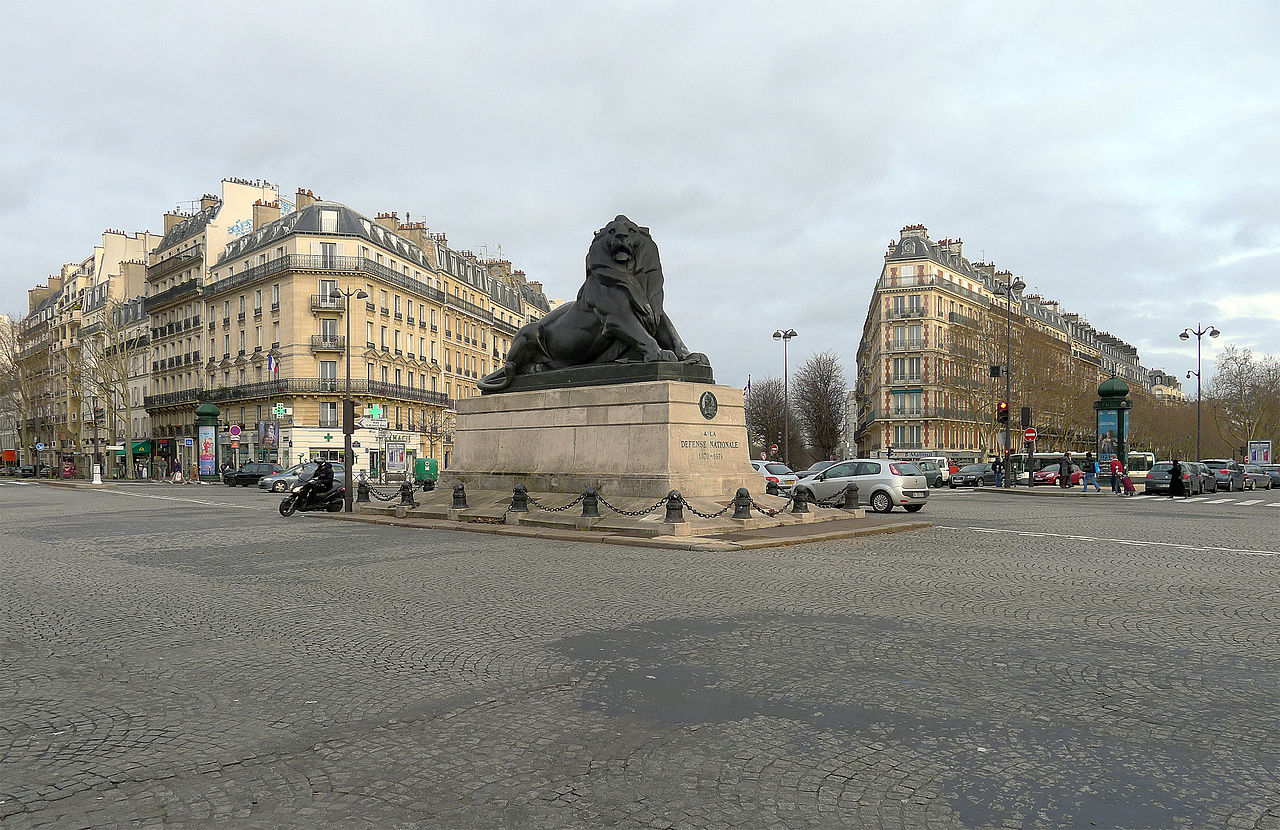
An extension of an earlier short film called PARIS S’EN VA (1981), this appears to be a riff on one of Rivette’s most successful films, Céline and Julie Go Boating (Céline et Julie vont ... (1974), one of the most uniquely original films the director ever made, following the exploits of two theatrically minded young girls as they create their own Alice in Wonderland experience while we watch them romp through the hallucinogenic worlds of their imaginations while racing through the streets of Paris.  The ecstatic and uplifting tone of the original, an endlessly inventive treat throughout, becomes instead a darkly menacing, nightmarish world where the suffocating atmosphere literally chokes the life right out of this world.  Perhaps as a response to the infamous puzzle game experimentation in the mind-altering Alain Resnais film Last Year at Marienbad (L'Année Dernière à Marienb... (1961), Rivette invents his own board game, using famous monuments and locations in the streets of Paris as possible places to land, using characters as living pieces moving about the board, seemingly at random, interacting throughout.  While you might think there’s a catch to figuring out this puzzle by following the clues, but that’s simply out of the question, as it’s not a detective whodunit, it’s simply a meandering journey through a decaying existential wasteland.  While the film appears to be thrown together at the last minute, shot cheaply and quickly by Caroline Champetier and William Lubtchansky on 16 mm, perhaps the best thing in the film is Rivette’s exquisite use of vacant lots, construction sites, an endless series of stairs, and rarely seen off-locations, like abandoned railroad tracks and demolition sites.  Into this world Bulle Ogier is Marie, while her real-life daughter Pascale Ogier is Baptiste, meeting seemingly at random on the streets of Paris, as Baptiste keeps appearing wherever Marie goes, so eventually they continue their journey together, but not before Baptiste announces an opening battle cry, “Bring it on, Babylon” as she rides her motorbike circling around the statue of the Belfort lion (1,280 × 830 pixels) situated at the center of the Place Denfert-Rochereau, a symbol of French Resistance against the Germans, and the site where we first see Marie.  But the Babylon Pascale references is the looming presence of a corrupt city destroyed by its own materialism and greed. 

Throughout the film, there are images of giant construction cranes looming off in the distance constructing new buildings while also demolishing dilapidated structures at a rapid pace, where the world is simultaneously building what it will eventually destroy.  Marie is happy to see her boyfriend Julien, Pierre Clémenti from Buñuel’s BELLE DE JOUR (1967), playing another lowlife gangster who seems to be saddled with nothing but troubles, where two men seem to be following him around the city, giving him 3 days to produce what they’re looking for.  While Marie and Julien constantly meet in various locations, Julien can’t disappear fast enough, as if he can’t be seen in public.  At the same time, Marie was recently released from prison, where she suffers from a rare medical condition that doesn’t allow her to breathe “inside air,” as she’s become addicted to fresh air, where she’s even forced to sleep outdoors.  While you’d think this clever interplay between characters is well set up, no one makes a lasting impression on the audience, where unlike CÉLINE AND JULIE, each sequence is near forgettable.  Rivette tries to create a world of mystery and invention, feeling like a claustrophobic parallel world where they have fallen into set traps, often languishing in a state of limbo as the days pass by.  Baptiste runs interference, as if protecting Marie from dangerous outsiders, but we never get any clear indication who she is or what she’s doing here.  For that matter, all of the characters appear out of a cheap Godard gangster flick playing their respective good and evil roles, where the heavies are all named Max and exist only to exert a noirish sense of danger, while the two women continually appear clueless and innocent, as if they could render no harm to anyone, so why do they exist in this labyrinth of doom?  Surrounded by dark secrets and lethal threats, where soon enough dead bodies surface, Pascale finds a secret map stuffed into the dead man’s pockets, as if this is the treasure map leading them out of their imprisoned existence.  While this map gives them a chance to explain the rules of the game, it doesn’t generate any real interest in the film, which simply never gets off the ground.   

This is a film that suffocates in its own film construction, where outside of its presumed puzzle existence, it becomes a road movie with two characters wandering endlessly through deserted sections of the city, continually questioning their own crumbling existence, never really finding a reason for coming to life onscreen.  Made not long after suffering a nervous breakdown, the film does seem to be searching for a reason to live, but these are instead dead souls doomed to wander perpetually through the ends of time, meeting at their designated times and stations, passing back and forth various documents and information from a briefcase, setting up their next designated appointments.  Eventually this begins to feel ludicrous, where even the secret language starts to resemble film noir code, where danger always lurks just around the corner.  When Pascale is called upon to slay a carnivalesque dragon, which breathes fire and smoke just for effect, it veers into the territory of fairy tales and children’s stories, but just as quickly starts questioning its own raison d’etre, as if these characters are caught up in their own dreary state of malaise and can’t escape their self-inflicted philosophical conundrums, even with the aid of the secret map.  The film fizzles out and meanders on too long, simply running out of gas, losing a sense of purpose and dramatic conflict, as it all feels silly and repetitive after awhile, where the absurdity of the rules don’t even begin to make sense, as in this imaginary state, there is no reason for existence other than to continually make random appointments with destiny, where some larger mystery engulfs them, as if fate has already decided the outcome, and they’re mere puppets playing out the parts.  In road movies, it’s the journey that matters, not the eventual destination, but here they are caught up in a realm of Sisyphus, destined to repeat their jagged path across an urban wasteland, up and down stairs, through vacant lots, only to discover no opportunity to start over and begin anew, where they’re stuck finishing what they started, where perhaps it was only a blind dream that Marie was released from prison, as her fate is apparently sealed.    

Tuesday, January 1, 2013

2012 Top Ten Films of the Year: #4 Holy Motors


HOLY MOTORS            A 
France  Germany  (115 mi)  2012  d:  Léos Carax

My guess is the more experience you have with cinema, the more you’ll like this film, which defies any narrative construction, yet continually exhilarates in its pure love and devotion to film language, much of it feeling like bits and pieces of old films all strewn together like broken parts to make something completely new.  Those with a need for rational explanation need not enter here, as to many this will simply not make sense, but certainly anyone who does give this a try can’t help but be blown away by the sheer originality and mad energy of the movie itself.  In other words you don’t even have to like it, but you can appreciate the unbridled joy with which this film was made, almost like a love letter to cinema itself.  Carax was once the boy wunderkind of cinema, where at 24 his first film Boy Meets Girl (1984), shot in black and white on location in Paris, won the Youth Award at Cannes, while his next Mauvais Sang (Bad Blood) (1986) was a post New Wave primary color extravaganza that won the Alfred Bauer Award at Berlin, an award given to a movie which opens new perspectives in film art.  Given a free reign over his next project, the boy wonder’s cost overruns created the most expensive French production in history, where production was halted several times before finally releasing the extravagant The Lovers of Pont-Neuf (Les Amants du Pont-Neuf) (1991), a sumptuous and romantic tribute to both Paris and lead actress Juliette Binoche, which was a colossal flop in Paris, not released internationally until 1999, thirteen years after his previous film.  When his next film POLA X (1999) was a huge flop as well, his career was all but finished, where we heard literally nothing about the man throughout the next decade, returning another thirteen years later to Cannes with this mammoth work that literally defies description, but is so ingeniously wacky that parts of the movie are simply off-the-charts hilarious, once again starring Denis Lavant as the director’s alter ego and stand-in for the creative force required to make an art film in the modern era.

This devoutly uninhibited film has such an edgy, stream-of conscious style that it likely summons different thoughts and ideas inside every head that shares this film experience, which plays out more like performance art, where Lavant is an outrageous chameleon-like character who literally takes on various disguises and different theatrical personas as he injects himself into the streets of Paris causing mayhem wherever he goes.  What’s intriguing straightaway is the viewer questions whether this character is even real or whether it’s some form of visiting spirit from a world beyond.  While this may not make sense to some, but it was reminiscent of The Phantom of the Opera, a scarred or disfigured character hidden from the world due to some deep personal tragedy or loss, living instead in a subterranean or alternate universe, which seems to be a blend of the future mixing with the past, where the connecting thread is the pure unadulterated joy of cinema.  Lavant is known by a half a dozen different names, but he’s driven around the streets of Paris in a white stretch limousine, where Édith Scob, the aged star of a French horror film more than 50 years ago, Georges Franju’s EYES WITHOUT A FACE (1960), is the driver, also dressed all in white, including the color of her hair.  She may as well be the driver of dead souls, as she transports Lavant around town where he sits in the back and receives 8 daily case assignments one at a time, literally transforming himself into character for each assignment, where the limo is largely a dressing room on wheels, where Lavant spends most of his time getting perfectly into disguise, becoming the manifestation of faded roles from cinema history which might die out altogether if he didn’t attempt to resuscitate them back into the modern world.  Much like the use of memories in Last Year at Marienbad (L'Année Dernière à Marienb... (1961), which may die if not remembered, Lavant seems to be the reincarnation of near dead movie roles, literally attempting to breathe new life into them, but taken completely out of context when set on modern streets, where he is literally out of place, out of time, where people on the street are aghast at what they see.  

The mix of fabulously designed set pieces and on-site locations are part of the brilliance of the film, as Carax does create an otherworldly impression throughout, where never for a single moment does anyone in the audience have any idea what’s happening next, where the built-up intrigue of these imaginary characters and what they’re doing returning back to earth is befuddling to say the least, where even the actors onscreen seem in complete bewilderment at Lavant.  In one assignment, like a creature from the silent era, Lavant turns into a little green Leprechaun with bright orange hair, a hideous creature that never utters a word but instead makes weird animal sounds.  When he crawls out of a sewer and leaps into a crowd on the street, people back away in disgust, where a high fashion photographer is taking photos of Eva Mendes as an haute-cuture fashion model, a statuesque figure of beauty, but this beastly creature instantly grabs the photographer’s attention, where he orders one of his underlings to immediately sign the creature up for a photo shoot.  When she attempts to communicate with the monster, she ridiculously attempts to relate by asking if he’s ever heard of Diane Arbus, famous for taking pictures of giants, dwarfs, and other freaks of nature.  Lavant simply grabs the model and carries her off into his lair in the sewers beneath the city that exists in stillness and in silence.  In such a short period of time, the marvel of invention that occurs in front of the camera in this one sequence is wildly imaginative and extremely cinematic, using rousing music in much the same way there are frequent cinema homages, as Carax is simply re-inventing cinema by reconnecting all the unused pieces, much like reassembling all the broken body parts of mannequins that we see strewn around the empty warehouse settings.

Midway through his day, Lavant’s assignment book reads “Entracte,” or intermission, conjuring up quick images on early archival black and white film stock of a shirtless man peforming before a crowd, like a circus act, which quickly cuts to Lavant leading a march of accordion players "Let my Baby Ride" by Doctor L (RL Burnside Cover)- Holy Motors OST  YouTube (3:20), an utterly enthralling piece of music that literally comes out of nowhere adding a sense of exhilaration to the film.  Who knows where Carax comes up with these ideas, where Lavant enters a Tati-like modern glass designed skyscraper dressed in a glow in the dark outfit where he does outrageous MATRIX-like dances in a darkened room, where he receives instructions from an unseen voice, like Warren Beatty in Mickey One (1965), becoming highly experimental using a dazzling strobe light effect, eventually joined by a shapely woman contortionist who can bend her body like a pretzel, with Lavant somewhere entwined.  Using two cinematographers, Yves Cape and Caroline Champetier, the streets of Paris often become hallucinogenic-tinged, or the shapes of buildings literally melt, creating phantasmagoric images of a reality unfolding into itself, where the world is seen in utter transformation.  Purely by chance, Lavant runs into an old flame, where he wanted to use Binoche, who apparently would not agree, so director Claire Denis suggested he use Kylie Minogue, where they have an extended sequence together that feels altogether unworldly on the rooftops of Paris, a direct reference to Baz Luhrmann’s Moulin Rouge (2001) that starred Minogue, literally bringing in film segments from every bit of the director’s own imagination.  This may be too much for some, who may wonder what in the hell is going on, but this is a quintessential dip into the collective subconscious history of cinema, where the entire movie is a subliminal flash in time, spliced together using bits of broken pieces, where the finale with Lavant finally at home, innocently looking out his window at night feels like he’s just a kid waiting for the arrival of Peter Pan.

Saturday, October 13, 2012

Holy Motors


Léos Carax


Denis Lavant at Cannes, 2012


HOLY MOTORS            A 
France  Germany  (115 mi)  2012  d:  Léos Carax

My guess is the more experience you have with cinema, the more you’ll like this film, which defies any narrative construction, yet continually exhilarates in its pure love and devotion to film language, much of it feeling like bits and pieces of old films all strewn together like broken parts to make something completely new.  Those with a need for rational explanation need not enter here, as to many this will simply not make sense, but certainly anyone who does give this a try can’t help but be blown away by the sheer originality and mad energy of the movie itself.  In other words you don’t even have to like it, but you can appreciate the unbridled joy with which this film was made, almost like a love letter to cinema itself.  Carax was once the boy wunderkind of cinema, where at 24 his first film Boy Meets Girl (1984), shot in black and white on location in Paris, won the Youth Award at Cannes, while his next Mauvais Sang (Bad Blood) (1986) was a post New Wave primary color extravaganza that won the Alfred Bauer Award at Berlin, an award given to a movie which opens new perspectives in film art.  Given a free reign over his next project, the boy wonder’s cost overruns created the most expensive French production in history, where production was halted several times before finally releasing the extravagant The Lovers of Pont-Neuf (Les Amants du Pont-Neuf) (1991), a sumptuous and romantic tribute to both Paris and lead actress Juliette Binoche, which was a colossal flop in Paris, not released internationally until 1999, thirteen years after his previous film.  When his next film POLA X (1999) was a huge flop as well, his career was all but finished, where we heard literally nothing about the man throughout the next decade, returning another thirteen years later to Cannes with this mammoth work that literally defies description, but is so ingeniously wacky that parts of the movie are simply off-the-charts hilarious, once again starring Denis Lavant as the director’s alter ego and stand-in for the creative force required to make an art film in the modern era.

This devoutly uninhibited film has such an edgy, stream-of conscious style that it likely summons different thoughts and ideas inside every head that shares this film experience, which plays out more like performance art, where Lavant is an outrageous chameleon-like character who literally takes on various disguises and different theatrical personas as he injects himself into the streets of Paris causing mayhem wherever he goes.  What’s intriguing straightaway is the viewer questions whether this character is even real or whether it’s some form of visiting spirit from a world beyond.  While this may not make sense to some, but it was reminiscent of The Phantom of the Opera, a scarred or disfigured character hidden from the world due to some deep personal tragedy or loss, living instead in a subterranean or alternate universe, which seems to be a blend of the future mixing with the past, where the connecting thread is the pure unadulterated joy of cinema.  Lavant is known by a half a dozen different names, but he’s driven around the streets of Paris in a white stretch limousine, where Édith Scob, the aged star of a French horror film more than 50 years ago, Georges Franju’s EYES WITHOUT A FACE (1960), is the driver, also dressed all in white, including the color of her hair.  She may as well be the driver of dead souls, as she transports Lavant around town where he sits in the back and receives 8 daily case assignments one at a time, literally transforming himself into character for each assignment, where the limo is largely a dressing room on wheels, where Lavant spends most of his time getting perfectly into disguise, becoming the manifestation of faded roles from cinema history which might die out altogether if he didn’t attempt to resuscitate them back into the modern world.  Much like the use of memories in Last Year at Marienbad (L'Année Dernière à Marienb... (1961), which may die if not remembered, Lavant seems to be the reincarnation of near dead movie roles, literally attempting to breathe new life into them, but taken completely out of context when set on modern streets, where he is literally out of place, out of time, where people on the street are aghast at what they see.  

The mix of fabulously designed set pieces and on-site locations are part of the brilliance of the film, as Carax does create an otherworldly impression throughout, where never for a single moment does anyone in the audience have any idea what’s happening next, where the built-up intrigue of these imaginary characters and what they’re doing returning back to earth is befuddling to say the least, where even the actors onscreen seem in complete bewilderment at Lavant.  In one assignment, like a creature from the silent era, Lavant turns into a little green Leprechaun with bright orange hair, a hideous creature that never utters a word but instead makes weird animal sounds.  When he crawls out of a sewer and leaps into a crowd on the street, people back away in disgust, where a high fashion photographer is taking photos of Eva Mendes as an haute-cuture fashion model, a statuesque figure of beauty, but this beastly creature instantly grabs the photographer’s attention, where he orders one of his underlings to immediately sign the creature up for a photo shoot.  When she attempts to communicate with the monster, she ridiculously attempts to relate by asking if he’s ever heard of Diane Arbus, famous for taking pictures of giants, dwarfs, and other freaks of nature.  Lavant simply grabs the model and carries her off into his lair in the sewers beneath the city that exists in stillness and in silence.  In such a short period of time, the marvel of invention that occurs in front of the camera in this one sequence is wildly imaginative and extremely cinematic, using rousing music in much the same way there are frequent cinema homages, as Carax is simply re-inventing cinema by reconnecting all the unused pieces, much like reassembling all the broken body parts of mannequins that we see strewn around the empty warehouse settings. 

Midway through his day, Lavant’s assignment book reads “Entracte,” or intermission, conjuring up quick images on early archival black and white film stock of a shirtless man peforming before a crowd, like a circus act, which quickly cuts to Lavant leading a march of accordion players "Let my Baby Ride" by Doctor L (RL Burnside Cover)- Holy Motors OST  YouTube (3:20), an utterly enthralling piece of music that literally comes out of nowhere adding a sense of exhilaration to the film.  Who knows where Carax comes up with these ideas, where Lavant enters a Tati-like modern glass designed skyscraper dressed in a glow in the dark outfit where he does outrageous MATRIX-like dances in a darkened room, where he receives instructions from an unseen voice, like Warren Beatty in Mickey One (1965), becoming highly experimental using a dazzling strobe light effect, eventually joined by a shapely woman contortionist who can bend her body like a pretzel, with Lavant somewhere entwined.  Using two cinematographers, Yves Cape and Caroline Champetier, the streets of Paris often become hallucinogenic-tinged, or the shapes of buildings literally melt, creating phantasmagoric images of a reality unfolding into itself, where the world is seen in utter transformation.  Purely by chance, Lavant runs into an old flame, where he wanted to use Binoche, who apparently would not agree, so director Claire Denis suggested he use Kylie Minogue, where they have an extended sequence together that feels altogether unworldly on the rooftops of Paris, a direct reference to Baz Luhrmann’s Moulin Rouge (2001) that starred Minogue, literally bringing in film segments from every bit of the director’s own imagination.  This may be too much for some, who may wonder what in the hell is going on, but this is a quintessential dip into the collective subconscious history of cinema, where the entire movie is a subliminal flash in time, spliced together using bits of broken pieces, where the finale with Lavant finally at home, innocently looking out his window at night feels like he’s just a kid waiting for the arrival of Peter Pan.