Showing posts with label Nantes. Show all posts

Friday, July 18, 2025

Petite Solange


Writer/director Axelle Ropert


Director on the set with Jade Springer


PETITE SOLANGE               B                                                                                             France  (86 mi)  2021  d: Axelle Ropert

A heartbreaking tale of divorce, subjectively told from the point of view of a 13-year old daughter whose world is upended for reasons she cannot fathom, literally pulling the rug out from underneath her, leaving her emotionally devastated.  Most films about divorce are told from the adult point of view, like Ingmar Bergman’s epic Scenes from a Marriage (Scener ur ett äktenskap) (1973), Asghar Farhadi’s A Separation (Jodaeiye Nader az Simin) (2011), Hirokazu Kore-eda’s After the Storm (Umi yori mo mada fukaku) (2016), Ryûsuke Hamaguchi’s 2017 Top Ten List #1 Happy Hour (Happî Awâ) (2015), or Noah Baumbach’s 2019 Top Ten List #3 Marriage Story, though a few notables accentuate how damaging this can be to children, like Michael Curtiz’s Mildred Pierce (1945), Noah Baumbach’s The Squid and the Whale (2005), or Xavier Legrand’s 2017 Top Ten List #7 Custody (Jusqu'à la garde), which also starred Léa Drucker, yet the uncompromising attitude of the 13-year old protagonist is the female counterpart to Jean-Pierre Léaud in François Truffaut’s The 400 Blows (Les quatre cents coups) (1959), with the film similarly ending on a final freeze frame.  Starting out writing film criticism for the short-lived La Lettre du cinéma magazine, where she was editor-in-chief, an approach that is common for male directors, but very uncommon for female directors, Ropert has crafted a small, intimate, and delicate film with a cathartic power, a French family drama elevated by the performance of young star Jade Springer in her first feature, playing teen schoolgirl Solange, who is intelligent and acutely sensitive, yet also introverted, living with her moody older brother Romain (Grégoire Montana-Haroche), her artistically inclined mother Aurélia (Léa Drucker), who is a successful actress,, and her father Antoine (Philippe Katerine) who runs a music store.  Drawing on Charlotte Gainsbourg’s emotionally scarred performance in Claude Miller’s AN IMPUDENT GIRL (1985), yet also Natalie Wood in Elia Kazan’s SPLENDOR IN THE GRASS (1961), both of which accentuate the exposure of human frailties, everything seems to be going well at the outset, as Solange’s parents are celebrating their 20th wedding anniversary, and while there are occasional awkward moments, there is no sign of any particular problem, but soon there are cracks in the façade of happiness, with the husband sleeping on the couch, and arguments extending long into the night, as this carefully calibrated film follows a young girl experiencing the pain of having to accept her parents as people with faults.  Exuding a naturalness in her performance through an economy of means, as if gleaned from the films of Éric Rohmer, there are no heightened, melodramatic moments, nothing that feels pretentious, instead this is filled with a quietly astute observational eye, where ordinary moments comprise most of what we see.

Set in Nantes, a city associated with Jacques Demy, opening to the dramatic music of Benjamin Esdraffo, his third collaboration with this director, the film is shot on 16mm by Sébastien Buchmann, who assisted Éric Gautier on Léos Carax’s POLA X (1999), much of it handheld, made to resemble the verité stylishness of 1970’s films, featuring bright pastel colors that eventually fade in the latter stages of the film, bathing the film with familial warmth, as this appears to be a close-knit family, where the mother loves to bring her children to her live performances, like part of an extended family.  Generated by what the director describes as the “simplicity principle,” the film uses an interesting device, showing Solange being asked to read a Paul Verlaine poem in front of the class, yet she quickly hesitates and sits down, unable to continue, offering no apparent explanation, with the film backtracking in time through flashbacks, only to return to that same moment later in the film, this time getting deeper into the dramatic ramifications, as she’s overwhelmed by the emotional fallout from her family troubles, causing her an extreme degree of mental stress.  Parents never want to cause their children pain, but divorce is a tricky subject, often hidden from the rest of the world, where there are little daily explosions that everyone has to navigate, and there are no real guidelines of how to get through it.  Solange is a seemingly happy kid, developing an interest in a slightly older piano-playing classmate (Léo Ferreira), but he doesn’t seem to be particularly interested in her.  She is best friends with a tomboyish classmate Lili (Marthe Léon), with both doing a class presentation together on Swedish environmental activist Greta Thunberg, who is an inspiration to her generation for standing up for what she believes, a teenager challenging world leaders, failing to comprehend why so little is being done to reduce carbon emissions, credited for raising public awareness, especially among young people, becoming the youngest-ever Time magazine person of the year in 2019 at the age of 16, where they clearly share the same concerns for saving the planet, showing a wild enthusiasm for her principled advocacy.  Horrified that her parents appear to be drifting apart, as there appears to be no reconciliation for their problems, things really spiral out of control when she visits Gina (Chloé Astor), her father’s younger assistant at the music store, who is inexplicably wearing her father’s sweater, causing an outraged Solange to run out of the store in anger, shocked at what she sees. 

The knock on the film is that it grows very fragmented towards the end, not really following any recognizable timeline, where storywise it may not make sense, feeling more like a freefall of disturbing events.  The film’s greatest strength, on the other hand, is its probing tenderness and sensitivity in the inquisitive character of Solange, who is largely alone, separated from the other members of her family, as her brother runs off to Spain to study abroad, missing him terribly, while both parents are otherwise preoccupied, leaving her without the support of the adults around her.  In what is essentially a coming-of-age story, our expectations are tempered by the illusions of youth, who envision a better and more hopeful world, yet reality comes crashing in where you least expect it, as the most devastating moments in Solange’s life remain offscreen, forced to navigate her way through an unchartered wilderness.  A glaring hint lies in a movie poster on the wall of her school classroom, Luigi Comencini’s MISUNDERSTOOD (1966), a tale of childhood innocence suddenly having to come to terms with a death in the family.  Divorce is a comparable feeling, as you lose something in each parent, a loving trust that is no longer there, uprooted from that safety net, where there’s no more normal everyday life, suddenly forced to contend on your own, realizing something her father describes as “children and adults live in different worlds.”  The pain and helplessness she feels is written all over her face, where words can’t really express it, yet it’s communicated with poetic delicacy and cinematic modesty, with an undertone of operatic refrains from Italian singers.  Taking refuge from her parent’s incessant arguing, Solange spends a long time sitting alone in a café, because she simply doesn’t know where else to go, eyed suspiciously by the server, yet she’s stuck in a no man’s land without a clue what happens next.  Lost in despair, she begins wandering the streets alone, deluged by an absence of love, overwhelmed by a profound sadness, falling into the river one night under suspicious circumstances, where all we see is her blue scarf floating on the surface of the water, fleeting details that describe the enormity of her world falling apart, veering into unchartered territory.  After months in therapy for depression, she emerges with a new understanding, forced to contend with a new reality, but it doesn’t hide the profound melancholy and darker implications she feels when her parents decide to divorce and sell the house where she grew up, without anyone having told her, where the last family meal celebrating her 14th birthday takes place in the back garden of the house, a place she can no longer call her own, finding herself adrift on the winds of change, where the brutal loss of innocence becomes a harsh reality that fervently pierces the heart. 

Tuesday, April 19, 2022

Lola


Director Jacques Demy on the set

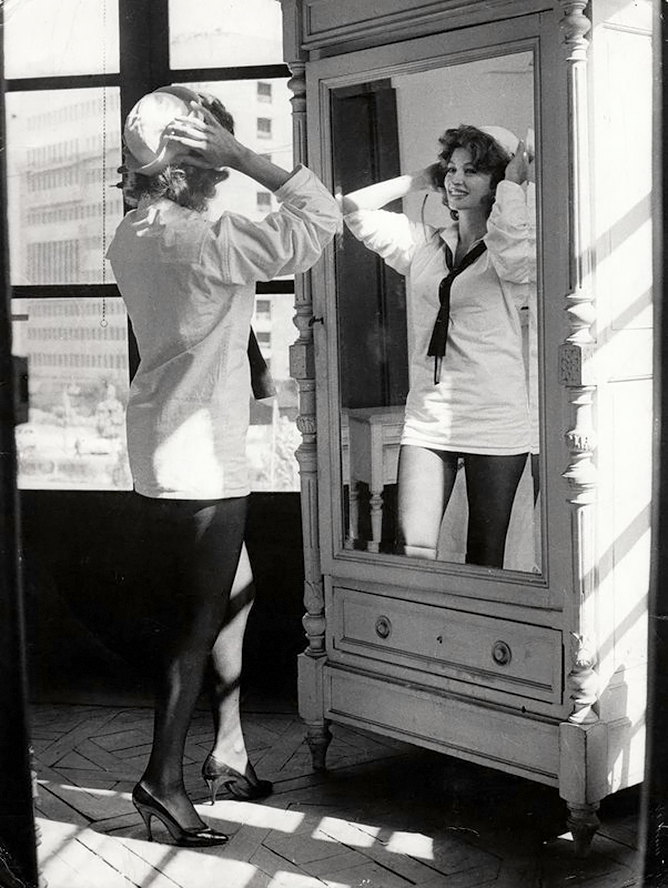
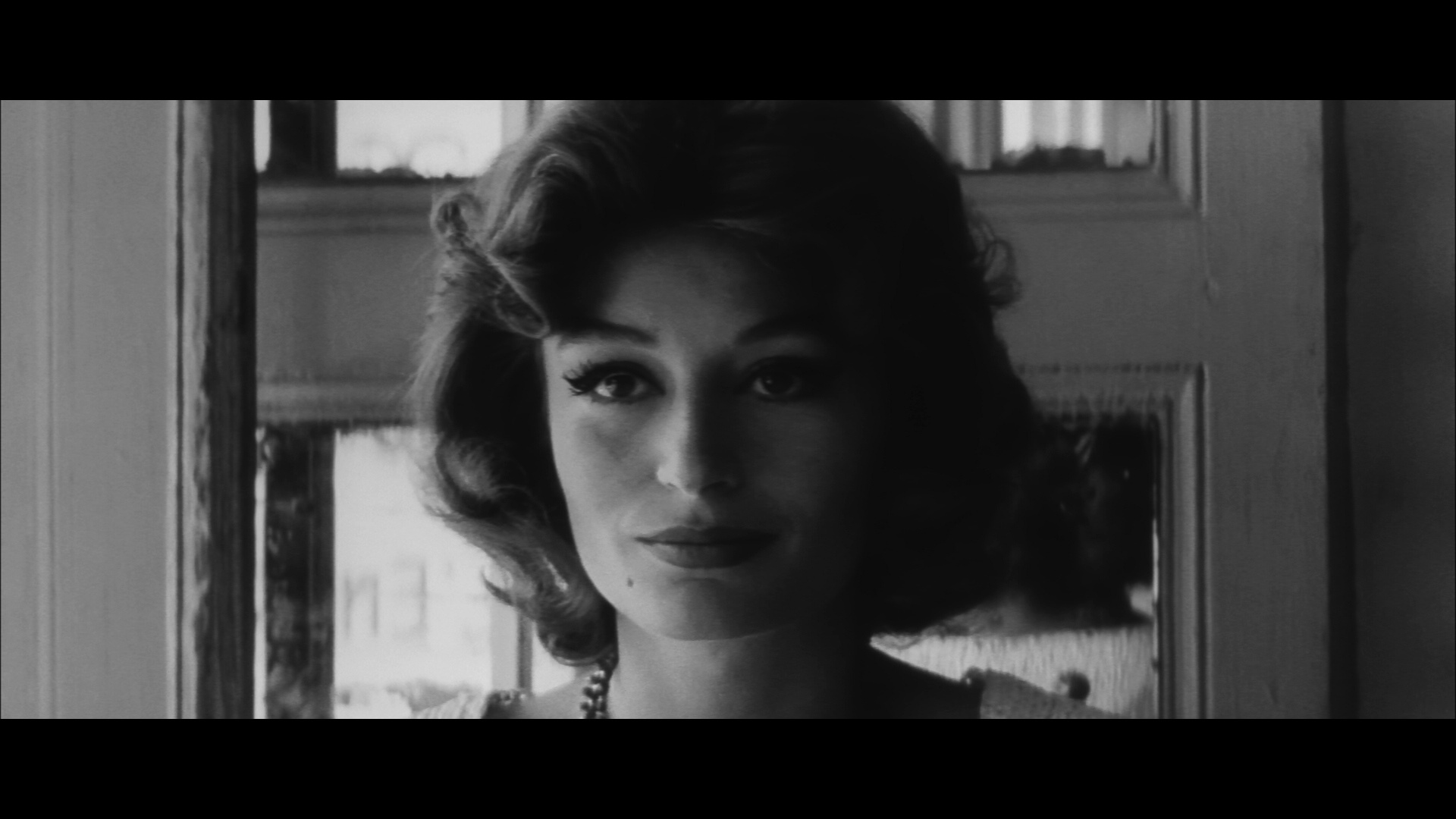
Anouk Aimée


Corrine Marchand with Demy


Aimée with cinematographer Raoul Coutard


LOLA                         A                                                                                                            France  Italy  (90 mi)  1961  ‘Scope  d: Jacques Demy

There’s a bit of happiness in simply wanting happiness.                                                        —Lola (Anouk Aimée)

A French filmmaker known for his lavishly colorful, Hollywood-style musicals, though this first feature was shot in black and white by Raoul Coutard, who would go on to become Godard’s favorite cinematographer, with his elaborately flowing camera movements, while Michel Legrand composed the score, described by Demy as a “musical without music,” reflective of a young, liberated postwar culture, stylistically emulating that rush of innocence that has come to define early French New Wave films, yet this film goes against the grain, against the highly masculine auteurism that defined the era and instead owes a major debt to the emotional sophistication of the women’s picture.  Dedicated to Max Ophüls in the opening screen credit, largely inspired by LOLA MONTÈS (1955), recalling several of his films, with many narrated from the point of view of the female protagonist, while this film, with Anouk Aimée playing the titular character of chanteuse Lola with a breathy, Marilyn Monroe style sensuality, only adds to the illustrious legend of the Lola films, beginning with Marlene Dietrich’s legendary performance as Lola, a Weimar Republic cabaret singer in Joseph von Sternberg’s THE BLUE ANGEL (1930), concluding with the Rainer Werner Fassbinder film LOLA (1981), set during postwar German reconstruction, with Barbara Sukowa playing the enticing cabaret singer Lola.  All deal in some way with an elusive aspect of freedom and love, fending for themselves during periods of economic instability, caught up in different historical times, with Demy recalling the postwar recovery period when money and jobs were scarce, still dealing with times of austerity, as they had not yet built a sustainable middle class economy.  All the things critics didn’t like about Demy’s films, calling them too romantic, too sentimental, or too stylistically extravagant, are what distinguishes them today, as Demy was in rare company, one of the screen’s greatest romantics, making films within his own creative universe, harkening back to a 1930’s era of French filmmaking described as Poetic realism and incorporating that style into his own films.  Even at his most successful, Demy was never embraced as part of the French New Wave, ignoring his wife Agnès Varda as well, despite their connections with the Cahiers du cinema critics who would themselves become filmmakers, with the world of cinema academia instead preferring auterist filmmakers, where it’s only recently that Demy, and Varda, have been totally embraced by the French critical establishment.  Since her husband’s death, Varda spent the last decades of her life working tirelessly to restore her husband’s standing in French film culture while protecting his legacy, though others, such as Demy biographer Jean-Pierre Berthomé, have accused Varda of obstructing scholarship in an effort to control the narrative about Demy, specifically any developing recognition about his role in queer cinema, as Demy was an acknowledged bisexual, which may explain why the male-dominated French New Wave directors, reflecting the bias of the times, were reticent to embrace him as one of their own.  While initially viewed as a New Wave film when it was released, it was ignored for decades afterwards, with Demy ignored by writers and historians as well, seemingly marginalized, yet viewed differently over time, as there is a reluctance to think of Demy with the other Cahiers du cinema critics.  James Monaco’s The New Wave, for instance, considered one of the fundamental texts on the French film movement, barely mentions Demy at all, yet he has been fully embraced by a new young breed of gay French filmmakers like François Ozon, Patrice Chéreau, André Téchiné, and Christophe Honoré, who are enamored by the extravagance of the Demy aesthetic.  One would be hard pressed to watch this film and not believe it shares principle aesthetics with the French New Wave, made on a miniscule budget, preferring real locations to studio sets, displaying an exuberant visual style, and a passion for movies (especially American ones), yet Demy was unafraid of melodrama, something the Cahiers group detested.  Yet the Cahiers critics loved this film, listing it as the #1 film of 1961, Cahiers du Cinema: 1951-2011, while Godard lists the film at #8 on his Top Ten list for 1961, Jean-Luc Godard: 1956-1965, even appropriating part of the storyline and dialogue into his musical sex farce released 6-months later, A Woman Is a Woman (Une femme est une femme) (1961), while introducing Demy to his own producer Georges de Beauregard, who financed the film, while later Truffaut helped finance The Umbrellas of Cherbourg (Les Parapluies de Cherbourg) (1964).  Part of Varda’s involvement included the complete restoration of this film, as the original negative was destroyed in a fire.  

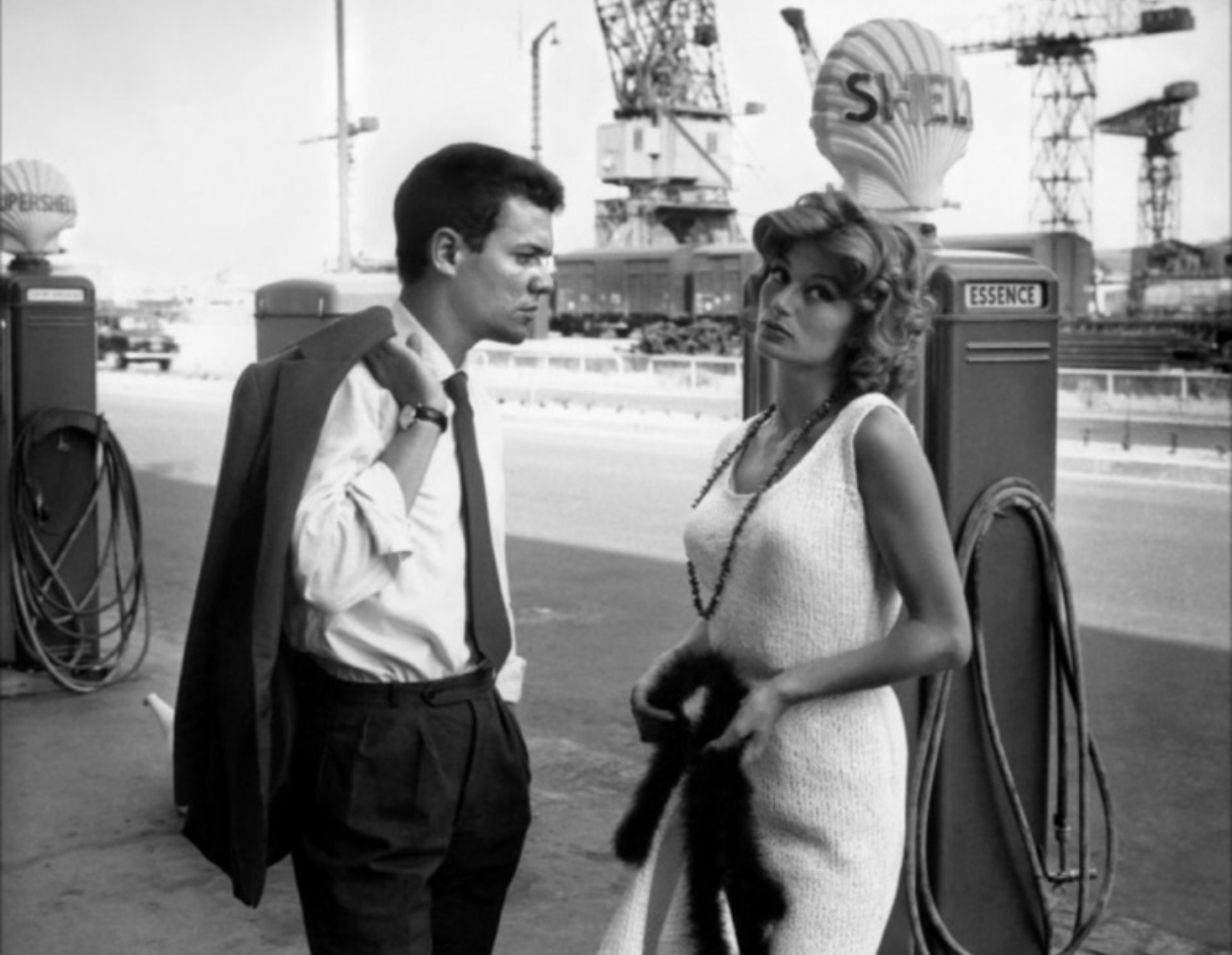
A love story about a yearning for a better life that evolves into a universal story of love and its aftereffects, where this may as well be a love letter to the movies themselves, with the setting in the director’s hometown seaside community of Nantes, a bustling port city in a state of transition, where the enormous construction cranes resemble the oil derricks in Douglas Sirk films set in Texas, a regular stop for American Navy warships unleashing sailors on leave, the same city featured so eloquently in Agnès Varda’s biographical portrait of her husband in Jacquot de Nantes (1991), where right from the opening credits we hear a Beethoven motif as a recurring theme, Beethoven's Symphony No. 7, 2nd movement | conducted by ... YouTube (7:30), exuding sensuality and grace, generating plenty of emotional intrigue.  Demy originally conceived an extravagant musical with elaborate costumes, all shot in color, but he was forced to minimize, where the multiple musical numbers were reduced to only one, embracing a modern existential spirit while conveying a fondness for the past.  Taking place over just a few days, this light-hearted narrative with a breezy tone follows several people in Nantes as they meet, form friendships and attractions, and discuss their memories and dreams for the future.  Unlike other New Wave films, Demy expanded the cast from a single protagonist, introducing a variety of characters who are all interwoven into the storyline, Lola (Anouk Aimée) a cabaret dancer and single mother, forced to choose between several lovers, yet still awaits her one true love, Michel (Jacques Harden), an idealized American cowboy type, her first love and father of her son Yvon (Gérard Delaroche), though he has been absent seven years, seen in the opening scene arriving to town in a white Cadillac, Lola Intro | Jacques Demy | Beethoven YouTube (1:52), having made his fortune overseas, appearing around town intermittently, but never connecting with anyone until reuniting with Lola in the finale.  Roland (Marc Michel), is an alter-ego of the director, a melancholic, disaffected young man filled with regrets and self-doubts who is ambivalent about his future, in love with Lola as a teenager, meeting her by chance early in the film and falls in love all over again, but is crushed by her rejection.  By chance, Roland meets Madame Desnoyers (Elina Labourdette), a former dancer and single mother, in a bookstore with her 13-year old daughter, Cécile (Anne Dupeyroux), making humorous reference to Lawrence Durrell’s recently published Justine, and quickly becomes friends with them both, yet a curious aside happens when Cécile shows him a photograph of her mother as a much younger dancer, which happens to be a still photo of Labourdette in the Bresson film The Ladies of the Bois de Boulogne (Les Dames du Bois de Boulogne) (1945), while Franky (Alan Scott) is an American sailor who resembles Michel and has gotten himself involved in a casual sexual relationship with Lola, while also spending time with Cécile, who seems to have a crush on him.  There are two additional characters, both inspired by Demy’s aunts, Claire (Catherine Lutz), the owner of a café frequented by Roland, and Jeanne (Margo Lion), who comes there every day to paint and who happens to be Michel’s mother, yet also hasn’t seen or heard from him in seven years.  Both women are distinguished by the fact they are living alone without men, something rarely depicted in French films at the time.  Demy’s film, at its core, is about dreamers, with Roland dreaming of traveling somewhere far away with Lola, while she dreams Michel will return one day.  Young Cécile dreams of being a dancer, while Michel dreams of making his fortune.  His return brings to mind Visconti’s White Nights (La Niotti Bianche) (1957), where a young girl stubbornly clings to the fleeting hopes that a former lover will return.  Demy has fashioned an elaborate choreography of coincidences and chance encounters, with dark underpinnings scattered throughout, a template for his best musicals, The Umbrellas of Cherbourg (Les Parapluies de Cherbourg) (1964) and The Young Girls of Rochefort (Les demoiselles de Rochefort) (1967), where the line between euphoria and melancholia is a thin one, subject to change by random encounters or a sudden change of heart, where missed connections are built into the storyline, like ships passing in the night, calling into question certain aspects of fate, yet the connections that do meet are delightfully charming, falling into the magical territory of French films.  What feels unique is that all are somehow seen and filtered through the eyes of Lola or her vanished lover, though that’s not initially evident, as the town is filled with paralyzed dreamers awaiting a better future that never comes, instead leading sad and lonely lives that have mysteriously been placed on hold, where happiness, even when it comes, is tenuous, seemingly passing through a purgatory of missed opportunities.  Demy was once a puppetmaster, putting on street shows as a kid, where it feels like he has his characters dangling from a string, where he’s pulling the levers in continually shaping their destinies.   

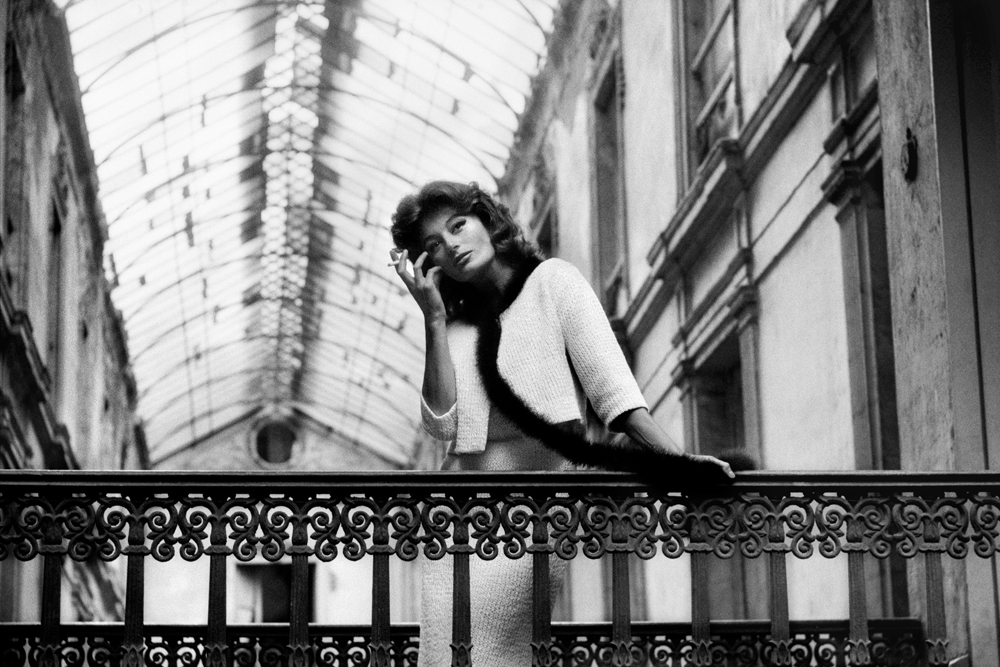
The framework of the film resembles a fairy tale, as it fits into the Hollywood Prince Charming stereotype, with Lola waiting for the return of her prince, where the central theme of fidelity plays out over an extended lover’s absence, her prince returning mysteriously at the end of the picture, placing great faith in the romance of one’s first love, as if it will always retain a magical connection.  The Umbrellas of Cherbourg (Les Parapluies de Cherbourg) is a direct descendent of this film, continuing the themes of fidelity and waiting, also mirroring the mother-daughter dynamic, though in the later film Demy subverts the audience’s expectations by refusing to provide a happy ending, suggesting instead that love is transient, creating a tearjerker with depths of complexity built-up in that tragic finale.  Waiting for that perfect prince has a Greek myth model in the long and continuing absence of Odysseus before finally returning to his wife Penelope in The Odyssey, and is also the subject of Disney’s SLEEPING BEAUTY (1959), while LOLA similarly is built around a premise of the heroine’s ability to wait for her dream to come true.  Demy challenges the idea of conventional relationships, packing his films with despondent characters that dream of a better life, which may be in tune with his secretly gay childhood where he had to dream his way out of his provincial existence, with so many of his characters waiting around hoping for something better to come just around the corner, where Demy’s films create an illusory world within the grim reality of their everyday circumstances, leaving them feeling trapped.  Initially it appears the central character is Roland, a moody, impressionable, free-spirited, yet habitually late New Wave youth who couldn’t be less motivated, exuding existential detachment, yet searching for happiness, valuing his freedom but inadvertently getting lost in a book, perfectly capturing the 60’s era of postwar apathy and melancholia, whose ambivalence about the future recalls the wayward lead character in Bresson’s Four Nights of a Dreamer (Quatre nuits d'un rêveur... (1971), or Alexander (Jean-Pierre Léaud), the quintessential New Wave character in Eustache’s The Mother and the Whore (La Maman et la Putain) (1973), while also bringing to mind any number of young men in Rohmer films caught up in the bloom of youth with their heads seemingly in the clouds, all trying to figure out where they fit into modern society.  For Demy, one protagonist leads to another, and what appears to be small, seemingly trivial moments with one character lead to more serious encounters with other characters, all of which create a multiplying, ripple effect where the drama keeps escalating.  For instance, when Roland meets the young Cécile in the bookstore, he tells her she reminds him of a girl by the same name in his youth.  That girl turns out to be Lola, who he runs into on the street purely by chance, yet their paths diverge as her story then becomes the consuming interest of the film, as she works at the Eldorado Club with several other young girls, who can be seen practicing their routines, where the women’s routine of boredom and ennui is broken by a genuine concern for each other.  American sailors routinely visit the place and freely spend their money, Jacques Demy's "Lola" (1961) - the boys arrive at the cabaret YouTube (58 seconds), where one of the dancers is Corrine Marchand, starring a year later in Varda’s groundbreaking Cléo from 5 to 7 (Cléo de 5 à 7) (1962), yet Lola, with a long cigarette holder, sings the only song in the film (written by Agnès Varda), performing a signature Marlene Dietrich-style dance routine, dressed in a black lace corset, wearing a top hat and black feather boa, imprinting herself in the imaginations of viewers with “Lola’s Song, C’est moi, Lola,” a woman who “likes to please them every day without going all the way,” Extrait de LOLA de Jacques Demy - La chanson de Lola YouTube (1:54).  One of the sailors who takes a special interest in Lola is Franky, yet her interest lies only in his physical resemblance to Michel, the man she really yearns for.  Again, purely by chance, Franky runs into the young Cécile at the corner store, as he buys the last edition of her favorite Meteor comic, striking up a friendship, where in one of the better sequences of the film he takes her to the carnival in town to celebrate her 14th birthday, where it turns into one of the better expressions of pure unadulterated joy onscreen, with the camera subjectively identifying with Cécile’s giddy excitement, as both are utterly thrilled on the rides together, Lola (1961) - Carrousel scene YouTube (2:11), even resorting to slow motion, allowing that magical moment to extend in time, revealing just how enthralled she is with him (Demy had envisioned a ballet, given a dreamlike quality, suggestive of how she feels), like one of the greatest dates she’ll ever have, and a metaphor for that euphoria of first love.  As the story develops, we learn that Cécile is a possible derivation of Lola, an example of the happy-go-lucky girl she used to be, symbolizing an exhilarating date Lola had with Michel at the same age, while her mother, Madame Desnoyers, a former dancer, represents what Lola may become, a single mother raising her teenage child alone.  And while Lola may actually escape the monotony and dreary routine of her stifling working-class existence at the end, Madame Desnoyers, by contrast, cannot.  Scenes of Lola dancing in the club, or lamenting Michel’s absence, are woven into these sequences, beautifully connecting together Lola’s past, present, and future.