





 |
| Writer/director Siân Heder |

 |
| Heder with Troy Kotsur and Marlee Matlin |
 |
| Marlee Matlin |
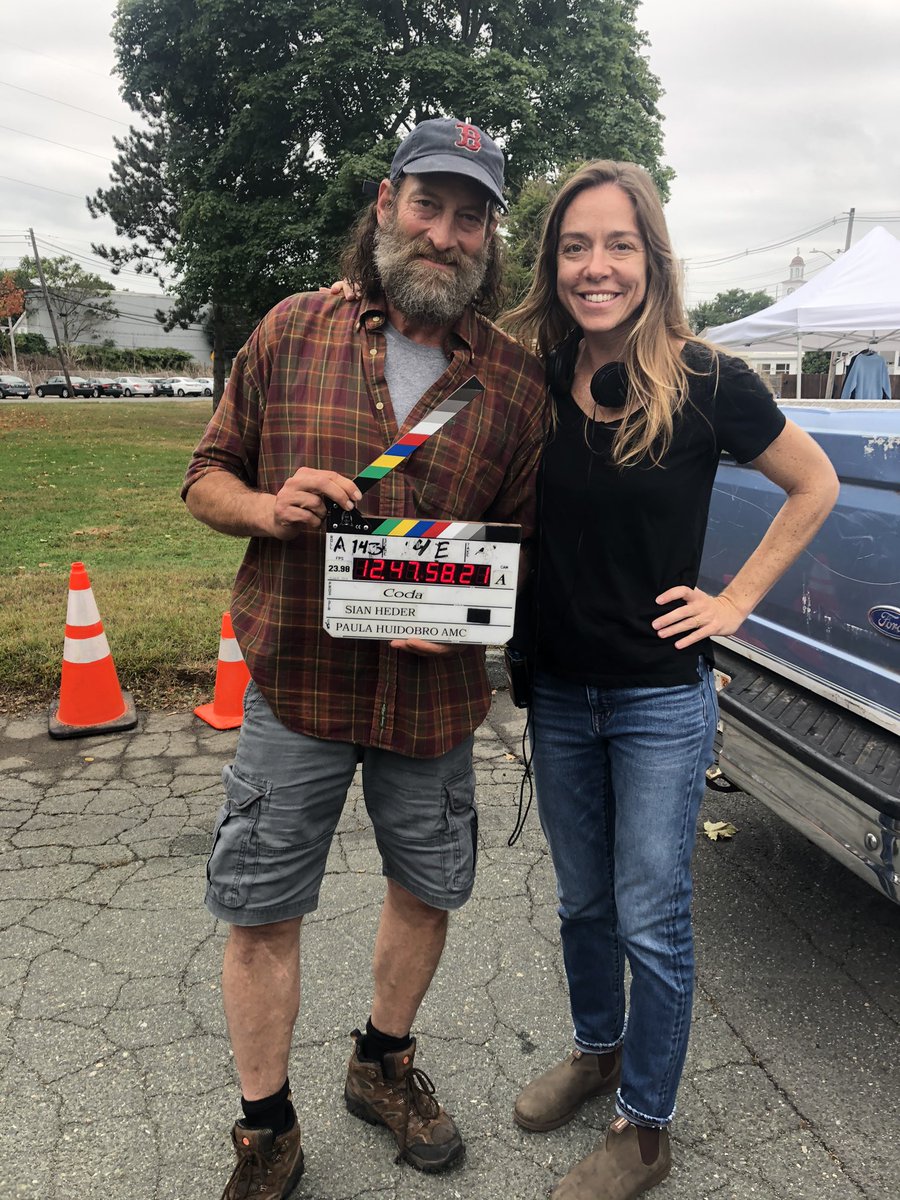 |
| The director with Troy Kotsur |
CODA B USA France Canada (111 mi) 2021 d: Siân Heder
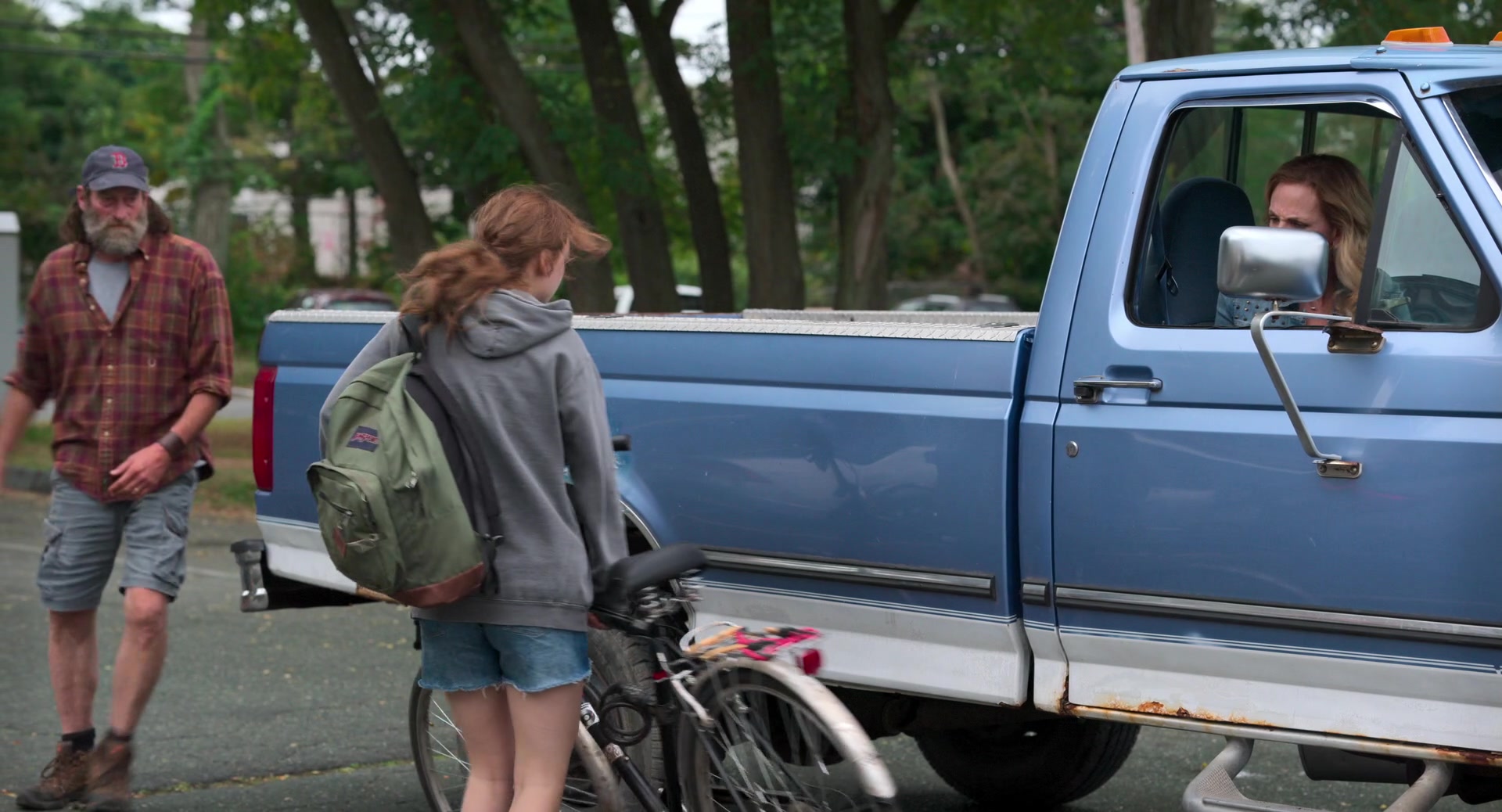
Perhaps Covid has a way of playing on one’s sensibilities, as coming out of nearly two years of a worldwide health pandemic leaves a Hollywood community searching for a feel-good story to unite around. This, apparently, is that film. Premiering initially in January 2021 at Sundance where it won the Grand Jury Prize (1st place) in the U.S. Dramatic Competition, also the Audience Award, the Directing, Screenwriting, and Editing Award, as well as the Best Ensemble Film before being sold to the Apple + streaming network for a record-breaking $25 million dollars, generating a growing interest towards the end of the year for the Academy Awards, winning three Oscars for Best Picture, Best Supporting Actor (Troy Kotsur), and Best Adapted Screenplay, becoming the first streaming film, the first Sundance Film Festival premiere, and the first film featuring predominantly deaf actors in pivotal roles to win Best Picture, also the last film in 89 years to win Best Picture with less than 4 Oscar nominations, the others being THE BROADWAY MELODY (1929) at three, WINGS (1927) at two, and GRAND HOTEL (1932) with only one. A story of a deaf working-class family’s ability to overcome all obstacles, as personified by their only hearing child, a 17-year old daughter who doubles as the family interpreter, able to communicate with the hearing community while practicing sign language with her own family, yet this exhausting talent takes its toll, since running a fishing boat requires someone who can hear, making it difficult to leave the nest, because her family will always need her to connect to the hearing world around them, yet she has her own dreams to pursue, as she has a rare talent for singing and hopes to get accepted by the Berklee College of Music in Boston. A remake of the highly successful French film THE BÉLIER FAMILY (2014), nominated for six César Awards while generating over $72 million dollars in commercial sales, yet was critically lambasted for showing a level of disrespect to the French deaf community for casting hearing actors in several of its main deaf roles ("La Famille Bélier is yet another cinematic insult to the deaf community"). Philippe Rousselet and the French-based Pathé Studio was one of the original French film producers, with the rights to do a remake, so they approached Siân Heder, a former writer and story editor for the Netflix TV prison drama Orange Is the New Black (2013 – 2019), who grew up in Cambridge, Massachusetts and visited Gloucester every summer, asking her to direct a new film to an American audience, righting the wrongs of the original version, as all the deaf members of the family are played by deaf actors, offering large and narratively significant roles to three deaf actors of extraordinary talent, and their performances give the movie a sense of authenticity and presence that warmly demonstrates a close-knit family. It’s a formulaic Hollywood movie, however, where one must easily overlook the contrivances utilized to achieve the end goal of happiness. Nonetheless, the integration of deaf actors into a larger narrative is extremely successful, as audiences uniquely need to see the signing of their hands at all times, as this is their way of expressing themselves, revealing the sad state of affairs when it comes to the casting of deaf actors or those with disabilities in both commercial and independent cinema, both demonstrating a long history from patronizing attitudes to total disregard. While Troy Kotsur’s acting award is well-deserved, so perfectly fitting the part of a working-class Gloucester fisherman with his wild scraggly hair, a propensity for smoking pot, and very dirty humor, really building his character throughout on so many levels, where an accurate representation of deafness is definitely a good thing, yet the Best Picture and Best Adapted Screenplay awards are another matter, as in both categories the Academy overlooked Jane Campion’s monumental work, 2021 Top Ten List #1 The Power of the Dog, a revisionist western from a feminist perspective that the Academy viewed as simply too depressing. This is the same Academy that historically embraced the racist depiction of Native American Indians in John Ford westerns for nearly a century, heavily lauded films that stand in stark contrast to the Campion film, where seriousness of subject matter is hardly a reason to disqualify a film from a best of the year award, but Hollywood has a long history of diminishing the importance of gravity and any reverberating impact on the industry, where it’s often years afterwards before the public questions how these more profoundly relevant films could so easily be overlooked during awards season.
What might surprise some is how close this film comes to actually being a musical (as we speak, it is being adapted into a musical), as so much is centered around feel-good Motown songs, offering a tinge of nostalgia to some while introducing the upbeat music to a new generation. The manipulation factor is obvious, as the deaf community has no connection to Motown or even to music, so this is something the hearing community threw in specifically designed for a hearing audience. Imagine, if you will, how that would play out to a deaf community, as they would not hear any of the melodic beauty or the surging emotions generated by the music and instead wonder what all the fuss is about. It does, on the other hand, serve as an example of how a musical soundtrack can influence a movie audience, as the happiness factor was a driving component that explains how this film could be chosen by the Hollywood Academy as the best film of the year, feeling more like the criteria has changed, making this an Audience choice of most popular film. And, in fact, the criteria has changed, (The Oscars' new diversity and inclusion rules for Best Picture ..., also seen here: Oscars.org | Academy of Motion Picture Arts and Sciences), changes that may have escaped the viewing audience, so instead of best film of the year, which it is still called, it actually means best use of inclusion and diversity. It’s the sort of thing Hollywood does to make itself feel like they’re more relevant, while remaining completely out of touch with viewing audiences around the world. This out of touch factor may explain why Hollywood remains obsessed with churning out blockbuster Marvel comic book, superhero movies. But then a little film like this comes along that strikes a nerve with audiences, perhaps taking them by surprise, as it’s a conventional feel-good story with a happy ending, the antidote, apparently, for the downbeat years of Trump and Covid, and now the unending Russian atrocities in Ukraine. While the original French story takes place on a rural dairy farm in France, this adapted story takes place in the hardscrabble fishing village of Gloucester, Massachusetts, the same turf as Kenneth Lonergan’s 2016 Top Ten List #5 Manchester by the Sea (2016), though no one speaks with any hint of a Boston accent (like the infamous Kennedy family), where the idiosyncratic Rossi’s are a third-generational fishing family, accentuating the life of Ruby (English actress Emilia Jones, who spent 9-months learning American sign language), a 17-year old high school senior whose parents, Jackie (Marlee Matlin, the first and only deaf actor to win a Best Acting Oscar) and Frank (Troy Kotsur), are deaf, as is her older brother Leo (Daniel Durant). Their lives revolve around the family business, with Ruby going out on a boat each morning before school with her brother and father, which is how the film opens, with Ruby singing to the music of Etta James, CODA | Intro Scene YouTube (1:56), then returning back to shore where she negotiates the sale of the catch to the wholesaler, who, they’re convinced, takes advantage of them because they’re deaf, and because Ruby is a child. What immediately stands out are the tender moments between Ruby and her family, with the deaf community aggressively using humor, as they call these price gougers all kinds of names, while they have affectionate profanity that they use for each other as well, especially brother and sister, with the language of signing subtitled below the screen. While this is not the life of your typical high school kid, it soon picks up on the routine challenges of her school life, where the sweetness of her character is perhaps a little too perfect, as she joins the school choir as an elective simply because a boy she finds cute, Miles, Ferdia Walsh-Peelo from John Carney’s Sing Street (2016), signs up as well. Once in class, however, when each is asked to sing, she flees the classroom in fright, running to her favorite secluded spot by a rock quarry waterhole and sings her heart out. Returning back to the music teacher Bernardo Villalobos (Eugenio Derbez) to apologize, he quickly discerns that she has a voice. More importantly, viewers quickly realize this is a different kind of movie, "How do you feel when you sing?" | CODA Film | Movie Clips YouTube (1:11).
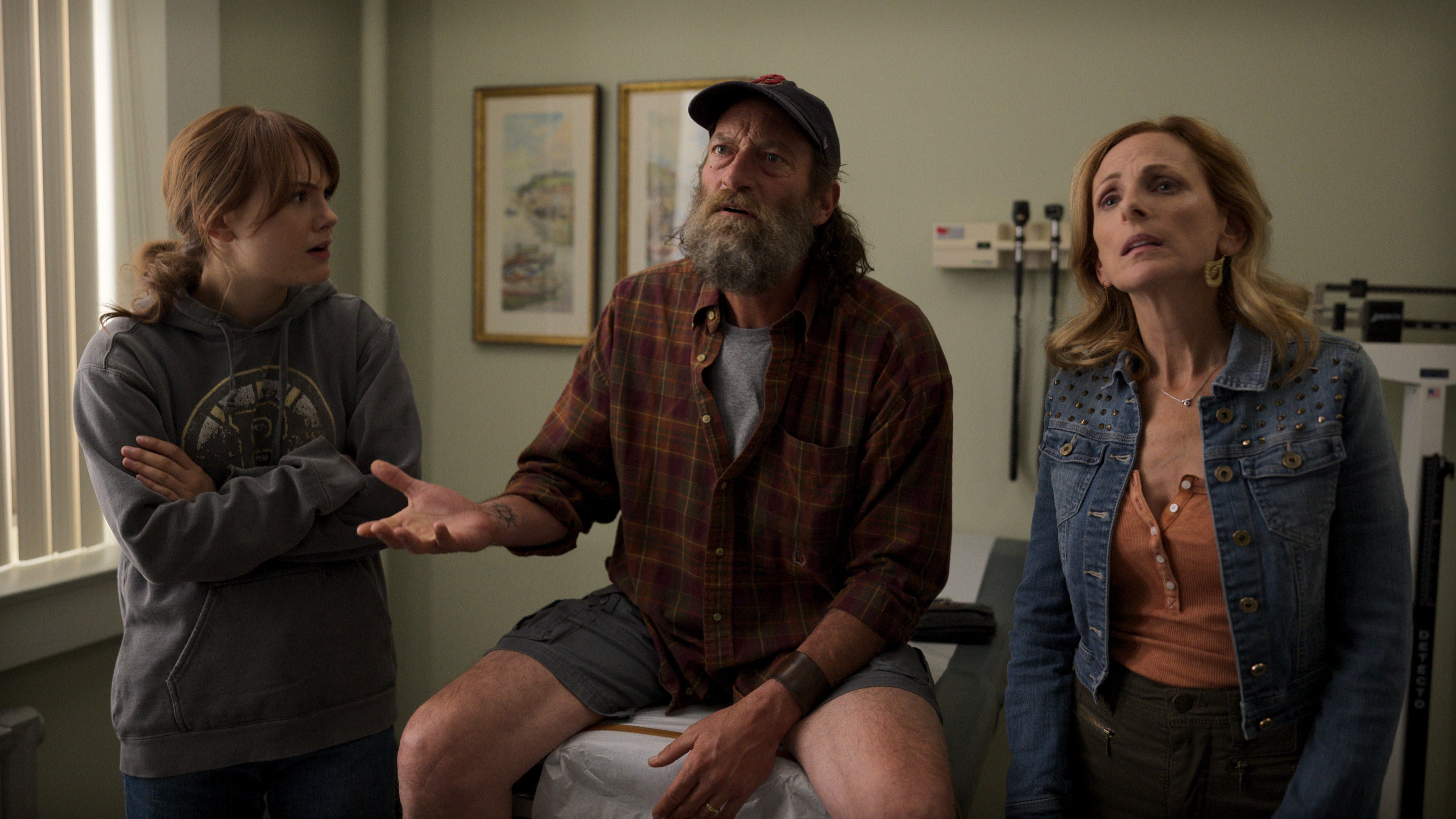
This is a film that tugs at your heartstrings, creates absurdly funny situations, yet also involves deaf characters who are authentic, an extremely important consideration, as CODA (Child of Deaf Adults) is a film that helps normalize and destigmatize those with disabilities, as too many throughout society tend to automatically exclude them with a sense of moral superiority, or make mocking jokes at their expense. Ruby has grown up identifying with a deaf family that is blatantly ostracized and routinely taken advantage of, hearing all the nasty ridicule hurled at them, the only one in her family who can, feeling little recourse, as her family refuses to stand up for themselves, but simply endures the insults. Amongst themselves, of course, they have no trouble trading barbs and petty insults with one another, choosing particularly expressive language to do so. But in high school, she tends to stay on the margins and doesn’t really stand out, perhaps afraid to use her voice, but her music instructor pairs her up with Miles singing a duet for an upcoming school concert, choosing Marvin Gaye with Tammi Terrell You're all I need to get by YouTube (2:35), Both are shy at first, but this opportunity gives them a chance to hang out and just be friends, before developing into a romantic relationship that feels more like puppy love, as the asexual nature stands in stark contrast to her own parents, who are emphatically open about the graphic nature of their own sexuality, hilariously expressed in a scene at the doctor, CODA | Doctor Appointment YouTube (1:28), with an openly embarrassed Ruby lashing out at her parents, purposefully mistranslating in order to teach them a lesson. The concert sequence is one of the film’s high points, invaluably aided by two deaf female collaborators who assisted the director, Alexandria Wailes and Anne Tomasetti, as in the middle of their duet together, which her family cannot hear, the sound disappears, forcing the audience to identify with the deaf, as we watch them look around at the faces of others to get a feel for what’s going on, taking their cues from what they see, not hear, where interestingly, her parents talk right through their duet through the silence of sign language, but their daughter shines in the moment, something they sense for the very first time, Coda (2021) - Duet scene YouTube (2:35). The film is adept at capturing small-town isolation, and the way it becomes exacerbated when one is pushed into the margins, yet the film is strongest when it explores the interpersonal dynamics within the Rossi clan, who are pressed up against it, along with other local fishermen, by corrupt business practices from local merchants, eventually forming their own fish co-op with other locals to sell their own fish rather than continually watch some crooked entrepreneur cut deeply into their profits, turning into a small-scale version of On the Waterfront (1954). Ruby finds herself torn between the obligations she feels to her family and the pursuit of her own dreams, as she’s urged to try out for Berklee, a prestigious school, but if Ruby leaves, her family’s business may be in jeopardy, placing overwhelming pressure from her family to be there for them, as they’re trying to keep their fishing business afloat during particularly rocky times, requiring her interpretive services, yet she’s forced to tell them, “I can’t always be that person.” The story of a child wanting to form her own identity outside of her parents is universally relatable, reminiscent of Greta Gerwig’s Lady Bird (2017), though neither film is nearly as insightful or as skillfully made as Kogonada’s 2017 Top Ten List #5 Columbus, another low-budget indie film taking place in a small town, which simply resonates with greater depth and purpose. Unfortunately, this film is susceptible to sentimentality and manipulative plot twists, straddling a fine line between formulaic clichés and a more adept means of personal storytelling, accentuating the interiority of characters’ lives with honesty and compassion. Yet every time the film takes a darker turn towards anguish or pain, another song resuscitates a more upbeat feeling, adding a positive spin to the family divide that ping pongs back and forth between family obligations and realizing one’s dreams. Her family sneaks into the balcony of her Berklee audition, bringing the house down as she simultaneously sings and signs to them to the music of Joni Mitchell’s “Both Sides Now,” CODA (2021) - The Audition [HD] YouTube (4:37), kind of a Giorgio Moroder and Jennifer Beals FLASHDANCE (1983) moment, even to the point where she starts again, Flashdance - Final Dance / What A Feeling (1983) - YouTube (5:03), not likely to leave a dry eye in the theater, becoming, in effect, a cinematic fairy tale of personal liberation.


