Showing posts with label Buddhism. Show all posts

Thursday, May 14, 2026

Resurrection (Kuang ye shi dai)


Director Bi Gan 


director and cast on the red carpet at Cannes

Shu Qi at Cannes, 2025


RESURRECTION (Kuang ye shi dai)                       B+                                                       China  France  USA  (160 mi)  2025  d: Bi Gan

Unlike any other film you’ll ever see, a radical departure from any other cinema experience, Chinese filmmaker Bi Gan, the maker of such extraordinary films as 2016 Top Ten List #2 Kaili Blues (Lu bian ye can) and 2019 Top Ten List #6 Long Day's Journey Into Night (Di qiu zui hou de ye wan), has been described by Canadian writer, critic, and Chinese film curator Shelly Kraicer, who lived in Beijing for more than a decade, as the anti-Jia Zhangke ('Resurrection' review by Shelly Kraicer), now moving in a completely new direction, more modernist, with a stream-of-consciousness spirit, as movie references abound, becoming an ode to cinema and a lamentation for our times, creating an imaginary sci-fi universe that lives only in the imagination, which becomes the beating heart that lives within us, coinciding with the life of dreams, which cease to exist when the body dies.  But new life emerges with every subsequent conscious existence, allowing the life cycle to begin again with a true out-of-body experience.  Seemingly inspired by the darkly immersive atmospheric tone of Ridley Scott’s Blade Runner (1982), writer/director Bi Gan and co-writer Zhai Xiaohui spent years in the lab constructing a new cinematic vision for this film, which was literally years in the making, as his last feature was seven years ago, but this nearly three-hour venture is a different kind of cinematic excursion that requires an open mind, as it simply resists logical evaluation and sets itself apart from the rest, like a time-traveling experience existing almost entirely in dream language.  A late edition to the Cannes lineup in 2025, added just five days before the festival began, winning a Special Grand Jury Prize, where jury president Juliette Binoche likened it to an “unidentified flying object,” the film has been re-edited since that initial premiere, yet it remains confusing enough, where it will be difficult for anyone to make sense of this sprawling epic work that simply goes places we’ve never been, yet the acclaim for this film will likely only grow over time.  Unraveling over the course of 100 years, like an anthology of short stories without chapter headings, told in six segments, with each one corresponding to one of the six senses recognized in Buddhist thought (The Six Sense Bases), sight, hearing, smell, taste, touch, and mind, where the protagonist in each segment is Jackson Yee, a Chinese actor, singer, and member of boy group TFBoys, who takes on five different roles, working with the director for a year and a half to make this film.  While there are multiple movie references, which the director takes in new directions, it’s difficult to say where this stands in Chinese movie history, as it’s remarkably ambitious visually, creating something onscreen that is simply unimaginable, yet it remains distanced and aloof, only occasionally connecting emotionally, leaving viewers befuddled and perplexed at the audaciousness of what they’ve just experienced.  Ultimately the film is something of a puzzlebox that the director himself wanted to watch, which makes perfect sense.      

Title cards explain that the film is set in a post-apocalyptic future when humanity has achieved immortality, but only by giving up dreaming, while those that continue to dream are called Deliriants, outcasts viewed as monsters that are knowingly veering towards their own death, living on a different level of human existence from the others, supposedly “bringing pain to reality and chaos to history.”  Using narratives that transcend space and time, moving from Silent-era German Expressionism to film noir to a Chinese ghost story to a phantastical vampire love story, shot by Dong Jingsong through various color filters, the film utilizes a film-within-a-film technique, opening in a silent movie theater, where film is considered part of an ancient forgotten past, with Bi Gan’s film dealing with the resurrection of dreams, of cinema, and of memory itself.  We discover a woman known as the Big Other, Shu Qi from Hou Hsiao-hsien’s MILLENNIUM MAMBO (2001),  THREE TIMES (2005), and 2015 Top Ten List #9 The Assassin (Nie Yinniang), who is capable of seeing through illusions, and is assigned to bringing Deliriants back to reality, sent to hunt them down, just like the hunt for Replicants in Blade Runner, gifted with the rare power to perceive these illusions for what they truly are, as she chooses to enter the monster’s dreams, determined to uncover the truth that lies hidden within.  Starting in an old Chinese opium den, elaborately constructed, like a dollhouse, featuring a multi-level space with adjoining rooms, windows, and walkways, each rendering a different activity, Resurrection (2025) Dir. Bi Gan : r/CineShots YouTube (46 seconds), but occasionally an outsized human hand intercedes, as she follows a secret underground passageway, like falling down an Alice in Wonderland rabbit hole, where she discovers a grotesque Nosferatu-resembling Deliriant (Jackson Yee) munching on raw poppy flowers to help stimulate his dreams, but they are killing him.  Unable to understand his irrational compulsion, she discovers a movie projector for a heart, and decides to load it with film, allowing him to replay his past life in dreams before dying, as a series of four elaborately constructed dreams (framed by a prologue and epilogue) unfold before our eyes, with a brief shot of a wax candle melting and Shu Qi’s voiceover coming between each section, chronologically representing an unnamed historical period and a different period of cinema, which acts like a portal into the world of the subconscious imagination, taking us upon a shape-shifting odyssey through illusion, beauty, and terror that takes him across a century of cinema and to the end of time.

What stands out in all three Bi Gan films is the complex visual style, each featuring extended one-shot takes that extend beyond 30-minutes, become a signature aspect of his filmmaking, which is never less than enthralling, arguably a natural extension from the seductive, all-consuming style that began with Hou Hsiao-hsien’s neon-splashed, adrenaline-rush submersion into the techno-scored nightlife of Taipei in MILLENNIUM MAMBO, connected, of course, by actress Shu Qi.  Tinged with science fiction and fantasy, with a layered synthesized soundtrack by French electro-duo M83, while paying tribute to various movie genres, it’s important to note that in every iteration, the character Jackson Yee portrays is an outlaw, with a dream sequence moving into the lead-up of WWII and film noir territory, shot using a blue color filter or featuring the pervasive use of the color, where he appears to be a musician/spy suspect/political prisoner who is both reviled and revered because of his voice, capable of inducing madness in men, a homoerotic object of desire for both the Composer (Yan Nan) and the Commander (Mark Chao), one wanting to hear his voice, while the other wants to unlock his precious secrets, FNC 2025 | Resurrection (Bi Gan) (51 seconds).  Nearly indecipherable, this mysterious segment involves a fleeting reference to Carl Theodor Dreyer’s DAY OF WRATH (1943), an elaborate prison, a lengthy interrogation, a near-death train incident, a missing suitcase, a theremin, an Orson Welles’ LADY OF SHANGHAI (1947) house of mirrors, a panicked train station engulfed in fog, the stabbing of eardrums, and the last sounds heard, the warbling sounds of a Bach song, BWV 478, “Come, sweet death, come, blessed rest” played on a theremin which magically closes one world while opening another.  That song foreshadows a series of deaths that are yet to come.  The next sequence jumps ahead to the Chinese Cultural Revolution in the 1960’s, a winter’s tale with snow inexplicably covering the ground of an abandoned Buddhist monastery, where a former monk, known as Mongrel, goes on a looting spree of locating Buddha statues before destroying them, all part of destroying the old ways, yet succumbing to a fever-inducing toothache, using a broken piece to knock out his rotten tooth, inducing the “Spirit of Bitterness,” who takes human form (Bi’s uncle, Chen Yongzhong, appearing in all his films).  The two engage in witty banter before the spirit, assuming the appearance of his late father, transports us into his dreamworld, reflective of a Chinese ghost story, revealing a mysterious backstory, offering a window into China’s dark past, where a dog reflects the karmic punishment for betraying the past, with Mongrel quickly realizing the past cannot be destroyed, as it exists in our minds and imagination.

Jia is a con artist during the onset of China’s market economy in the 80’s, who schemes to win prize money offered by an Old Man crime boss (Zhang Zhijian) who executes people who cross him.  In a world ruled by money, Jia befriends an orphan (Guo Mucheng), teaching her a card trick, hoping to convince the Old Man in the supernatural, or that she can identify a card simply by smelling it.  Posing as Jia’s daughter, even while blindfolded and wired to a lie detector machine, she manages to outwit the Old Man and win a cash prize, which they split before Jia leaves town and is immediately robbed and left for dead.  Meanwhile, the Old Man summons the girl for his real purpose, having abandoned his own daughter years ago, but longs to read a burnt out letter she wrote before she died in a fire.  Using the power of smell, she surprises us all by reading aloud the full contents of the letter written to an absent father.  In what is arguably the most elaborately staged segment, the pièce de résistance is a nearly forty-minute single-take tale that begins with a fireworks sequence, shot with breathtaking technical brilliance, mostly through a red color filter of rainy streets and smoky nightclubs, set during a millennium celebration on New Year’s Eve in 1999, as the Deliriant is reborn as Apollo, a reckless young hoodlum who has never been kissed, but is unfazed watching someone get strung up near the docks, yet when he meets a free-spirited young girl Tai Zhaomei (Li Gengxi), who may be a vampire but has never bitten anyone, his fortunes turn, no longer feeling alone.  As they run through abandoned buildings and back alleyways like the young kids in Godard’s ode to youth, Band of Outsiders (Bande à Part) (1964), caught up in a world of dream and reality, this becomes an evocation of youthful hope and joy at the dawn of the new millennium.  But there’s a catch, as she works for a mob boss, Mr. Lu (Huang Jue), feeding on blood that he supplies from his victims, turning into an eerie vampire love story, including an astonishing nightclub sequence, Resurrection (2025) - Nightclub Karaoke Scene YouTube (9:18), with its constantly moving camera, where Apollo gets the snot kicked out of him, but he perseveres, using a time-lapse technique to go from night to the next morning, yet just when they think they can escape it all, kissing passionately on a barge right out of Vigo’s L'Atalante (1934) in the moments before sunrise, their own combustible passion self destructs, effectively ending their dream.  In an epilogue, Shu Qi’s Big Other wraps things up, dressing up Apollo to resemble the original Deliriant, setting his corpse free in a gigantic vault filled with liquid, Resurrection 2025 Movie Ending Scene YouTube (2:16), returning us back to the wax movie theater filled with illuminated patrons, but one by one, each light goes out until only darkness remains, as the film ends with the theater, like time itself, melting away.  Yet if this film proves anything, it is that dreams, or inner freedom, is the one thing that cannot be controlled by outside forces.  

Wednesday, November 17, 2021

Legend of the Mountain (Shan zhong zhuan qi)


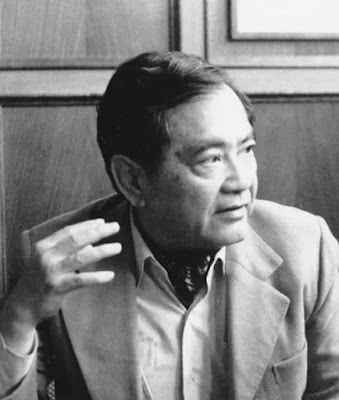
Director King Hu


The director with Sylvia Chang

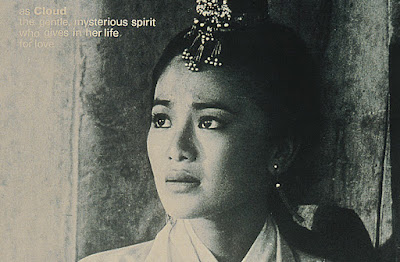
Sylvia Chang


LEGEND OF THE MOUNTAIN (Shan zhong zhuan qi)         B                                               Hong Kong  Taiwan  South Korea  (192 mi)  1979 ‘Scope d:  King Hu

Legend of the Mountain is the love story of a human and a ghost.  It’s a Song Dynasty short story.  It tells about a struggle that occurs in the ghostly realm, in another world.  The ghosts’ main objective is to be reincarnated as a human.  But being a ghost has its convenient aspects – for example, you can work magic!   It’s strange; why do they always want to become human?  Humans are born to suffer.  You could say this raises a question.  The movie was more than three hours long in its original version.  The film critic Derek Elley watched a videotape of the film and decided that it should be shown at both the London and the Edinburgh film festivals.  Later on, when I told him that I might shorten it, they wrote me a long letter saying I mustn’t cut it.  As for the full version of Legend of the Mountain being shown at the London Film Festival, let’s ignore whether the reviews were good or bad; at least they got to see the whole leopard and not just the spots!                                                                                             —King Hu, 1979

Conjured up from the same ghost stories in Pu Songling’s Strange Stories from a Chinese Studio that inspired A Touch of Zen (Xia nü) (1971), specifically one story entitled A Cave Full of Ghosts in the West Mountain, this film was shot back to back with Raining in the Mountain (Kong shan ling yu) (1979), released the same year, taking advantage of the mountainous location shots in South Korea, it also recycles many of the same actors used in the previous film, shot once again by Henry Chan, where the art direction and Scope cinematography is utterly spectacular, yet the eerie nature of the supernatural mysticism in this film is in the realm of Mizoguchi’s ghost story Ugetsu (Ugetsu monogatari) (1953), eventually leading to Tsui Hark’s more fancifully produced trilogy beginning with A CHINESE GHOST STORY (1987).  This film has always suffered in comparison to its companion film, largely because it usually appears in its truncated 105-minute version, yet to immerse yourself in the full-length version is an unforgettable experience that brings to mind Terrence Malick’s enthralling 2011 Top Ten Films of the Year #1 The Tree of Life, yet made thirty years earlier with a completely different philosophical structure and design.  Hu brought a literary depth to martial arts films that elevated the genre to an art form, particularly his unique blend of Chinese history and legend, politics and martial arts, philosophy and religion.  Besides his love of Peking opera, which may have inspired those acrobatic wuxia leaps and jumps, Hu’s films also display a heterogeneous array of traditional forms ranging from history and legend to literature and painting.  Hu’s affection for culture is expressed in his character’s familiarity with history, operas, short stories, and novels, yet what stands out in this film is the stunning, painterly design of every shot (Hu’s mother was a painter), including an astonishing array of nature shots, something he shares with American director Terrence Malick, yet Hu’s overriding concern was combining the natural and the supernatural into the same universe, placing this phantasmagoric ghost tale within the immense open-air beauty of the surrounding natural world, with birds and animals frolicking or dragonflies breeding, accentuating the mountains, trees, rivers, lily ponds, and waterfalls along with a golden setting sun, including shots through tree branches or fruit blossoms, as if paying tribute to the natural images of Chinese poetry, yet the reflective blend of myth and history is what makes this a King Hu film.  Two years earlier in 1977, King Hu married a Chinese writer and scholar named Chung Ling, who had written extensively about Chinese literature and had been teaching the subject for several years at the State University of New York in Albany, giving up her academic career to work with her husband, writing the screenplay for this film before resuming her teaching career in Hong Kong in 1982.  Co-written, directed, produced, and co-edited by Hu who also provided the art direction, production and costume design, this film represents the evolution of the wuxia film where action has largely been replaced by contemplative reflection, recalling a time when many religious traditions had co-mingled in China for centuries and shaped Chinese life for more than two thousand years, blending together different elements of Taoism, a system of belief attributed to the philosophy of Lao Tzu, a 6th-century BC contemporary of Confucius that teaches how to accept the natural order of things and live in harmony with the universe, and Buddhism, which believes human life is one of suffering that paves your way into the next life, ruled by the forces of reincarnation and karma, offering a path of meditative practice and spiritual development leading to insight into the true nature of reality, with the goal of attaining nirvana, or spiritual enlightenment.  By bringing all of these elements together, Hu accentuates the transcendental interconnectedness of things, even the things that seem to sidetrack us from seeking our desired goals and destinations.    

Set in the Song dynasty in the 11th century, where a scholar, Ho Qingyun (Shih Chun), embodies the more practical, rationalistic traditions of Confucianism, which is more an ethical philosophy rather than a religion, having failed the imperial exam, becoming an ardent calligraphy expert and copy artist, summoned by a Superior Monk (Chen Hui-Lou) from the Ocean Mudra Temple set in the mist-shrouded Gaya Mountains asking him to copy a Buddhist Mudra Sutra that releases the souls of the dead, to be used for a ceremony honoring deceased soldiers, which presumably will bring nirvana to legions of dead soldiers whose casualties resulted from the ongoing warfare of the Song-Xia wars.  Dispatched to a faraway fort where he’ll presumably have the peace and tranquility needed for his time-consuming task (though what’s more peacefully serene than a remote Buddhist temple in the mountains?), Ho wordlessly sets off on yet another long-distanced journey on foot, with prayer beads given to him by a monk to ward off any demons he might encounter along the way, yet his journey is defined by an overwhelming visual splendor, seeing a mysterious spirit in the woods playing a flute, only to disappear and reappear somewhere else, occasionally asking for directions, before finally arriving at the fort, discovering it is abandoned except for Mr. Tsui (Tung Lin), an advisor to the deceased general Han (Sun Yueh), informing him that the general and most of the soldiers were wiped out in battle.  No sooner does he arrive that he is literally swarmed by a host of characters, including a muted, seemingly deranged Old Chang (Tien Feng), Madame Wang (Rainbow Hsu), an extremely bossy, man-like woman who immediately orders him around, pushing in front of him her beautiful daughter Melody (Hsu Feng).  At a welcoming dinner, Ho is plied with wine while Melody furiously plays the drums, as if casting an intoxicating spell on the man until he passes out, only to awaken the next morning, though it could just as easily have been days, having completely forgotten everything that happened the night before, yet Melody has apparently spent the night, claiming he had his way with her, whispering sweet nothings in her ear while promising to take care of her.  Basically tricked into marrying her, this whirlwind of change ushers in a thoroughly altered mood, where something strangely mysterious is going on even before Ho has transcribed a single word, as a golden-dressed Lama (Wu Ming-Tsai, aka Ng Ming-choi, who also provided the martial arts choreography) and a Taoist priest Yang (Chen Hui-lou) are seen lurking in the background, moving back and forth outside in the distance while sneaking in and out of the fort interior looking for the prayer beads, exhibiting much of the same secret behavior from the previous film with vying parties searching for a priceless ancient scroll, where it’s even the same actors reprising their roles in a different capacity.  What’s clear to viewers is what’s being hidden from Ho, as behind the scenes they are casting various spells on one another, creating spiritual battles through musical instruments, with Melody’s power expressed through her drumming while the Lama counters with a tambourine drum, while also using clashing cymbals, with the Taoist priest also referred to as Reverend and Master.  This magical interplay between the dark arts is a fierce and furious sport, yet it soon becomes apparent that they all want to get their hands on the sutra once it’s finally finished, each having their own secret motives while placing pressure on Ho into hastily completing his copying.  Whatever peace and serenity Ho might have been seeking, he certainly doesn’t find it here, as he’s surrounded by apparitions vying for absolute control of the mystical world.     

Mr. Tsui takes Ho into town to buy some needed supplies, but gets sidetracked by a tavern run by Madame Chuang (Jeon Sook) and her lovely daughter Cloud (Taiwanese film legend Sylvia Chang), with the Taoist priest Yang living nearby, initially causing some consternation, but Ho and Cloud go walking together in search of needed herbs, becoming a heavily romanticized journey through the splendor of nature, with Ho realizing she is the spirit he saw playing the flute earlier, capable of appearing and disappearing, with the two immediately sensing some connection.  But it’s Mr. Tsui’s drunken comments that cause alarm, blurting out that Ho’s wife is a demon, that she only wants to get her hands on the sutra before enslaving him, much like she has done to Old Chang, who was once a proud warrior protecting the fort.  It’s here that Ho realizes he’s surrounded not by people but by spirits, devilishly motivated souls who are hell-bent on being helped into the next stage of their existence.  Music is a much more important aspect of this film, written by Wu Ta-chiang, featuring a prominent use of the flute, where there’s even a recurring love theme, as it’s apparent Ho and Cloud have a love connection, yet since she’s not human, only in spirit can they actually flourish.  When he returns home, Melody flies off into a jealous rage, using her demonic powers to immobilize his legs, leaving him unable to move until Cloud rescues him, with Melody going toe-to-toe with the Lama and the Taoist priest who served as her Master, both fighting back, yet ultimately Ho has to face the woman he married in a no holds barred battle for survival pitting the living against the dead.  More than the other Hu films where he appears, the actor Shih Chun is challenged by lengthy, wordless sequences, where he has to do more with his face to convey the layers of bewilderment and confusion that he continually experiences.  The length of the film allows for plenty of detours in the narrative thread, which is slim at best, feeling overlong and repetitive, where the interactions between characters often grow tedious, with characters that are not as richly developed as earlier films (but that may be because they’re not among the living, guided purely by instinctual desires), but it does allow the director to experiment with duration, elongating the dreamlike fantasies with their ability to both stretch and compress time, resorting to flashback sequences that help explain what happened, as Melody was an apparent favorite of General Han during his time at the fort, yet grew enamored at hearing Cloud play the flute, sparking the jealous rage of Melody, who becomes a serial murderer, killing not just Cloud but her own mother and assistant as well, tried for her crimes at the General’s court, then ordered into exile to die alone.  Yet her wandering spirit remains restless, seeking to settle her scores, inadvertently granted extreme powers from a misguided Taoist priest, enslaving the souls of Madame Wang and her assistant in her attempt to steal the sutra, with hopes of resurrecting herself back into the world of humans.  Hu brilliantly uses the priest’s prayer shrine, which has a black screen, like a movie screen, allowing his subject as well as viewers to simultaneously watch events unfold from her past life, generating startling revelations, featuring a multitude of shifting allegiances, murky motivations, betrayals, and romances, all inter-connected, evolving into a unique cinematic aesthetic where hypnotic imagery is met with hallucinations and the sublime.  As a distinctly Chinese ghost story, it’s not very surprising, exhibiting little suspense or dramatic tension (the complete opposite of his earlier wuxia classics), as the protagonist Ho is not quick to figure things out, yet the glorious otherworldly fantasia on display is visually extravagant, with fighting encounters in the forest, where religious and demonic forces battle it out with each other, with Cloud and Melody acrobatically leaping high up into tree branches before descending on each other, like dive bombs from above.  Equal parts fairy tale and nightmare, utterly strange and compelling, it’s the gentle sounds of Cloud’s flute that personalizes much of the musical soundtrack, like a musical leitmotif, where her pervasive spirit overrides much of what we see, receding deep into the internal recesses of our imaginations.