THE AMERICAN FRIEND
(Der amerikanische Freund)
A-
Germany
France (125 mi) 1977 d: Wim Wenders
Located seventy
miles inland on the River Elbe, Hamburg is Germany’s second largest city and
Europe’s second largest port. The city was largely rebuilt after being
devastated by Allied bombers in World War II. Its Reeperbahn neighborhood is
renowned as a red-light district (now greatly reduced) and as the proving
ground for the Beatles. With the move of the main dockland downriver, the old
harbor front has become the site of HafenCity, Europe’s largest urban
development project.
As always, the
factual city and the cinematic city overlap but are not quite the same. With
gulls wheeling across the sky, a tang of North Sea in the breeze, and massive
cranes towering over the harbor (which rarely seems more than a stone’s throw
away from the action), Hamburg is German cinema’s signifier of flux. It is a
city in transit and transition. It is a place of departures--whether by bulky
container ship or sleek bullet train. Even more so, it is a place of arrivals,
often by foreigners and outsiders--soulful Greek restaurateurs, seductive
Italian chefs, mysterious Americans in cowboy hats--who come to imperil and
invigorate the regime of German tradition and orderliness.
Following the
magnificent Kings
of the Road (Im Lauf der Zeit) Road Trilogy Pt. 3 (1976), Wenders has crafted another
existential road movie about angst-ridden people, lost souls who search for
identity against the bleakest of landscapes, ignoring plot for the most part,
where the mystery of the journey matters more than the destination, where the
influence of America is unmistakable, casting two legendary American directors,
Nicholas Ray and Sam Fuller in minor roles, while pulling Dennis Hopper out of
his self-induced drug and alcohol phase to play Ripley was a stroke of
inspiration, as he brings a tormented mania to the role where his eerie
presence spells trouble whenever he appears, like an Angel of Death.
Wenders, apparently, initially wanted John Cassavetes, but he turned it down
and suggested Hopper for the role. Creating a cinema of alienation that
is almost exclusively men, lost in a world they don’t particularly understand,
where even the film itself appears to meander aimlessly at times, drawn to
painfully beautiful landscapes with endless shots of blank skies and
featureless horizons, showing a fascination with flickering television screens
and crumbling, deserted buildings, yet Wenders is a visionary director that
allows the viewer to drift in and out of the intoxicating atmosphere.
While his 70’s films brought him international acclaim as the vanguard of
German New Wave, along with Fassbinder and Herzog, with Wenders there is also
indisputably an American influence, where the director grew up with a defeated
Germany appalled by their Nazi past, and much like Kurosawa’s late 40’s and
50’s films, embraced the conquering culture of America, where you’re likely to
find jukeboxes, coke machines, cowboy hats, neon signs, flashy American cars,
and references to the American pop music of Bob Dylan or Chuck Berry. But
perhaps more importantly, Wenders belongs with the modernist tradition of
European art film exemplified by Antonioni in L’AVVENTURA (1960) and RED DESERT
(1964), who created dramas of alienation and emptiness, predominately shot out
of doors, featuring characters that wander aimlessly through bleak city
landscapes that provide a starkly beautiful backdrop, where according to
cinematographer Ed Lachman, an assistant to Robby Müller on the film, he
asserts that “light and landscape are actors” in Wenders’ films. Made in
Hamburg, Paris, and New York, much of it in English, the film is modern and experimental
while paying tribute to the great film noir tradition of the post-World War II
era, drawing upon gangsters and the suspense thriller, becoming something of a
commercial success on the international markets, but especially in
America. It bears some similarity with Nicholas Ray’s BIGGER THAN LIFE
(1956), where a character has been diagnosed with a rare blood disease and may
only have a short time left to live, which leads to the inevitable catastrophes
that follow.
Emptiness, vacancy and a camera — whether still or movie — are the
starting points for our own exploration of transnationalism and the German
city. In the case of Wim Wenders, this framework lends structure and unity to a
career that encompasses the early German and German-American “road movies” Alice
in the Cities (1974) and Kings of the
Road (1976), the later explorations of Paris, Texas, and the
“vertical road movie” Wings of Desire (1987), and much later, Don’t
Come Knocking (2005). The momentous events underscoring these films are not
only associated with emptiness and with landscapes in turmoil but also,
particularly in Wings of Desire, with the rise of National Socialism,
the tumultuous destruction of World War II, and the resulting emptiness of
postwar inner-city “ruin landscapes” (Trümmerlandschaften); an equally
important unifying theme is the generational rupture between fathers and sons
following such seismic historical events. In this framework, the American West
(and the American Western) served a specific and telling purpose for the
postwar German West: to envision both traumatic upheaval and utopian
projection. This projection was as much of a socio-cultural project as it was a
cinematic fantasy. Wenders has commented that his “first memory of America is
of a mythical land where everything was much better.”
[…] Other West German directors have explored America; Werner Herzog
moves from a bizarrely distinctive Berlin milieu to an equally specific rural
Wisconsin in Stroszek
(1977), and Percy Adlon drops a lost Bavarian soul into the heart of the
Mojave Desert in Out
of Rosenheim / Bagdad Café (1987). But Wenders is the only German
director who consistently negotiates the borders of past and present, city and
country, Germany and the American West in his search for a postwar identity and
a correlative mythology and imagery. Not unlike Travis, who mutely staggers
into the frame after crossing the border from Mexico, Wenders and his
generation were literally born into a “landscape in turmoil,” the ruins left in
the devastating wake of world war; a topography of absence and vacancy, of lost
traditions, generations and faith. Wenders has described postwar Germany in
difficult terms: “I don’t think that any other country has had such a loss of
faith in its own images, stories, and myths as we have.”
[…] Indeed, Wim Wenders has been characterized by both his “obsession
with America” and his role in the New German Cinema, the “national cinema of
aesthetic experimentation and political opposition” that includes also such
luminaries as Rainer Werner Fassbinder, Werner Herzog, Volker Schlöndorff and
Margarethe von Trotta. By 1984, the year Paris, Texas opened and
won the Palme d’Or at the Cannes Film Festival, Wenders had extensive
experience with crossing the borders between West Germany, West Berlin and the
American West. Born in 1945, just months after the end of the war, Wenders
views his contributions to New German Cinema as shaped by his “distanced
relationship to Germany as a ‘fatherland.'” Belonging to a “generation
without fathers,” without a “tradition of our own,” Wenders draws heavily upon
non-German traditions, particularly (as we’ve seen) the American genres of the
Western and the road movie.
While Wenders’ early films were often described as “angst,
alienation and America,” THE AMERICAN FRIEND continues to explore earlier
themes from Kings
of the Road (Im Lauf der Zeit) Road Trilogy Pt. 3 like male friendship as
well as a connection between Germany and America, while also consciously
examining cinema itself, adapted from a popular 1974 novel Ripley’s Game by American novelist Patricia Highsmith, who also
wrote the source novel for Hitchcock’s STRANGERS ON A TRAIN (1951). As an
indication of her popularity, the rights to all of Highsmith’s novels written
up to that point had already been bought for various film productions, where
Highsmith sent Wenders a draft manuscript before the book was even
published. The story centers around the dubious presence of Tom Ripley
(Dennis Hopper), a dislocated American in a cowboy hat living alone in a
massive estate in the German countryside outside Hamburg, where he’s involved
with American art forger Derwatt (Nicholas Ray) in a criminal racket selling
forged paintings. Offended by a curt offhanded comment made to him by
Jonathan (Bruno Ganz), an art restorer and picture framer who he learns has
been diagnosed with a rare blood disease that may be incurable, so Ripley plots
to involve Jonathan in some gangland murders, thinking he’s got nothing to
lose, veering into John Cassavetes territory in The
Killing of a Chinese Bookie (1978) which was made immediately “after” this
film was released. Jonathan’s shop is centrally located downtown, where
what immediately stands out is the city itself, a dilapidated downtown harbor
location in view of ships coming in and going out, with dozens of construction
cranes dotting the skyline. Impressively shot by Robby Müller, this is
likely the most stylish Highsmith adaptation, where Wenders has shifted the
story’s emphasis with the casting of Dennis Hopper as Ripley, certainly not the
image that comes to mind for most readers, as Ripley has that calm demeanor of
someone you can trust, while Hopper’s Ridley, even at his most restrained, is a
bit wacko, adding a furious intensity that would otherwise not be there.
Wenders delves into his personal eccentricities as if it was part of the landscape,
using his edgy, nervous energy that is always about to explode as the perfect
contrast to the more politely refined Jonathan, a man with responsibilities who
is married with a young son. It is only the prospect of outlandish sums
of money that he can use to take care of his family after he’s gone that lures
him into the nefarious activities of this seedy underworld.
Ray’s BIGGER THAN
LIFE is a portrait of domestic oppression, with seemingly no way out, while
Jonathan’s fascination with a life in crime becomes pallitable only as a
response to the rigidity of his own domestic plight. According to Robert
Phillip Kolker and Peter U. Beicken in The
Films of Wim Wenders: Cinema as Vision and Desire, 1993:
For Nicholas Ray, and many other American filmmakers of the 50’s,
domesticity was itself a kind of abandonment, a slippage into the comfortable
and necessary at the expense of male freedom. Wenders stretches this
ambivalence across the poles of the characters’ despair. They remain,
even more than Ray’s characters, lonely and hopeless in solitude or in
domesticity; adventure exists only as momentary and inauthentic respite.
“Pity the poor immigrant,” Ripley sings (recalling the old Bob Dylan song) as
he sits abandoned by Jonathan, who has gone off with his wife to die, alone on
the beach near Hamburg — like Philip Winter on the Jersey shore at the
beginning of Alice in the Cities (1974).
Hopper’s Ripley is
turned into a lone cowboy with no wife or servants and none of the busy
domestic life as portrayed in the book, instead he spends lots of time alone in
his house talking into a tape recorder, asking himself ponderous questions
aloud, or taking Polaroid selfies as if he’s trying to figure out who he is,
shouting out to no one in particular, “I am confused.” Vulgar and crass, while
also ambiguous and manipulative, he defines himself with the phrase “I make
money,” suggesting shady dealings and a career in criminality while at the same
time Hopper is associated with the 60’s American counterculture of Easy Rider
(1969), actually singing a few verses of Ballad of Easy Rider, “The
river flows/It flows to the sea/Wherever that river goes/That’s where I want to
be.” His residence has a green Canada Dry neon sign overlooking the pool
table and jukebox, where he becomes synonymous with American symbols like Coca
Cola, his cowboy hat, a Thunderbird car, a yellow New York taxicab, or Marlboro
cigarettes, all of which have an influence on European culture. Ganz’s
deliberately underplayed Jonathan, on the other hand, is quiet and
introspective, preferring to work alone where he uses his hands and becomes
familiar with the feel of wood and the various scents involved with his
profession. While Hopper is manic and explosive, the picture of
unpredictability, adding a sense of danger throughout, Ganz, more of an
established star of the German stage at this point in his career, is methodical
and intellectual, where he meets with his doctor and discusses the results of
his lab tests with the calm reserve of a business transaction. Jonathan
is besieged by thoughts of dejection and desperation, where he can’t stop this
feeling of his whole world disappearing, where initially, the idea of murdering
someone for money seems preposterous, but the thrill of excitement running
through his veins adds an element of vitality back into his step that he can’t
explain, certainly not to his wife, who begins to suspect something foul is
afoot with his sudden association with Ripley, something that is otherwise
unthinkable for a cultured and sophisticated man. His initial disgust at
the certainty that the Derwatt painting was a fake quickly fades into the past
as he develops an amicable relationship with Ripley, where both share a deep sense
of alienation and existential anguish, exchanging small gifts as peace
offerings. Together they comprise a running commentary on the often testy
relations between America and Europe.
Ripley is initially
approached by French underworld figure Raoul Minot (Gérard Blain) to murder
some rival gangsters, but he defers, suggesting Jonathan for the job, spreading
rumors of his impending demise, creating a palpable sense of paranoia creeping
into his life, where themes of real and fake from his professional career start
intruding into his personal life as well, where there is literally no one he
can trust. This uneasy frame of mind makes it easier to enter into a
surreptitious lifestyle of secret deals with the criminal underworld, as if he
already has one foot in the grave where he is subconsciously communicating with
the dead. This otherworldliness offers him a sense of hope and freedom
that otherwise escapes him, where Ripley visits him in his store both before
and after the hit, never letting on his connection to the crime, where they
develop a curious friendship. Minot is so impressed with the job that, to
Ripley’s surprise, he orders another hit, this time taking place on a moving
Parisian Metro train. Minot is a modernist gangster that probes the
psychological state of mind of his young protégé hitman, continually playing
upon his weaknesses, alternately coaxing him while offering substantial bribes,
raising the incentive by promising to get him into a prestigious hospital in
Paris for a second medical opinion, which apparently seals the
deal. Highsmith’s initial reaction to the film was utter disgust,
particularly with Hopper as Ripley, but after seeing it a second time, she
became convinced that the film captures the essence of the Ripley character better
than any other film adaptation, praising Hopper’s performance, calling the film
stylish, where she was especially impressed with the scenes on the train, which
rival any Hitchcock production. It’s a thrilling and exhilarating
sequence with plenty of tension and suspense, where Jonathan’s near panic in
such cramped, claustrophobic quarters closing in around him when things don’t
go as planned is a beautifully edited, tightly compressed murder scene.
While it remains unclear just who Jonathan is killing, or what connection they
have to anyone else in the film, the real connection is to film noirs of the
40’s, where the atmosphere is so thick you could almost choke on it.
We may recall the sequence in The American Friend in which
Jonathan Zimmermann, urged on by Ripley, makes contact with a French gangster,
who urges him to assassinate an alleged American mafioso, “an American Jew from
New Jersey.” And he does it, in a chase sequence through the Paris Metro
that somewhat disguises what Wenders is doing: demonstrating how easy it is for
a German petit bourgeois to become a tool in somebody else’s scheme and reenact
the past political crimes of his culture, abandoning conscience, reason, and
humanity…
So amid the shared pain of unhappy heterosexuality, Wenders’ men seek
solace with each other and attempt to find the oedipal roots of their
unhappiness. They finally look past women to the search for their father,
and through their father, toward Germany’s history and its manifestation of
cinema. For cinema, as always in Wenders’ films, is the mediation through
which his characters attempt to discover themselves and the expression of the
possibilities of their salvation. As Wenders said, “ No other narrative
treats the idea of identity with greater urgency and justification than
cinema.”
This trip into the
lurid underworld both fascinates and repels, where the perspective of
Jonathan’s wife Marianne (played by the director’s wife Lisa Kreuzer), is
perhaps the most unclouded, as she peppers her husband on his lies and secret
affairs that most definitely affect her and their son, especially with Ripley
hanging around the apartment as if he owns the place, where she notices a
substantial change in her husband’s behavior, where for her, there is a greater
fear of the unknown. Nonetheless, Jonathan trots out the door after the
aforementioned Ripley, leaving his wife in a state of unanticipated hysteria,
as none of this makes sense to her. By the time she figures it out, she
makes an amusing reappearance, figuring prominently in the apocalyptic
finale. The film provides a host of cinematic tributes, not the least of
which are cameo roles of Sam Fuller and Nicholas Ray, but also French director
Jean Eustache, while also starring Gérard Blain as underworld figure Raoul
Minot, an actor with a connection to the French New Wave, working for both
Truffaut in his short LES MISTONS (1957) and Chabrol in LES COUSINS (1959),
while also taking a page out of Godard’s PIERROT LE FOU (1965), with both films
ending with explosions on deserted beaches where the surviving character is
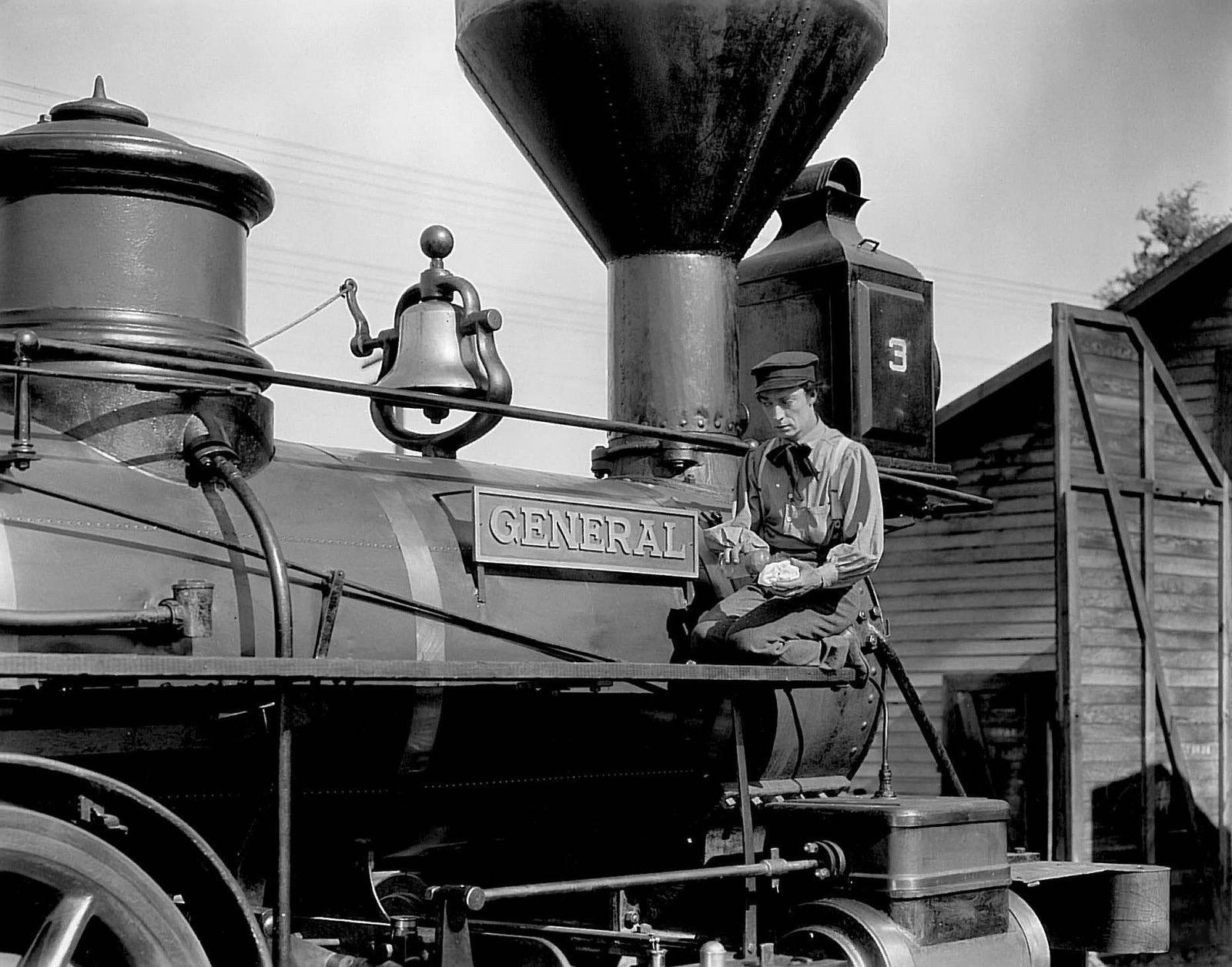
named Marianne. Taking a peek into the home of lead character Jonathan
(Bruno Ganz), he has a zoetrope, while his son has a lampshade that animates a
color version of the infamous locomotive in Buster Keaton’s THE GENERAL (1926)
(http://www.doctormacro.com/Images/Keaton,%20Buster/Annex/Annex%20-%20Keaton,%20Buster%20%28General,%20The%29_04.jpg),
while Jonathan and Tom Ripley exchange gifts of optical toys that are themselves
references to cinema. Sam Fuller plays a cigar-chomping crime boss, with
a femme fatale girl constantly in tow, who amusingly runs away at the first
sign of trouble. Who knew that a man on the verge of death by an
incurable disease would make a great hitman, or that murder would invigorate
him? Wenders creates a visually suggestive look of Hamburg that is highly
atmospheric throughout, creating an expressionist red-colored sky at one point
following a death, making excellent use of the zig-zagging escalator in the
train station, reminiscent of the devastating final scene of Fassbinder’s FOX
AND HIS FRIENDS (1975) which was shot in the Munich subway, but the shifting
storyline only grows more hallucinatory, veering into a world of cinematic
poetry. Near the end, Ripley sings the opening line of the Dylan song, “I
pity the poor immigrant who…” before his thoughts wander off, while what’s not
shown are the lyrics that follow, that perfectly describe Ripley’s state of
mind, “…wishes he would’ve stayed home, who uses all his power to do evil, but
in the end is always left so alone.”