 |
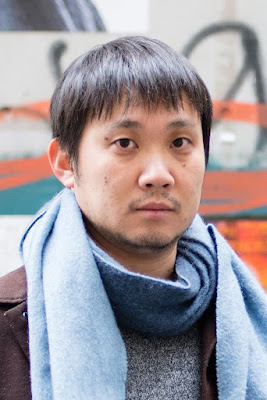
| Director Ryûsuke Hamaguchi |
Wheel of Fortune and Fantasy (Gûzen to sôzô) B Japan (121 mi) 2021 d: Ryûsuke Hamaguchi
Following on the footsteps of 2017 Top Ten List #1 Happy Hour (Happî Awâ) (2015) and Asako I & II (Netemo sametemo) (2018), Hamaguchi has released two films in the same year, DRIVE MY CAR (2021) which won the best screenplay award when it premiered at Cannes, and this film which won the Silver Bear for 2nd place at the Berlin Film Festival, with the Japanese title translating to “Coincidence and Imagination,” which might actually be better. A set of three contemporary love stories in Japan loosely connecting different aspects of life for women, accentuating how relationships are influenced by chance, offering themes of failed love, loneliness, and regret, largely realized by long and extensive philosophical dialogues that both highlight and criticize various aspects of problems faced by Japanese society today. Something along the lines of Rohmer’s Four Adventures of Reinette and Mirabelle (1987) or RENDEZ-VOUS IN PARIS (1995), both in structure and its reliance upon cleverly written dialogue, yet the jarring use of unspeakably honest language leads us to places we rarely visit in the modern world. Never less than intriguing, delving into psychological mysteries and complex scenarios, three minimalist tales resemble short stories, where the opening actually describes them as “Ryûsuke Hamaguchi’s Short Stories,” each one expanding on themes of female identity, yet an interesting influence, according to the director in an interview with Filmmaker magazine in 2019 (Ryūsuke Hamaguchi on Solaris, Asako I & II and Japanese ...), in discussing his path to becoming a director, is that among his biggest revelations in film school was the introduction to Cassavetes films.
Before I entered college, I wasn’t necessarily thinking about that, I was just purely a cinephile, conventionally in love with Hollywood films—Tarantino, Wong Kar-wai, things called mini theater films in Japan. But after I went to this film club in college and the cinephile culture just poured right in. I think the biggest inception for me to becoming a director was watching Cassavetes…I thought Cassavetes’ films have more emotions with the performance. That’s what I was more interested in.
The Cassavetes connection was curiously echoed again more recently this summer (Ryūsuke Hamaguchi on Cassavetes, Sci-Fi ... - The Film Stage), where he asserts a profound admiration, particularly for the film Husbands (1970).
I, of course, like silent films. I also like French New Wave cinema—these are films that I watched as a student. I found them in the cinema. I also like classic Hollywood and Japanese films as well, but as you mentioned, Cassavetes really does have a special place in me. When I was 20 years old I watched the film Husbands and it’s still my favorite film. It’s one of those films where I feel the more times I watch it, there’s really no other film like it.
The reason I really loved the film when I was 20 is that I really felt that life was being portrayed in this film. The protagonists of Husbands are three white males in their 40s, or something, so they would seem to me as if they were very separate from me. However, I just felt in watching these characters that they were living a fuller life than I was. When comparing the lives of what I saw on the screen against my own life, my own life started to feel more fake. And it was the first time that I felt that way. And very few films, other than these Cassavetes films, have really made me feel those things.
Now that I think back on it, a conclusion that I come to is that a Cassavetes film is not a film. I make films because I like films. But there’s a part of me that thinks so. By saying that a Cassavetes film is not a film, what I mean is that I think the general sense of what a film is is that there’s a budget and then there’s a schedule and within the schedule you sort of use up the budget. And that’s the broad system of how a film is made. And perhaps Cassavetes is still part of that system. However, I feel like at the end of the day his films kind of go beyond that systematic way of thinking. And so he’s not making a film within this idea of budgets or within the idea of schedules, and because his films are so away from the systematic thinking we are able to see something that goes beyond that. That’s something I finally understood once I was in my 30s, and while it still takes a lot of courage to try to get close to something like that, I’m still trying to attempt.
Hamaguchi studied at the Graduate School of Film and New Media at Tokyo University of the Arts where he graduated with a Masters in Film, studying under Hiroshi Takahashi and Kiyoshi Kurosawa, initially working on videos for television before film school, now known for making understated, exquisitely realized social dramas that accentuate the role of women in Japanese society. In this feature, while not thematically related, each of the three segments feature the life of one woman bleeding into the life of another character, sort of blurring the lines between them, yet the highly intimate, explorative nature of the dialogue is what stands out, offering a few striking, awkwardly uncomfortable confrontations, continually delving into unexplored territory, creating combustible emotional moments, something of a rarity in Japanese films. And one wonders if there is any director working today who is so in tune with women, as it’s one of the astonishing aspects of his filmmaking. Each of the segments are connected by a short piece of classical piano music, the opening movement of Robert Schumann’s “Scenes from Childhood,” Schumann - Kinderszenen Op.15, "Scenes from Childhood" | Vladimir Horowitz YouTube (18:03).
Magic (or Something Less Assuring)
Opening at a photo shoot with fashion model Meiko (Kotone Furukawa), displaying a bubbly personality while obviously enjoying being the center of attention, yet a long scene follows in the darkened back seat of a cab ride featuring the confessional revelations of Meiko’s best friend Tsugumi (Hyunri) recounting the intimate details with a man she recently met, describing it enthusiastically as one magical night. They simply talked through the night completely enraptured by each other, Wheel of Fortune and Fantasy (Guzen to sozo) new clip from Berlin Film Festival 2021 - 1/4 YouTube (3:06), while openly acknowledging being hurt from an earlier relationship where his girlfriend cheated on him and broke his heart, so he wanted to take things slowly, yet the instant chemistry made her a little afraid of what might happen when they meet again. Would it disappoint, or would they pick up right where they left off, rekindling that same electricity, while also perplexed by the idea, “Feeling at ease isn’t the same as romance.” These kinds of questions both haunted and consumed her as an abstract bouquet of different colored nocturnal city lights could be seen out the back window as they spoke. But the night was not done, as Meiko surprises the worksite of Kazuaki (Ayumu Nakajima), an interior design company executive alone in his office with a secretary, sending her home when Meiko arrives, not exactly sure what would happen. This entire episode feels like a flare-up of hurt feelings from a previous relationship that went wrong, with Meiko sarcastically asking him about that “magical night” with her friend Tsugumi (“a terrible coincidence, isn’t it?”), indicating he wasn’t exactly truthful, where it can be jarring hearing about your life from somebody else’s perspective, delving into unusually difficult territory as the two drudge up long forgotten resentments and feelings for each other while trading barbs and insults, reverting to an open display of emotional fireworks that recalls Who's Afraid of Virginia Woolf? (1966), where language becomes assaultive, while also discussing possible implications with Tsugumi, with Meiko dangerously treading into unwelcome territory, blindsiding her friend behind her back while bulldozing into what is clearly not her business, Wheel of Fortune and Fantasy (Guzen to sozo) new clip from Berlin Film Festival 2021 - 2/4 YouTube (2:56). A few days later, Meiko and Tsugumi are sitting in a café at the window discussing Tsugumi’s anticipated follow-up evening with Kazuaki when he unexpectedly walks by and decides to awkwardly join them. What follows toys with our perceptions, with the director offering two completely different scenarios, one that is boldly shocking followed by a completely different finale shortly afterwards, each suggesting how differently influenced our lives could be by the decisions we make.
Door Wide Open
Easily the most controversial of the three, yet its willingness to tread into sexually risqué language over an extended period is a bit shocking, yet there are devious behind-the-scenes implications with this one, where university professors have to keep their doors open because of new sensibilities around sexual harassment. Delving into hidden motivations and desires, students at a university are shocked to see a student in a prostrating bow literally beg Professor Segawa (Kiyohiko Shibukawa) to change his grade, creating a disturbing scene of shame and abject humiliation, followed shortly afterwards by an equally unpleasant sexual encounter. Nao (Katsuki Mori), an older student in her 30’s is largely ignored by the younger students, except one, Sasaki (Shouma Kai), with whom she is having a sexual affair, yet he appears to hold her age in contempt, nonchalantly heaping unending emotional abuse upon her, and then smugly laughing about it, yet she doesn’t leave, internalizing her own guilt and low self-esteem, apparently enthralled by his good looks and mesmerized by the hold he has on her. He suggests she entice the professor with a honey pot, luring him into an uncompromising position that would get him fired, where he would have the last laugh, apparent payback for that earlier incident. While she initially refuses, he sadistically keeps up the pressure, so we later see her meekly pay a visit to the professor shortly after winning the prestigious Akutagawa Prize, one of the most sought after literary awards, though clearly she has calculating intentions. After having him sign his book, Wheel of Fortune and Fantasy (Guzen to sozo) new clip from Berlin Film Festival 2021 - 3/4 YouTube (3:04), she reads an extended pornographic passage, closing the door behind her, as if ensnaring the professor with his own words, but he opens the door again, not wanting to create the appearance of hiding something. The motivations taking place here are deeply complex, where she may have initially wanted to trap the professor, a man she admires, but when he allows her to keep reading while maintaining an icy calm, her intentions seem to have shifted from vengeance to eroticism, entering very dangerous territory, curious about her own changing identity, where the professor is openly candid and supportive, expressing an interest in her life and trying to offer helpful suggestions. Shocking in its brazenly uncompromising sexuality, revealing an intricately shifting power dynamic, it’s also strangely mysterious and like nothing else, clearly showing a unique underside of human nature, taking each of them (and us) by surprise. While their shared embrace of candid sexual vernacular and personal detail is continually awkward, neither one seems embarrassed or put-off, though this is very adult stuff and completely outside the realms of professor-student talks. A lapse in judgment happens only afterwards, and purely by accident, as there is a fast forward chance encounter on the train five years later between Nao, whose life has gone absolutely nowhere, and Sasaki, now a successful literary editor, though the irony is that he doesn’t actually read books. The fortunes of the two men have reversed, though viewers are well-aware that Sasaki is entitled, overly superficial and shallow, a conniving and thoroughly contemptible human being, yet fate has somehow handed him undeserved rewards.
Once Again
In what may be the most intriguing segment, feeling the most personal, it is one of the few times this extremely conscientious director has extensively examined underlying gay themes, probing the underlying affects of repressed desire, this is a beautifully written tale of mistaken identity, honestly probing the power of memory, where one character’s deep-seeded loneliness and another’s loveless relationship converge to examine primary lesbian instincts, thwarted in one character at an early age, but never forgotten, playing out in an entirely different scenario many years later. The third episode takes place in a future setting that does not indicate a sci-fi setting, only that all forms of digital life have been erased overnight by a global computer virus, essentially dismantling all phones and computers, returning the world to a forgotten era of communication, where messaging is done through mail delivery while eradicating all computer-based employment, sending millions out of work. Moka (Fusako Urabe), is a middle-aged woman who attends a 20-year high school reunion, but never finds the person she was hoping to meet, yet coincidentally runs into her the next day going the opposite direction on the Sendai subway station escalator, both highly surprised to see each other, where they decide to retreat to the home of Nana (Aoba Kawai) for some tea. But when Moka begins confessing her personal regrets and sense of loss from not seeing her in twenty years, Nana senses she doesn’t really know this woman and stops her in her tracks, questioning who she is, discovering they don’t actually know each other, Wheel of Fortune and Fantasy (Guzen to sozo) new clip from Berlin Film Festival 2021 - 4/4 YouTube (2:56). It’s an embarrassing and demoralizing mistake, yet Nana can clearly see how important this is to her, so she encourages her to say more, with Moka describing deeply felt feelings for another female student in high school, yet she was too confused and anxious at the time to say anything, and it’s only now that she realizes just how much she matters, a love she has never replaced. Describing the emptiness she feels, “You must have a hole with nothing to fill it. We must be connected through this hole.” The more she reveals, emotional barriers between them seem to vanish, as they discuss their regrets, mistakes, and the new realities of their very different lives. Nana lives in a large and beautiful home, yet it feels empty, as she married for comfort, not out of love, sensing her own desparation, confessing “Time is slowly killing me.” Without realizing it, they both sense something greater than themselves with the other person, yet they are total strangers. Comprised of long takes with a slowed tempo, both women let out feelings they have long kept bottled up, yet each comforts and seems to be restoring something in the other as well, a renewed sense of self-worth. As truth and fiction merge, a different kind of truth is discovered, shifting the trajectory of the story entirely, becoming an exploration of the kind of world we wish could exist, with deeply felt connections, instead caught up in the daily hardships of living, where inner desires and long forgotten dreams are simply abandoned and never realized.