Thursday, March 16, 2023

Athena


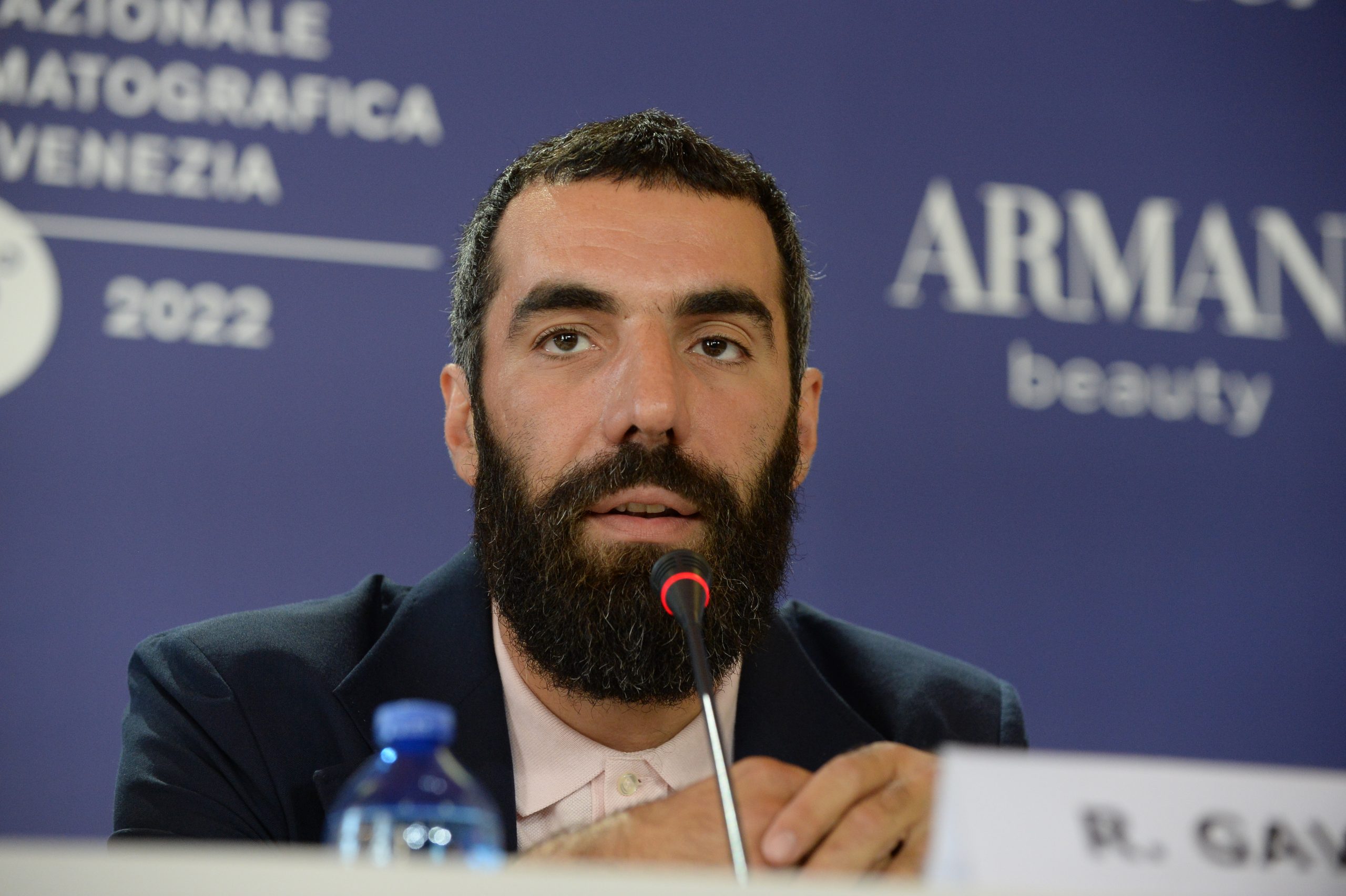
Director Romain Gavras


Ouassini Embarek on the set


cinematographer Matias Boucard


ATHENA       B                                                                                                                            France  (99 mi)  2022  ‘Scope  d: Romain Gavras

The true hero, the true subject, the center of the Iliad is force.  Force employed by man, force that enslaves man, force before which man’s flesh shrinks away.  In this work, at all times, the human spirit is shown as modified by its relations with force, as swept away, blinded, by the very force it imagined it could handle, as deformed by the weight of the force it submits to.  For those dreamers who considered that force, thanks to progress, would soon be a thing of the past, the Iliad could appear as an historical document; for others, whose powers of recognition are more acute and who perceive force, today as yesterday, at the very center of human history, the Iliad is the purest and the loveliest of mirrors.                                                                  —Simone Weil opening paragraph from her essay The Iliad, or The Poem of Force, 1945, The Iliad, or The Poem of Force | The Anarchist Library

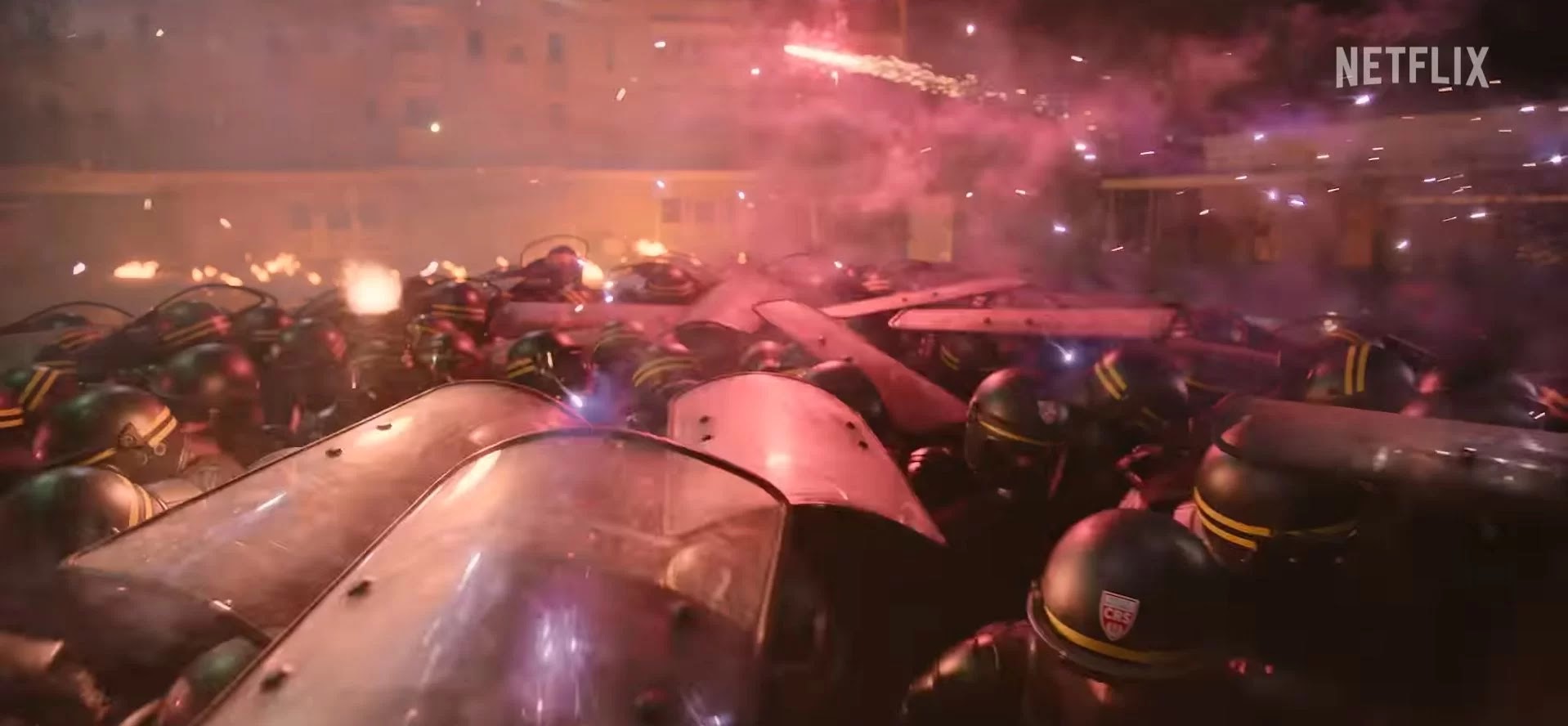
Gavras is the youngest son of renowned Greek-French film director Konstantin Costa-Gavras, whose political thriller Z (1969) was ripped from the headlines, shot like a documentary, and listed by Time magazine as one of "The 15 Best Political Films of All Time: The Votes Are In".  Like father like son, this is another blisteringly intense experience recalling the French suburban riots of October 2005 that originated in the mostly North African immigrant banlieue region of Clichy-sous-Bois, an eastern suburb of Paris, after the death of two young boys who had been escaping the police, eventually spreading to 274 cities and towns nationwide, triggering the worst rioting in France for 40 years, lasting over three entire weeks, forcing the government to declare a state of emergency, resulting in the burning of nearly 9,000 vehicles and the arrests of 2888 individuals, as dozens of public buildings and businesses were set on fire.  The French courts eventually cleared the police (French court clears police over Paris deaths that triggered ...), while the conditions that fueled the uprisings in the banlieues remain largely unchanged, ('Nothing's changed': 10 years after French riots, banlieues ...), as the same bleak hopelessness prevails, and the promise to provide racial and economic equity has abysmally failed, with poor education, rampant youth unemployment, and violent confrontations continuing from a heavy-handed police presence, often involving tear gas brigades, with French Prime Minister Manuel Valls saying in Le Monde that there was a “territorial, social, and ethnic apartheid” in France.  Unlike the widely heralded Kerner Commission following urban riots in the United States during the 60’s that revealed “Two societies, one black, one white—separate and unequal” (The 1968 Kerner Commission Got It Right, But Nobody Listened), or the Scarman Report in Great Britain following the Brixton Riots of 1981, which identified “complex political, social, and economic factors” that created a “disposition towards violent protest,” but did not explicitly condemn police racism and denied that “institutional racism” even existed, with the recommendations ignored by the Thatcher government, there has been no official national debate on the crisis in France, as no commission of experts and legislators was convened to analyze the riots, resulting in a massive failure to address ongoing racial and religious discrimination.  Making matters worse, newspaper and television reports often depict these rioters as “violent” or “thugs,” though artists are often at the forefront of the protests, yet somehow they fail to address the circumstances that ignited these outbreaks.  What we’re left with, then, to fill the political void, is the arts community providing their own challenging vision, with Gavras using cinema as a theater of provocation, hoping to advance public arguments and discussions on the separate and unequal disparities in the the banlieues, where hopelessness and civil unrest continue to plague the nation.  Shot south of Paris in Évry-Courcouronnes, in the Parc aux Lièvres housing project (aka “the Rabbit Park”), where around 80% was shot with an IMAX camera, the last one available when shooting started (there are only around 50 in the world), this follows in the footsteps of the Mathieu Kassovitz film LA HAINE (1995), Jean-François Richet’s MA 6-T VA CRACK-ER (1997), Jacques Audiard’s Dheepan (2015), and more recently Ladj Ly’s Les Misérables (2019), all films shot in the suburban banlieue projects, where trust with authorities has never been lower, as residents are routinely stigmatized as criminals, where racial tensions with police are continually on high alert, using raw language and an ultra-realistic cinéma vérité shooting style to convey the immediacy of each moment, as these are tinderboxes continually on the verge of erupting into a firestorm of violence.

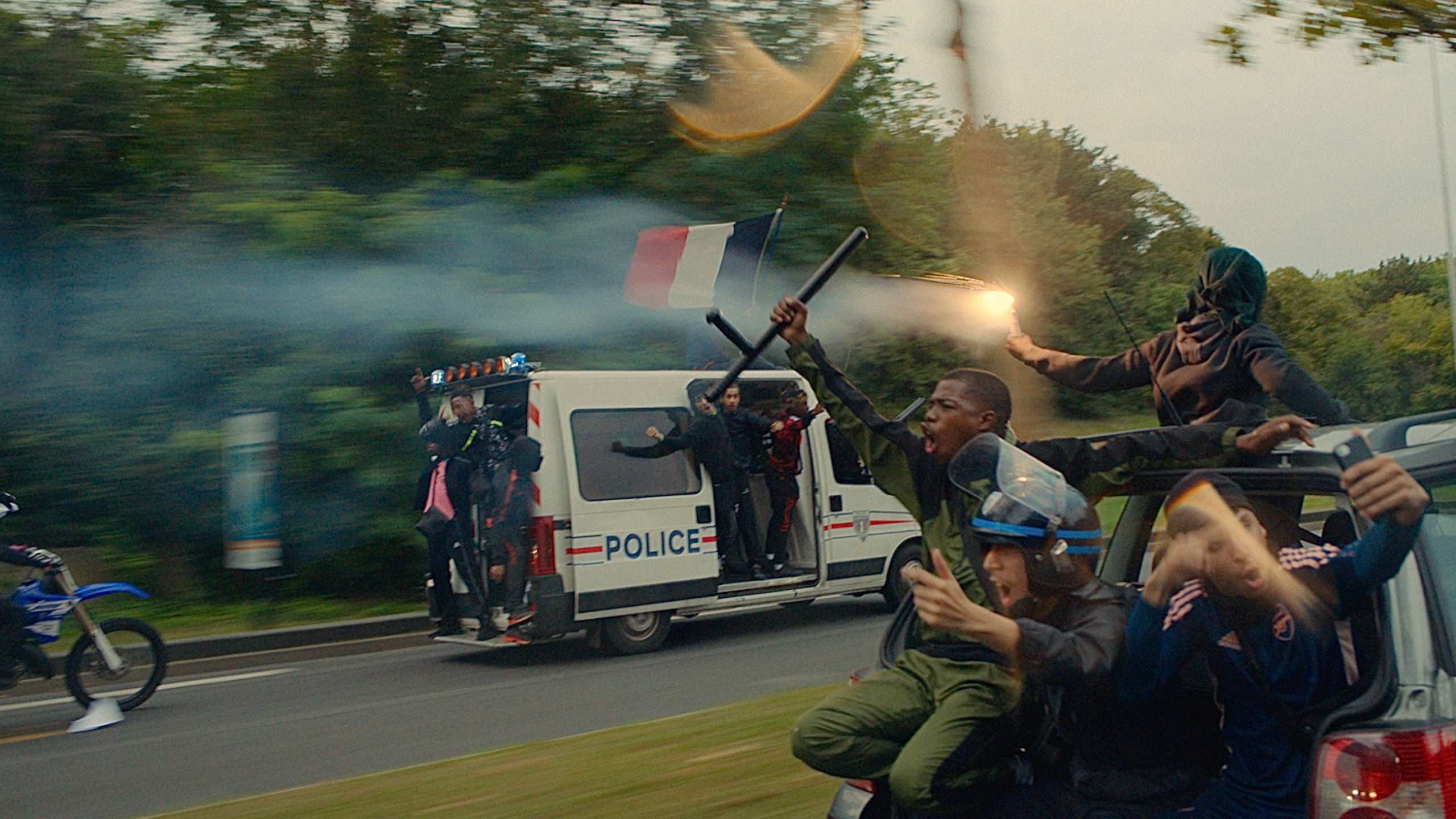
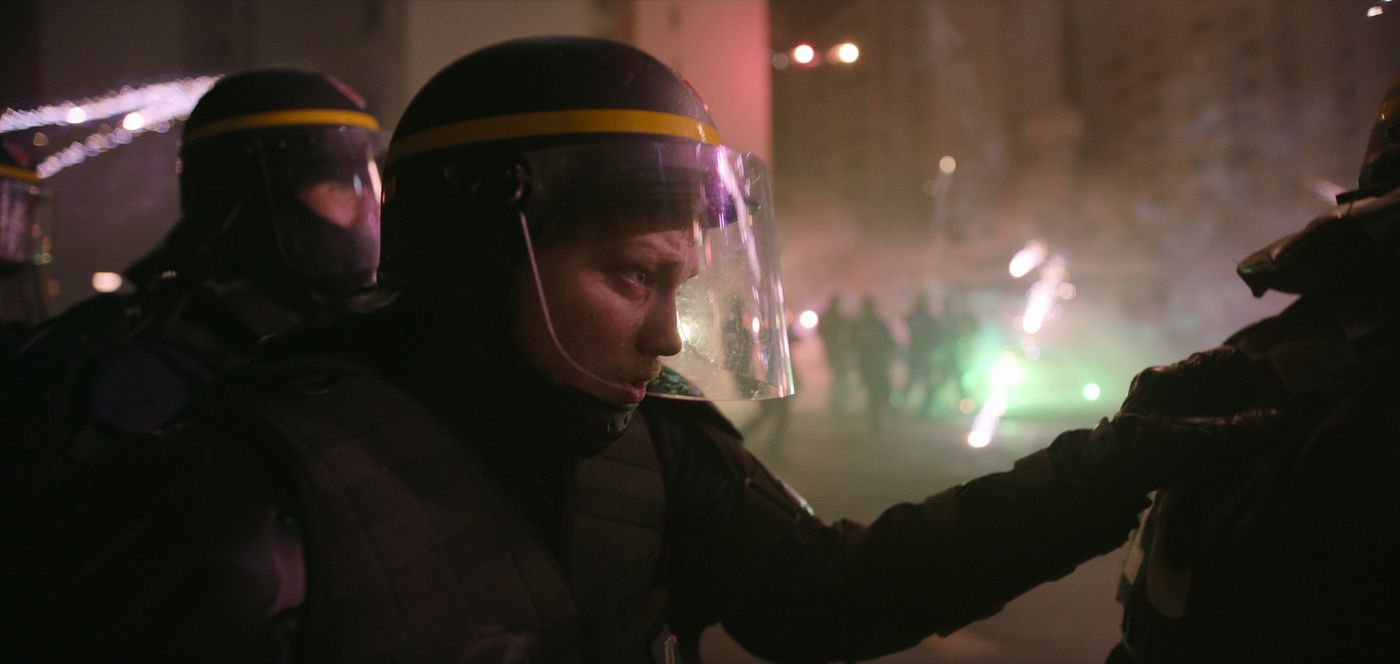
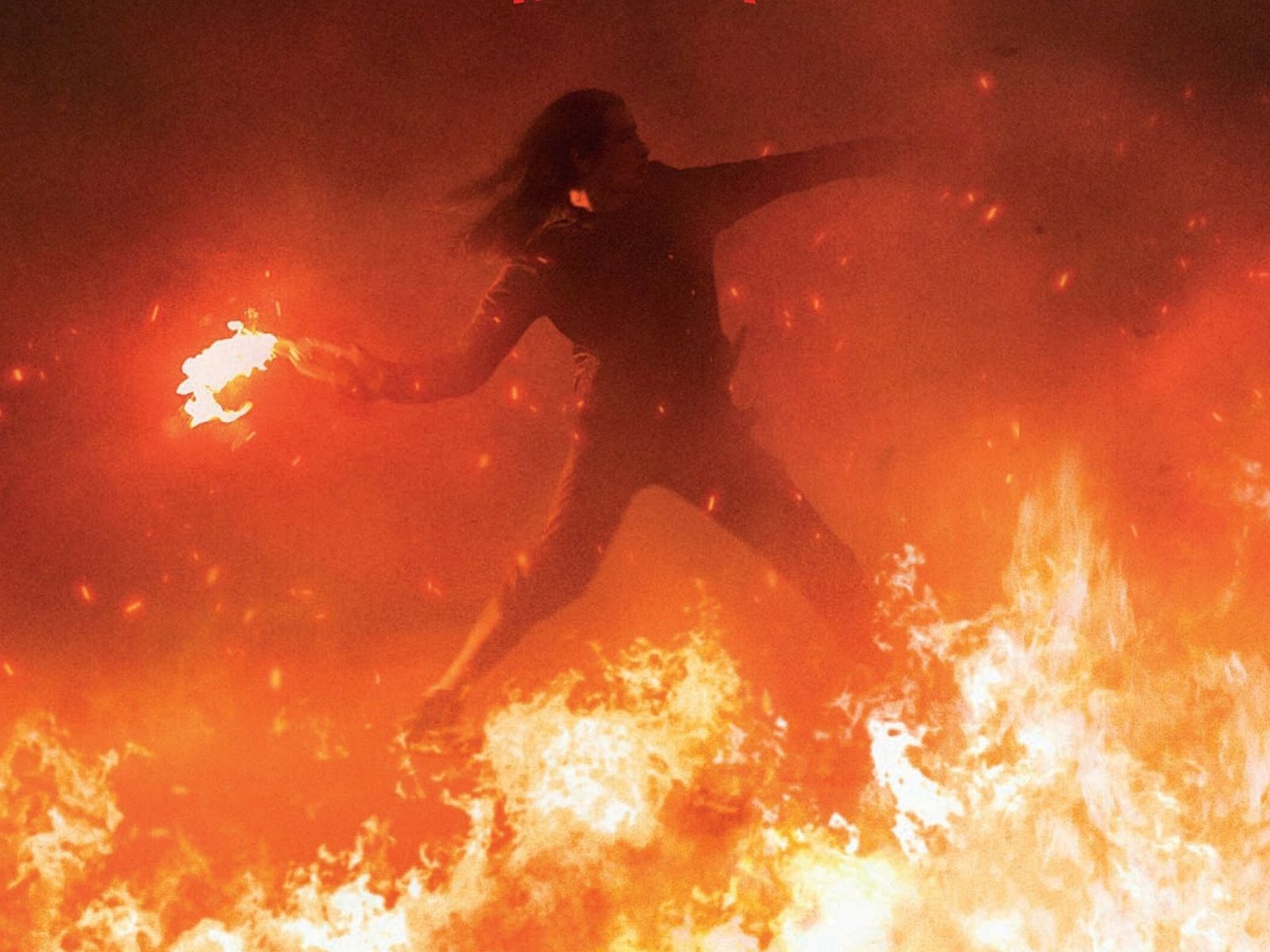
Gavras got his start making advertisements and directing music videos, and this is largely a choreographed movie, much like storyboards in movies of old, where sequences were carefully constructed ahead of time and rehearsed for months before shooting began.  Matias Boucard’s cinematography is the star of the show, easily the biggest single takeaway from the film, and not just the harmonious synchronicity of the tracking shots, which are utterly spectacular, but the sheer realism in capturing the impassioned outrage from the collective anger in the projects.  Reminiscent of Emmanuel Lubezki’s camera kinetics and complicated long takes in Alfonso Cuarón’s Children of Men (2006), the opening shot is a doozy, an electrifying 11-minute tracking shot that swivels on a dime from following a solemn police press conference, quickly turning into John Carpenter’s ASSAULT ON PRECINCT 13 (1976), as all hell breaks loose with a sudden mob insurgency when they ransack the police station stealing weapons, gear, and a police van before making an electrifying escape back into the protected walls of the Athena projects (named, appropriately enough, after the goddess of war), with armed residents standing guard atop the towering fortress awaiting the inevitable police response.  Written by Gavras, Ladj Ly, and Elias Belkeddar, it’s a Greek tragedy along the lines of The Iliad, an alliance of Greek cities that eventually prevail in sacking Troy, with a SWAT team of police in riot gear representing the massive force of the Greeks against the besieged banlieue fortress of the protected city of Troy, viewed as a nightmarish Armageddon vision of intensely staged combat where in the end all humanity feels lost, as there is no reconciliation, only blind hatred. This gritty thriller follows three brothers of French-Algerian descent whose lives are thrown into chaos following the brutal beating of their youngest 13-year old brother who was left for dead, with video footage pointing to the police, where the outraged community is a powder keg of unleashed fury ready to explode.  Abdel (Dali Benssalah) is a decorated French soldier who fought in Iraq and in the former African colony of Mali, now collaborating with the police, whose calm demeanor is in stark contrast to the incendiary emotions of Karim (Sami Slimane), the charismatic youth leader who aggressively starts a campaign of guerilla warfare against the police, while the oldest is Moktar (Ouassini Embarek), a drug dealer more concerned with hiding his stash of drugs and weapons from the impending police raids than assisting either of his brothers.  Karim despises the fact that Abdel refuses to take up arms and fight the police, angrily raging “You’re a military whore for France,” while Moktar constantly urges Abdel to protect his own skin above anything else.  These existential, post-imperialist choices reflect the dilemma of Arab and African French immigrants who are urged to assimilate, yet find opportunities glaringly limited by poverty, powerlessness, and racial divisions, where justice is something they never see, with absolutely no trust in the police or governmental authorities, where a lingering sentiment refuses to accept them as being French, instead associating them with criminal or terrorist behavior, where they are literally viewed as the scourge of the earth. 

The knock on this film is that it accentuates the stereotypes, with zero female presence, making little effort to establish any interior character development while also failing to provide social context, though much like the United States, police killings of civilians have dominated headlines in France for years, with the film addressing a prevalent lack of hope in the post-modern world, motivating Gavras to present a collapsing world that seems to revel in an unfolding civil war which sends shock waves across the nation, with television reports of mosques burning and right-wing attacks across the country.  Driven by the visceral allure of Pontecorvo’s revolutionary The Battle of Algiers (1965) and George Miller’s sensationalized Mad Max: Fury Road (2015), the aesthetic is an adrenaline rush on overdrive, using drones and swooping crane shots with no pauses or moments to breathe, as it’s simply a non-stop assault to the senses, an all-consuming experience in real time that continually immerses viewers into the center of the action, accentuated by the reverberating music of Benoit Heitz, aka GENER8ION, ATHENA - Netflix Soundtrack - GENER8ION YouTube (35:46), like a Greek chorus commenting on the action, with the camera jumping back and forth in expressing points of view, where the bloodthirsty allure of revolution becomes an apocalyptic day of reckoning of Biblical proportions.  As the various attacks unfold, it also includes a tormented family melodrama, with brother turning against brother, elevated to a mythical scale as they barricade themselves into the bowels of this concrete monstrosity, where much of it is shot in darkened corridors where it was hard to tell what was happening, resembling the chaos of a war zone, entangled in a perplexing labyrinth where there are no good options, each seemingly a dead end, while also mysteriously sheltered inside is a wanted sociopathic terrorist, Sébastien (Alexis Manenti), who has gone into hiding.  At some point in the ensuing chaos a young police officer named Jérôme (Anthony Bajon) is separated from his unit and captured, immediately turned into a hostage used for negotiations, demanding the names of the three policemen involved, with Karim refusing to believe the police report that the killers may not have been police officers, but far-right extremists posing as the police in a deliberate attempt to incite a race riot.  The same nation that gave us liberté, égalité, and fraternité is also the nation of Le Pen, the hijab ban, and horrific atrocities in Algeria, where the colonial fallout is still being felt.  While Gavras explores themes of racism, violence, and social injustice on a grand scale, he combines all facets of photography, editing, and the musical score with a potency that is perfectly synchronized, culminating in an adrenaline-charged tragedy of operatic dimensions, where a nihilistic fatalism devalues everything that exists, as freedom is a lost cause, recalling the finale sequence of Peckinpah’s The Wild Bunch (1995), where this is simply a blitzkrieg of annihilation, leaving no room for empathy or reflection.  The reveal in the final postscript may be the most divisive aspect of the film, a flashback to what sparked the outrage, yet it’s handled with a deft precision, adding a sense of foreboding for the future, as cataclysmic divisions in France are only exacerbated by increasing political power of the far-right National Rally, whose nationalist, anti-immigration policies repeatedly connect immigration to Islamic terrorism, making any potential racial reconciliation impossible.  This deserves to be seen on the biggest screen possible, with the best sound systems, as much of the visual style was designed for the big screen, much like Hollywood action movies, but unfortunately it spent little time in theaters and was immediately streamed on Netflix, which is disheartening, as you can’t help wondering how that happened, as it seems like a huge mistake.  The film is dedicated to DJ Mehdi, a French hip hop and house music producer, and the memory of Bernard Moussa Gomis. 

Monday, March 6, 2023

We (Nous)


Director Alice Diop


WE (Nous)        B                                                                                                                        France  (115 mi)  2021  d: Alice Diop

I will love whoever hears that I am screaming.                                                                      —Marguerite Duras from her short film Les Mains Negatives (The Negative Hands), 1978

Inspired by Les Passagers du Roissy Express by François Maspero, published in 1990, which was awarded the Prix Décembre, one of France’s premiere literary awards, where Maspero, a member of the French Communist Party and an influential publisher of radical works in the 70’s, chronicled his experiences along the RER express subway (Réseau Express Régional), the rail network linking Paris to its suburbs, known as the banlieues, which are far more diverse than the urban ghettos of American cities, yet Diop was particularly impressed that the author took the time to observe the people who live there, preserving their dignity.  Yet what stood out in her memory is an accompanying photograph of an eight-year-old black girl that was taken near the shopping mall she grew up next to, with Maspero photographing and talking to people she knew, quite literally transposing her life into the book.  A former bastion of leftist communists working in the factories, the de-industrialization of the 1970’s was catastrophic for this region, leading to rampant unemployment in the 80’s, voter indifference, and the implosion of communism and the radical left during the François Mitterrand years, replaced by a growing support for the far-right National Rally, also known as the National Front.  Presenting a picture of daily life seldom seen by tourists, with immigrants living in cement blocks of run-down housing projects that resemble the faceless style of Soviet architecture, yet there are also vivid memories of the Drancy internment camp when Vichy government officials cooperated with the Gestapo and sent nearly a hundred thousand Jews to Auschwitz, where social problems and the collapsed political horizons are balanced against the backdrop of China’s brutal suppression of the pro-democracy protests and the dissolution of the Soviet Union.  Influenced by the Claire Denis film 2010 Top Ten Films of the Year: #1 35 Shots of Rum (2008), featuring a protagonist who drives the RER trains, Franco-Senegalese filmmaker Alice Diop, who is from an Aulnay-sous-Bois housing project in the northeast suburbs of Paris, returns fifteen years after she left and journeyed on the RER Line B to document the changes in this region 30 years later, expanding a theme she began with an earlier 2017 short, Les minutes du GREC - RER B d'Alice Diop - Vidéo Dailymotion YouTube (1:15).  Presented as a series of disconnected encounters, the railway line cuts through the city from north to south and is itself a featured component, much like Ozu shots of trains are an identifying signature of Japanese identity, yet what immediately stands out is a working class reliance on mass transit, as we see hordes of mostly black people standing en masse awaiting these trains to go to work, cloaked in a cloud of invisibility, recalling similar scenes in Akerman’s D'Est (1993) observing life behind the Iron Curtain, providing a stark image that differentiates a class division, already suggesting a landscape of exclusion.  While France applauds multiculturalism, yet under the microscope a different reality exists beneath the slogans, as the diversity of stories and memories have really been negated, with the film exposing invisible lives that remain outside the purview of traditional prototypes.  Born out of the November 2015 Paris attacks that shocked Paris, signaling a newly fractured French society, where the terrorists were descendants of postcolonial immigration, growing up in the same banlieue neighborhoods, so there was something about them Diop could recognize, a theme that also prevails in Saint Omer (2022).  The director’s voice can be heard asking questions from behind the camera, yet in this search to forge a new French identity, there is no attempt to provide a commentary that links these various segments together, with no single experience holding a special privilege, as they are all part of the same fabric.  Little by little, however, under these seemingly innocuous images, links are made, always observed discreetly, without necessarily asking for clear explanations, becoming a cinematic representation of diversity and memory, gradually becoming an essay on the social realities of life in postcolonial France.  Opening and closing in the Fontainebleau Forests 35 miles south of Paris, known for the opulent Château de Fontainebleau built by French royalty dating back to the 1100’s, a favorite residence and hunting lodge of the Kings of France because of the abundant game in the surrounding forest, we see images of an exclusive all-white hunting club dressed in antiquated attire and blowing hunting horns on horses, indicative of a leisurely activity for aristocrats, with some following on foot, bicycles, and cars, resembling the fox hunt scenes in Jean Renoir’s RULES OF THE GAME (1939), as hounds and horns announce their presence in the woods as they terrify roaming deer, with the dogs chasing them down into exhaustion before closing in for the kill.  Hunting with dogs is a barbaric practice outlawed in Germany in 1936, Belgium in 1995, and Great Britain in 2005, yet it’s an age-old practice that still exists in France, inherited from the days of a monarchy, with hundreds of cars following on weekends, where hunting tours are organized like safari adventures in Africa.    

Today the term banlieue has become a euphemism for the “racial other,” or the “Other Paris,” as it’s often referred to by journalists, carrying with it a social stigma, embodying stereotypes that plague their residents, many of whom are working class immigrants of Middle Eastern and North African descent.  In France, as it is elsewhere, it becomes a political issue when deciding whose story we tell, whose story gets to be told, with Diop imprinting these images onscreen to suggest a vastly enlarged canvas.  Stringing together a kaleidoscopic portrait of largely black and immigrant communities, intermingled with aging white residents who rely upon their services, we are introduced to Ismael Soumaïla Sissoko, a car mechanic from Mali living in his beat-up truck, listening to the music of Ivory Coast reggae singer Alpha Blondy - Cocody Rock YouTube (4:47), hooking up a television screen to the car battery, and speaking to his mother back home as he works under the hood, informing her “They’re mean to us,” also suggesting it’s too cold, indicating he’d like to go home after spending 20 years working in France.  Diop accompanies her own sister, Ndeye Sighane Diop, a geriatric nurse, as she makes various house calls to the aging, mostly white clientele living in working class neighborhoods.  One elderly woman from Brittany recalls how she met her husband, as she was very depressed at the time, determined to jump off a bridge into the Seine River, but he grabbed her, insisting that he walk her safely home, a practice that continued each night after work, eventually going to the cinema together until they got married.  She recalls how they never had money, as he sent nearly all his earnings to his family back home in Italy, yet this is a common practice for immigrants working abroad.  Diop interjects her own family history through low-grade home videos, with her parents offering her a life they never had, as her father came to France from Dakar in 1966, claiming he was never out of work for 40 years, and she can be heard accompanying him on visits to nearby Sausset Park where they would watch the birds in a tranquil setting, though she’s frustrated that so little evidence of her mother remains, always appearing on the edge of the frame, wishing there was more, as memories of her are fading.  As she expounds on her reflections, adding a narration only for her own personal experiences, she poignantly adds, “I regret all that is vanished, all that has been erased,” which segues to 1950’s images of Marlon Brando as the leader of a motorcycle gang in THE WILD ONE (1953), a cultural icon synonymous with the 1950’s, presumably the movie playing which was taped over by the family videos.  Going even further back in time, an all-white Catholic congregation in the Basilica of Saint-Denis, where French royalty is buried, listens to a royalist ceremony reading the prison testament of Louis XVI, the last King in France, proclaiming his innocence in 1792 (The Last Will and Testament of Louis XVI | andrewcusack.com), knowing his end is near, as he attempts to frame his place in history before they abolish the monarchy and execute him by guillotine during the French Revolution.  It’s curious to hear the words of a monarch in the hallowed grounds of a church, where he is viewed as a religious figure, a heroic Catholic King who came face to face with the wickedness of his subjects who sought to overthrow the Catholic Church and everything it stood for, as Roman Catholicism was the official state religion of France.  When news of his death reached Rome, Pope Pius VI condemned the Revolution and shared his view that Louis was indeed among the blessed martyrs in heaven, with a modern era church service centuries later still having the power to move many to tears, suggesting this was the beginning of a rejection of God and His Church, leading to mass secularization.  This is an astoundingly revisionist view that could only happen in France, where the Church, aligned with the monarchy, are viewed as united in Christ, claiming to be the victim of a historical blunder that somehow opened the doors to freedom and democracy.  One could say the same about Charlemagne, who was engaged in almost constant warfare throughout his 40-year reign, yet was revered as a saint and anointed Holy Roman Emperor in 800 A.D. with his royal ordinances quoted by generations of future Popes.  Diop captures this with no editorializing, utilizing a verité approach where viewers are empowered to make their own judgments and assessments. 

The camera shifts its attention to the Shoah Memorial in Drancy, with an authentic boxcar on display, taking us inside the empty hall with a video installation revealing constantly shifting faces, wordless images selected at random, with names, images, and lifespan listed, including many children, where around 10,000 children were interned in the Drancy camp before being deported, writing letters that were never delivered, some thrown out of the train windows, expressing an evocative requiem for the dead, offering a solemn remembrance that has a prayer-like reverence.  France has a real problem with historical memory, as the Drancy camp was turned into a low-income housing project immediately after the war, eventually building the museum, but it’s poorly attended, mostly by tourists, primarily Americans.  While France can celebrate the memory of Louis XVI for 250 years, the complicity of the French government in the Holocaust just 70 years ago has nearly been erased.  In contrast to the quiet, what follows are lively images of neighborhood kids playing, with the banlieue project towers looming behind them, as boys can be seen sliding down a short hill on cutout cardboard while a group of high school girls are playing cards.  Young men appear in lawn chairs or lying in the grass along a riverbank, drinking beer and listening to music, dancing in a comical manner, mimicking the old-time music of Édith Piaf, Édith Piaf - La Foule (''Que nadie sepa mi sufrir'') YouTube (3:09).  Recalling a similar scene with philosopher Brice Parain in Godard’s My Life to Live (Vivre Sa Vie: Film en douze tableaux) (1962), Diop also appears before the cameras in a conversation with French writer/philosopher Pierre Bergounioux, living in one of the poorest regions in France, as he reads aloud from his diaries.  As they discuss Molière, Rousseau, and the functions of an artist, both acknowledge how entire groups of humanity have been excluded in the past from the world of literature, film, and art, expounding upon centuries of French history and inequity, as only the dominant classes are represented, while ordinary people go unrecognized.  Diop explains that part of her purpose is “to conserve the existence of ordinary lives,” providing a voice for the underrepresented in the maligned outskirts of Paris.  Diop noted in an interview that Libération, the daily newspaper, had run a headline, “We are one people,” asking herself “who this ‘we’ was for them … What ‘people’ was the newspaper talking about?”  The whole film recontextualizes this question, making herself part of the “we” in question, with Diop revealing the aim of the film is “to right the wrong done to all the people who have been overlooked, and to give voice to ‘small lives.’  Lives that have disappeared without a trace, as my parents’ did.”  She alluded to her “obsessive need to collect and preserve the traces of all these lives, to prevent them from disappearing and to archive them in French history.  To send a strong, and political, message that they are part of it.”  The personal and the collective are woven together in this film, providing a tapestry of experiences, where the filming is an act of remembrance.  With an influx of black and African immigrants, residents are regarded as aimless delinquents at best, and imminent terrorists at worst, where the high-density pockets of public housing have become islands of social exclusion.   Being from the banlieues is a serious impediment to employability, as nearly every resident has a story about discrimination, as it prevents residents from getting jobs and getting into good schools, often complaining that journalists drop in only to report on car burnings and drug shootings.  The implication is that people with darker skin are not fully French, which is especially true for Muslims.  It speaks to the neo-colonial attitude, as the legacy of colonialism and slavery persist in the way these urban spaces are policed today, requiring a stricter presence.  The least digestible aspect of France’s colonial past is Algeria, fighting an 8-year war where 700,000 people died.  One cannot overstate how heavily this history has been repressed.  Gillo Pontecorvo’s neo-realist The Battle of Algiers (1965) was banned in France for five years after its release, still remaining a touchy subject.  During pro-independent celebrations in 1961, French police killed some two hundred people, throwing their bodies off bridges into the Seine. It took forty years for France to acknowledge that this massacre had occurred, and the incident is barely mentioned in schools.  According to young people in the banlieues, colonial history is scarcely taught, and literature from former colonies is almost completely ignored.  France is a country ruled by graduates of the prestigious École nationale d'administration in Strasbourg, training heads of state and industry leaders, creating a tier system that largely excludes anyone from the banlieues.  A resurgence of anti-Semitism and anti-immigration has fueled the politics of the far-right National Rally, becoming so pervasive that it’s now part of the popular culture.  Part of this was inflamed by the French law declaring it illegal to wear Muslim face-covering veils in public, prohibiting girls from wearing a hijab while playing sports, with the far-right advocating a ban on Muslim women wearing head scarves in public.  The intimacy of the film is startling, with a handheld camera and a distinct subtlety of direction, but what makes this film special is the sensitivity and empathy it encompasses towards all Parisians, from children, senior citizens, to the upper echelon of French society, with Jean Ferrat’s song Jean Ferrat - Ma France - YouTube (3:49) playing over the closing credits.